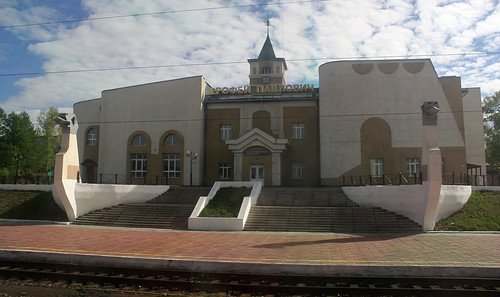
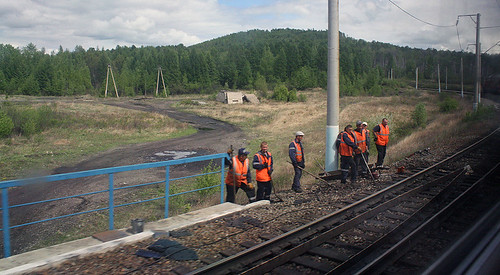
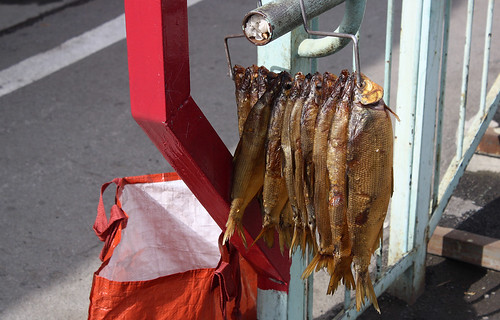
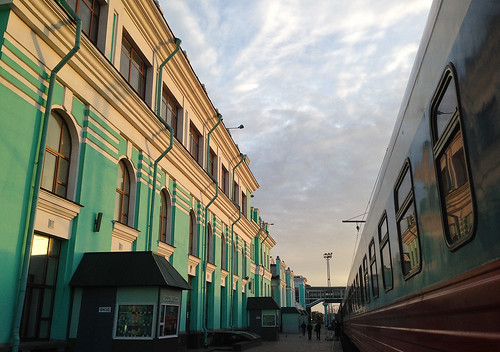
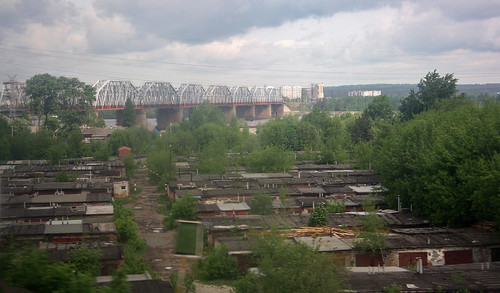
As we slept, our train would have crossed the Yenisei, the largest of the rivers that flows into the Arctic Ocean, and one that marks the border between western and eastern Siberia. Ilyanska is our first stop in the latter, and although not as cold as Omsk, it still has an old world feel to it. Indigenous people can be seen in larger numbers on its platforms, and the women in particular look markedly different. The offerings amongst the platform vendors has increased too, with smoked fish from nearby Lake Baikal being one of the more prominent additions.
Category: Trains
Rossiya Diaries: Taiga, Taiga, burning bright!
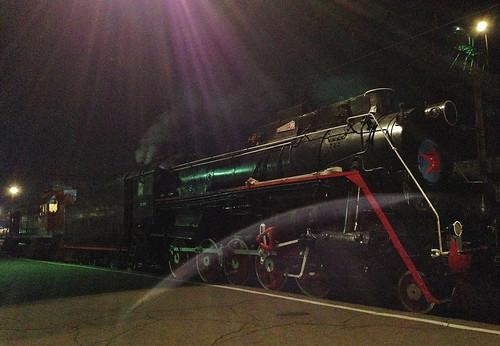
I am awakened by the slow rumble of our train passing over a fairly lengthy bridge. Lifting the window blind only a little, so as not to awake the remaining occupants of our cabin, I discern through the condensation that we are rolling into Omsk, our first stop on day 3. The river we just crossed was the Irtysh, the chief tributary of the Ob. Outside, it’s a chilly 6C and the station clock resolutely reads 03:15 AM. The smell of burning coal fills the air. In the distance stands a steam locomotive, plinthed. It’s a bit of a time warp here at Omsk, and also a gentle reminder that we are now well and truly in Siberia.

Continue reading “Rossiya Diaries: Taiga, Taiga, burning bright!”
Rossiya Diaries: Through the Urals to Yekaterinburg
The massive bridge over the River Kama, one of the longest tributaries of the Volga, marks our entry into the industrial city of Perm. We’ve gained 2 hours over Moscow and traveled over 1400-km already. During WWII, a lot of military factories were set up in Perm, and it started being referred to as Molotov, after the Russian minister of Molotov Cocktail fame!
We bid dasvidaniya to Lena and Sergei at Perm, and will now have the cabin to ourselves till our next halt, Yekaterinburg. We stock up on breakfast supplies and then return to our private space moments before departure.

Continue reading “Rossiya Diaries: Through the Urals to Yekaterinburg”
Rossiya Diaries: Vladimir and the Volga
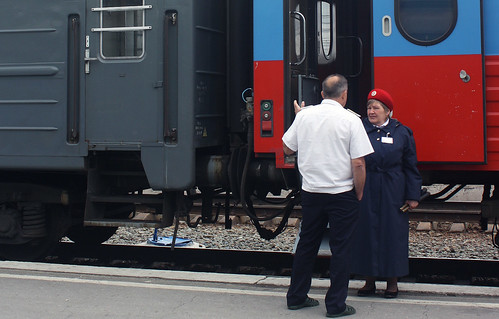
For all the planning its taken us to journey on the Rossiya, it ends up being a mad scramble at Yaroslavskiy station – last minute ATM runs, food supplies and such, only to be met by a stern-faced Olga, our carriage attendant or Provodnista, who, as expected, doesn’t speak a word of anglesky!
Rossiya Diaries: Moscow Love
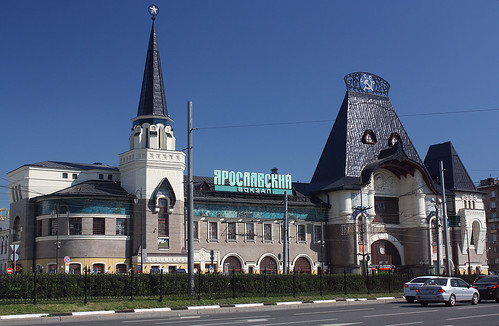
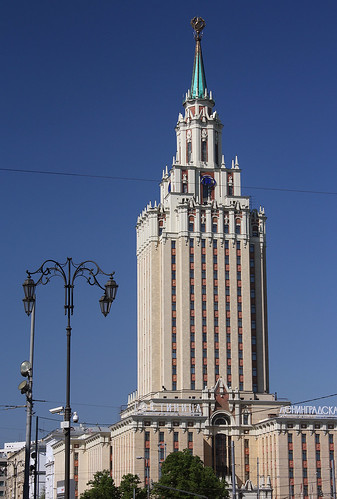
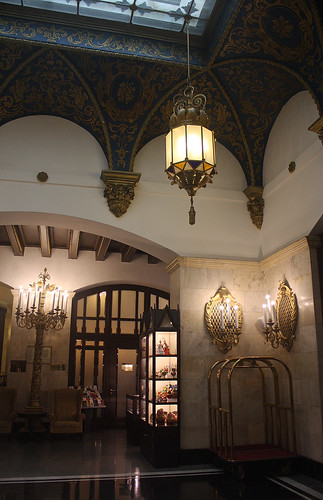
The Hilton is an excellent choice for an overnight stay in Moscow, especially if one is planning to depart on the Rossiya the following morning. Three of the city’s nine rail terminals lie within earshot of the hotel, including Yaroslavskiy Vokzal, the starting point for the worlds longest train journey.
Not only is it’s location on Komsomolskaya Square a convenient one, but the Leningradskaya Hotel (it’s original name) is a landmark building, one of Moscow’s “Seven Sisters”, a set of Russian Baroque skyscrapers, commissioned during the Stalinist era. The structure itself is grand and imposing; it’s lobby nothing short of opulent, and the rooms, stately. It is in one of them that SK and I meet, traveling companions on what is bound to be a journey of epic proportions.
Bolivian wanderings, and a slice of Peru
First and foremost, a special shout out to Yesmy and Roxanna, the two amazing women working the reservations desk at the Amaszonas office in Uyuni. Without their efforts, a lot of what I am about to share would never have been possible. The guardian angels of Uyuni, as I like to refer to them, I will forever be grateful.
El Alto landings
The runway at El Alto is almost 4-Km long! Not for nothing though – at that altitude, aircraft land at twice their sea level velocity and need every foot of tarmac available to them. At 13,225 ft, El Alto is also the highest international airport in the world, and a gateway to La Paz, the world’s highest capital city.
La Paz itself sits in a bowl surrounded by the Cordillera Real, a branch of the Bolivian Andes, flanked on its south by the imposing snow-capped peak of Illimani (at 21,122 ft., the highest mountain in the range) and the equally impressive Illampu, to its north. El Alto lies on a plateau some thousand feet higher than the capital, and the drive down from there to La Paz offers some rather dramatic views.
Frietag in Hamburg
Berlin Hauptbahnhof, that awe-inspiring steel and glass behemoth, is incredibly quiet for 7:45 on a Friday morning. We are on platform 7, some 3 levels below the main entrance, awaiting train 794, one of many Inter City Express or ICE trains that ply the German rails everyday. Part of an extensive high-speed network, the ICEs are some of the fastest in the world, and obviously, I’m excited at the prospect of traveling on one!
Our train to Hamburg is late though – not something one would expect from the über efficient Germans! Thankfully, its not particularly crowded, so we do get our choice of seats, and after a quick stop at a Berlin suburb, we are on our way, leaving behind the North German countryside in a blur…
Chicago to Seattle, the slow way
1:45 pm – Great Hall, Chicago Union
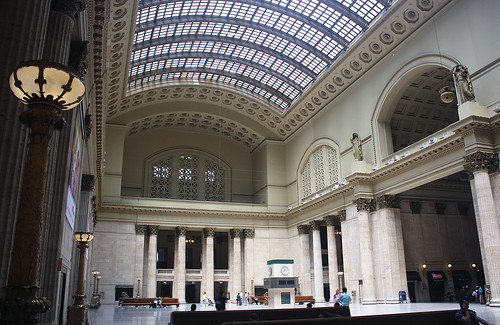
Back in the day, the Pennsy and the New York Central offered through Pullman service from coast to coast. But that was then – the golden era of rail travel. Today, pretty much any rail journey from one coast of the United States to the other, requires a change of train at Chicago’s Union Station. The impressive Beaux-Arts building dates from 1925, and although it has been expanded considerably since, one would be remiss not paying a visit to its magnificent Great Hall. Flanked by two grand staircases – one of which was the setting for the most memorable scene in The Untouchables – the sweeping marble-floored atrium, topped off by a vaulted skylight, continues to provide a befitting gateway to any transcontinental journey.
The station still operates an exclusive lounge for sleeper class passengers, and it is here that the four of us convene, from different corners of the country, to embark on a 2,206-mile (3,550-km) journey to Seattle, aboard the Empire Builder.
Ay, Chihuahua!
Rush hour, Mexico City
Securing a gate at Benito Juárez International is almost as difficult as finding a perch for your feet during rush hour in Mexico City – and the rush starts early, very early! The Metro system is thoroughly efficient though – trains arrive every couple of minutes – and at 2 pesos a ride, it is also one of the cheapest in the world! The airport is located just 5-km east of the city centre, and so even on a short layover, it is perfectly feasible to make a trip downtown – one that’s bound to whet the appetite and make you want to come back for more.
Mexico City, as we know it today, was built by the Spanish on the ruins of Tenochtitlan, the capital of the Aztec Empire. As it was in Aztec times, the city is centred upon Zócalo, the sprawling main square, Latin America’s largest! The Metropolitan Cathedral, a stunning baroque structure, defines the square’s northern boundary. To the east sits Palacio Nacional, which, due to an ongoing protest, has been closed to the public since May! Two near-identical Federal District buildings make up the southern periphery, and to the west are a series of neocolonial commercial buildings. In the centre of it all, a larger than life national flag flutters in the wind. With the first few rays of sunlight piercing through, Zócalo is a sight to behold!
Located just west of Zócalo, the Art Nouveau lobby of Gran Hotel de la Ciudad de Mexico is absolutely stunning, and worth a detour from the main square. Formerly a department store, and presently a hotel, it was featured in the film “Frida”. Their rooftop restaurant doesn’t open till lunch, unfortunately, so if you’re looking for an al fresco experience, you have to make do with the nearby Holiday Inn. Thankfully, the price for a buffet there is a steal, and the views irresistible. The breakfast, as it turned out, wasn’t too shabby either!
Andean High
Lest we forget Lima
A low haze hangs over the city, as you near touchdown at Jorge Chávez International Airport. Outside, the air is somewhat putrid and the eyes tend to smart. Traffic crawls along wide arteries and its not even 7 in the morning! You begin to question your very decision to stop over in Lima. But unlike countless others who skip it, in their rush to get to the Sacred Valley, you have in fact made the right choice! Lima’s worth more than just a second look – all it takes is one sunny day to lift the veil of smog, and a little bit of perseverance.
If the city’s new and hyper-efficient Bus Rapid Transit (BRT) system, and its up-and-coming Metro are anything to go by, the city has a lot to look forward to. Looking back, however, the city’s own past is securely preserved within Centro Historico, Lima’s landmarked historic quarter. A walk along Jirón de la Unión, from Plaza San Martin to Plaza de Armas, is an eye-opener, and a lesson to any civil servant on the preservation and upkeep of historic zones in large cities.
Public squares – no matter their size or importance – are spotlessly clean; lawns are beautifully tended, and pedestrian-friendly streets abound. The historic district is brimful with well-kept heritage buildings, some dating from the 16th-century, in styles ranging from Baroque to Neo-classical, and materials running the gamut from adobe to brick. In between, a myriad of colonial-era carved wooden balconies – no less than 1600 of them – makes up for the lull, if ever there was one…