
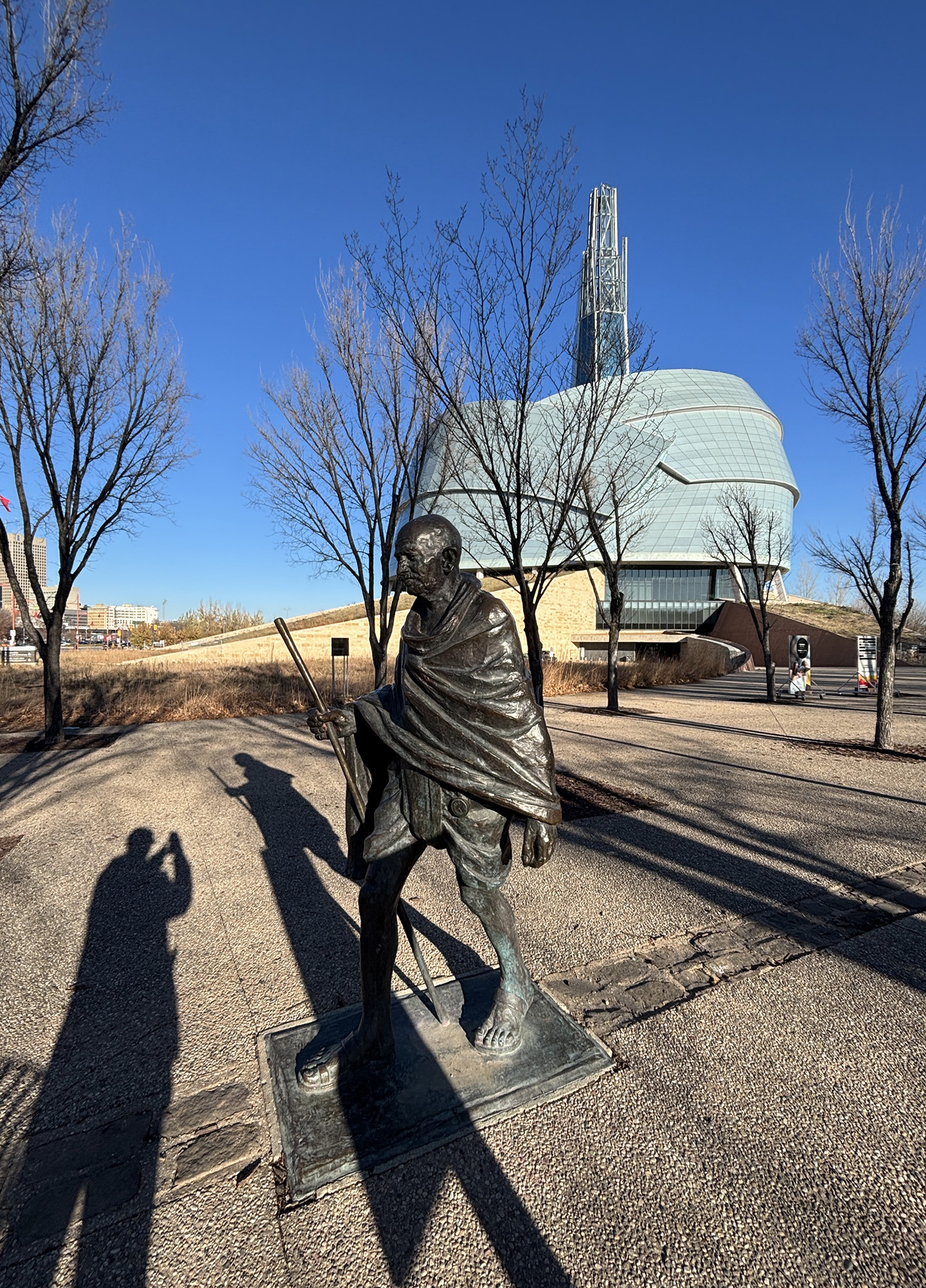
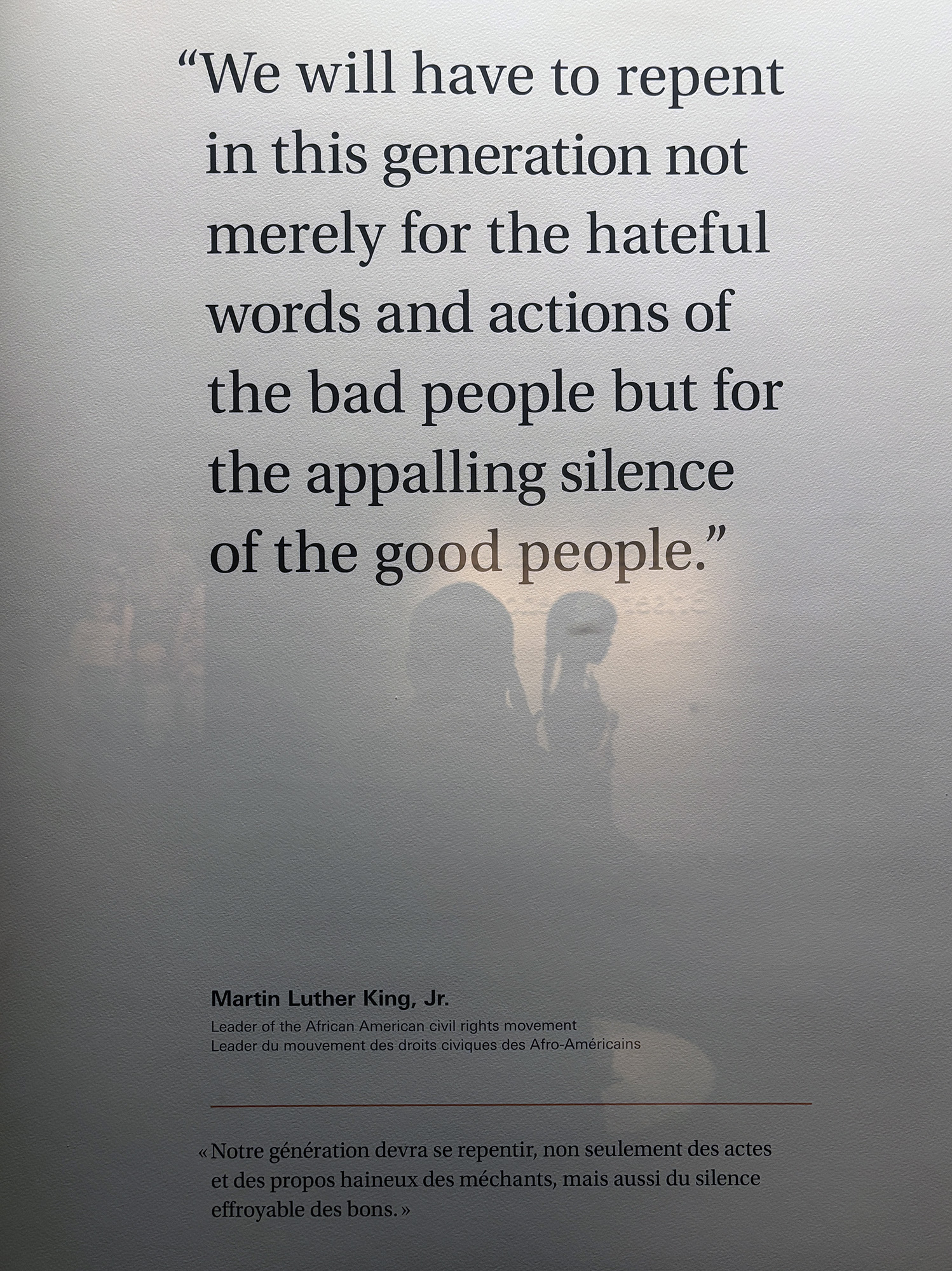
Up there amongst my most moving experiences to date, the Canadian Museum for Human Rights is one not to be missed. Now more than ever before, given the ghastly times we live in. It does require a visit though to little-known Winnipeg – admittedly, a city that’s not on anyone’s radar or route. But having been there on three occasions now, I can assure you – the city of less than a million punches a lot higher than its weight class.
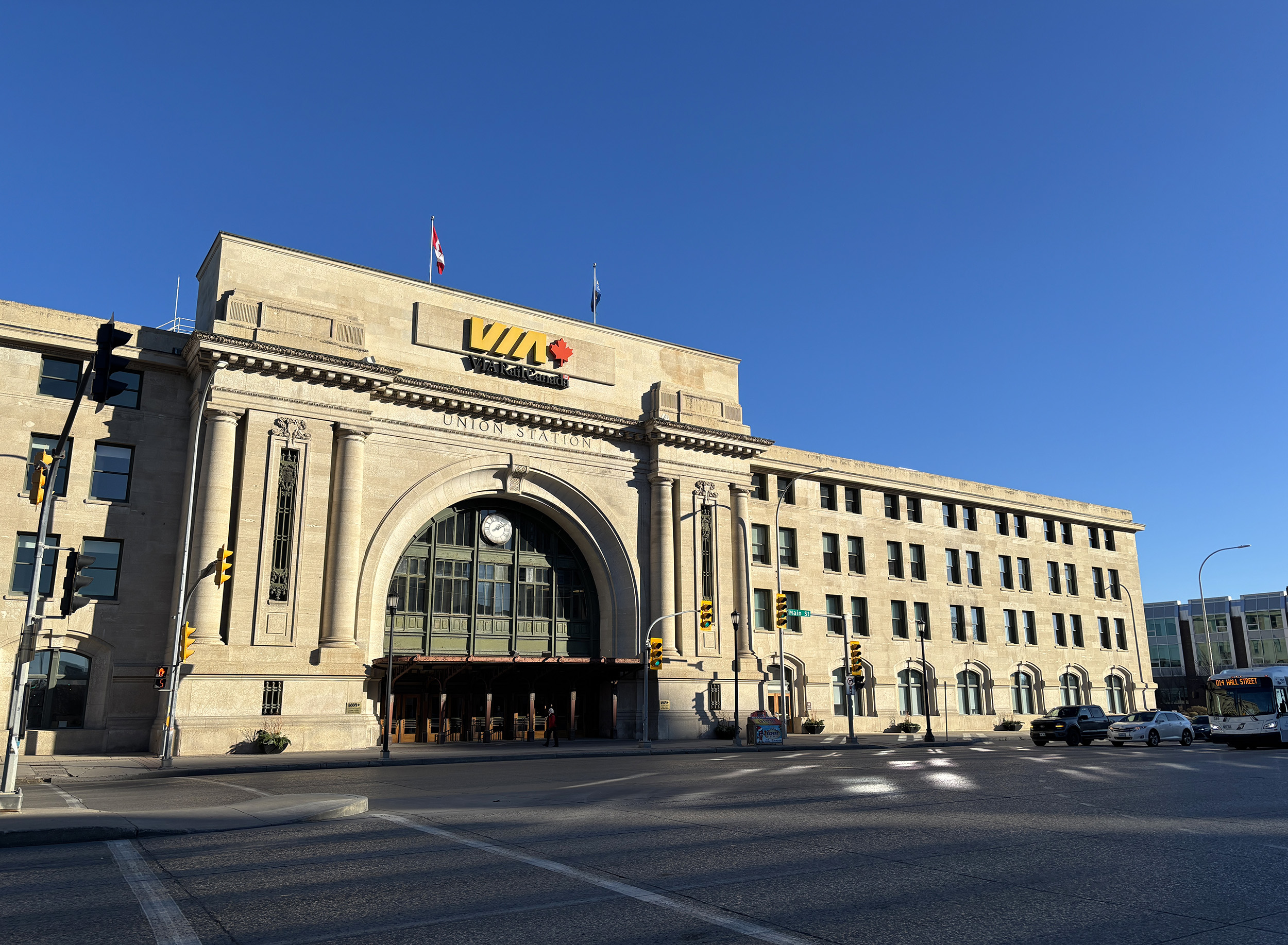
Back in 2017, while traveling across Canada by train, we had a 4-hour halt at Winnipeg, and I took advantage of a tour originating right outside the station to explore the city a bit. The museum’s distinct architecture – symbolic of a dove – had caught my eye then, and finding myself in Winnipeg once more – some eight years later – I made it my first order of business. But there’s more to the city than just that museum. The capital and largest city of the province of Manitoba, Winnipeg is strategically located, historically relevant, rich with indigenous culture, and home to a young and diverse population. It boasts some grand architecture, excellent parks and riverwalks, a solid food scene (some of the best Filipino cuisine I’ve had), and an impressive bus system to get you around. The city left such a good impression on this second and longer visit of mine, I was already looking forward to being back there in a matter of days.
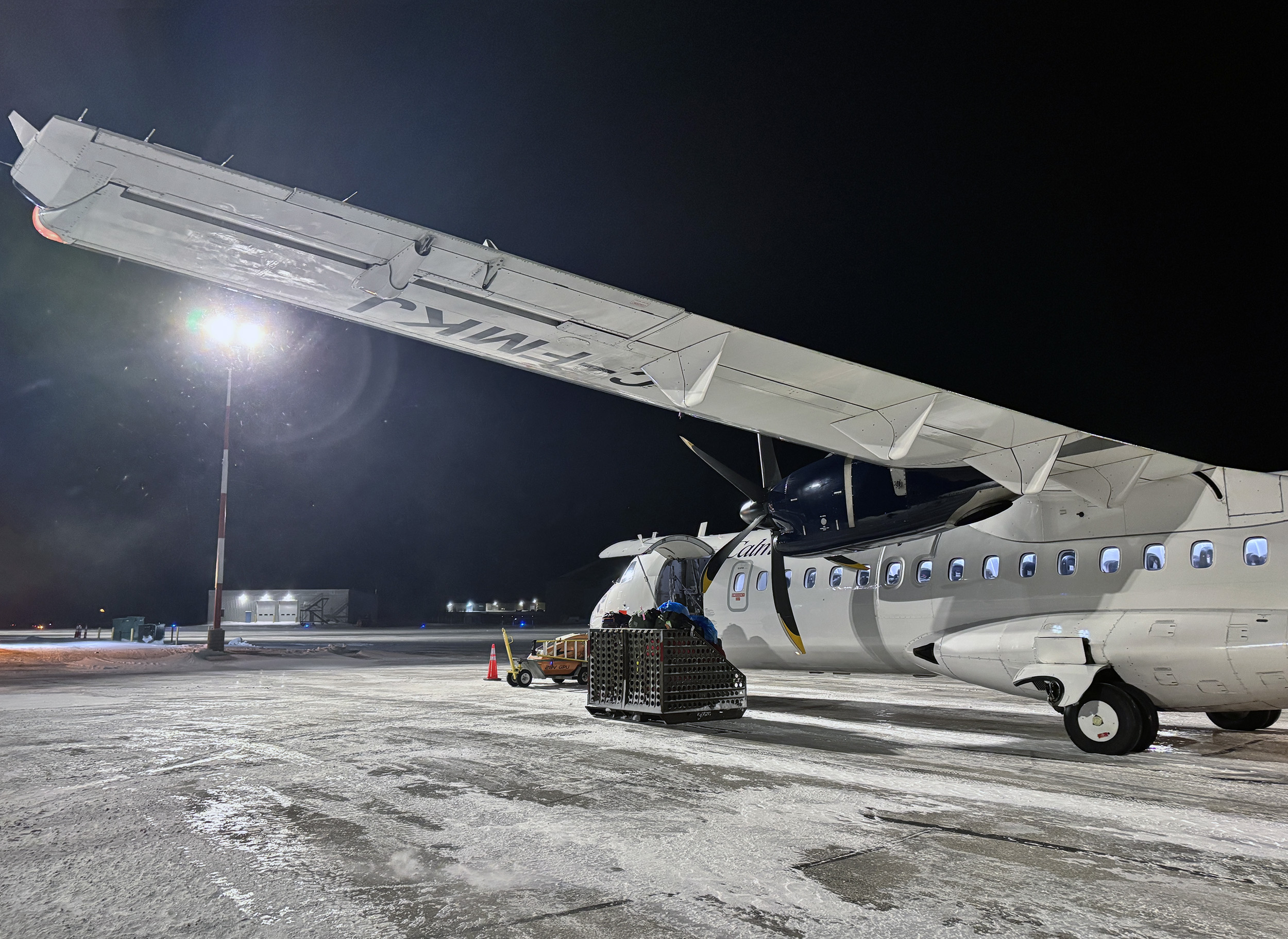
Churchill, the “Polar Bear Capital of the World”, sits at the northern tip of Manitoba, and the only reasonable way to get there is via Winnipeg. Calm Air is the sole operator between that pair of cities, as it is for much of the neighboring territory of Nunavut, and with only three flights a week, my entire itinerary depended on them. Transport Canada doesn’t take kindly to any kind of photography on the tarmac, but touching down in the icy airfield at Churchill was far too momentous for me to pass on. The chiding that followed was rendered in the most polite manner possible, as only the Canadians can pull off. The terminal at Churchill airport was a one-hall affair, and a large group of travelers waited in its warm confines, donning bright matching jackets – clearly part of a charter. I stepped outside rather confidently to look for the taxi rank, but there was none. Like Calm Air, there was just the lone operator in town, who had a single vehicle to his credit. I retreated back into the terminal and waited.
I was staying at the Blueberry Inn, a venue that included breakfast but had no restaurant on site. That meant, for the duration I was in Churchill, I would get to patronize practically every eatery there was in that one-horse town. An exciting prospect, at first, except that walking anywhere – especially at night – no matter the distance, was a potential hazard. Rangers had already gone by the inn twice, firing off shots along Churchill’s main drag, to drive bears back towards the bay. The unwritten rule in Churchill, I was informed, was that all vehicles and homes should remain unlocked – to offer refuge to anyone that’s in danger from an astray polar bear! And with that bit of information, and my fingers and toes firmly crossed, I set off towards the closest spot for dinner, the aptly-named, Lazy Bear Cafe.
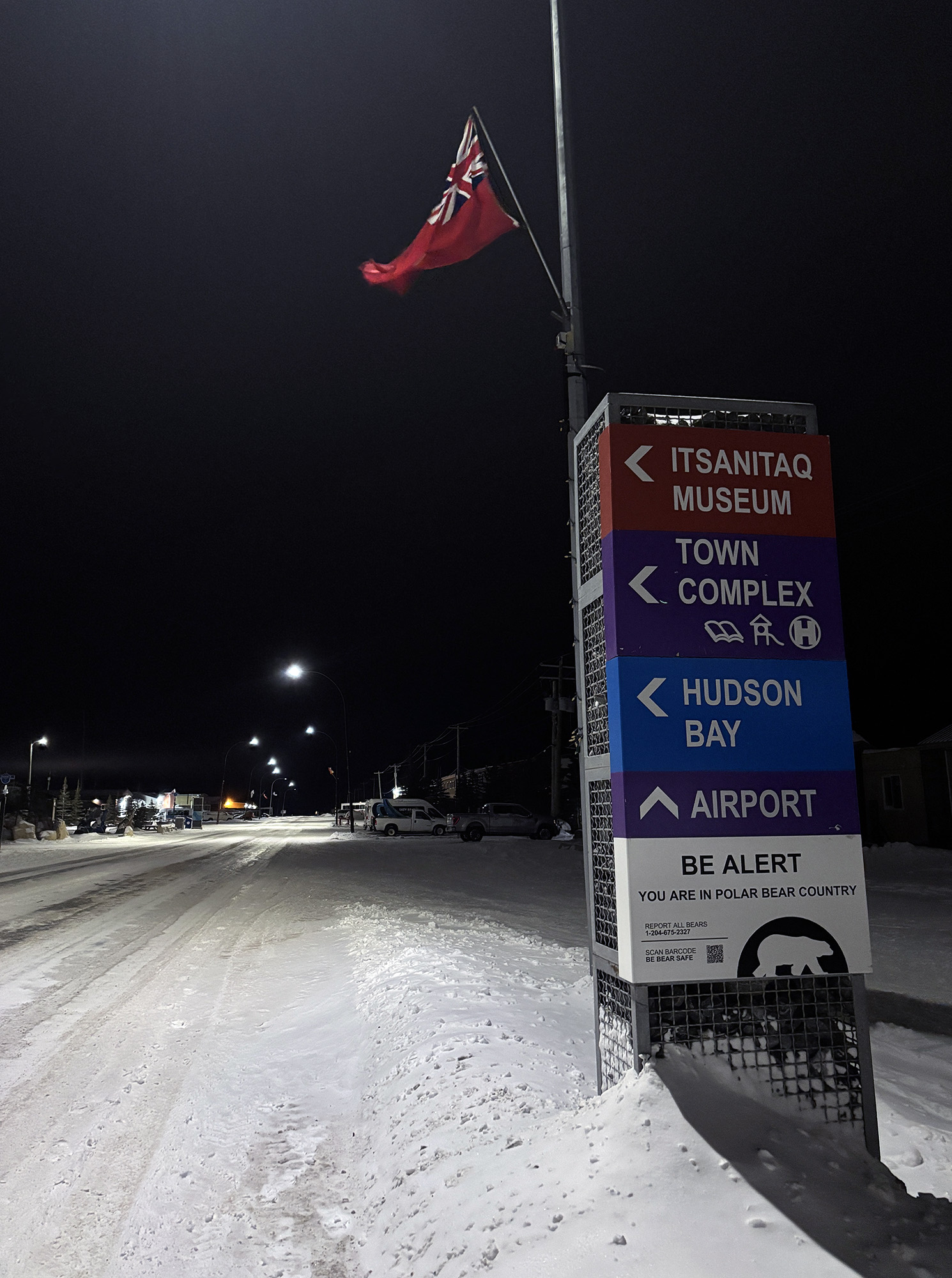
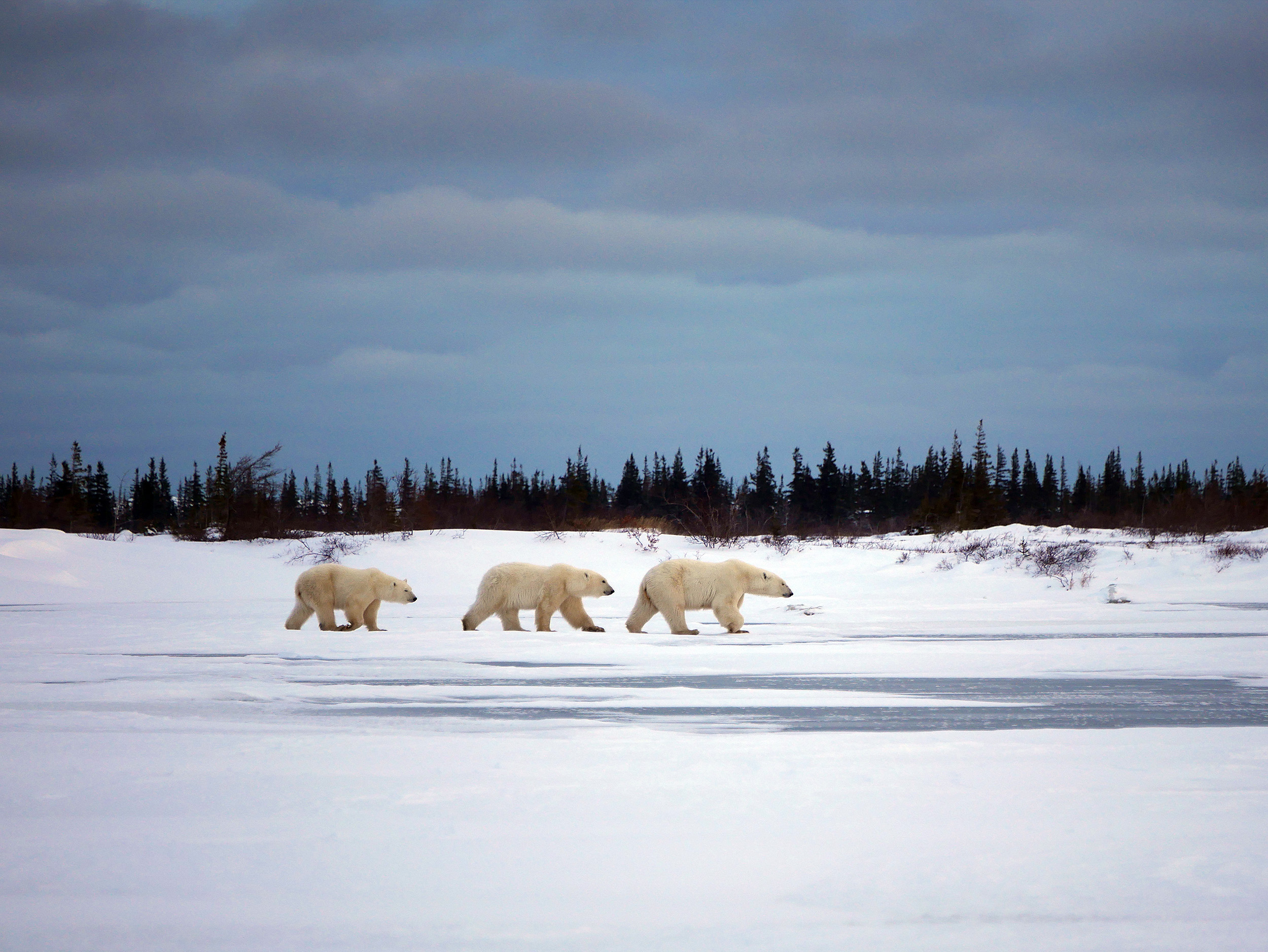
Named after one John Churchill, the third governor of the Hudson’s Bay Company, the subarctic hamlet of Churchill is located on the 58th parallel north, at the point at which its namesake river meets Hudson Bay. We were at Cape Merry, the very tip of that peninsula, having driven past Churchill’s marine observatory, the humongous grain silos at its port, and a garage full of tundra buggies. Our group of six, all bundled into a 4×4 van, had been picked up turn by turn after breakfast, for what would be an 8-hour outing in the wild. Retracing our steps east but skirting the north side of the settlement this time, we made our way into open country. A full hour had passed. It was cold and gloomy, and barring the “sights” of Churchill, we’d seen nothing. Finally, at 0920 local time, we spotted our first polar bear. One initially, and to our delight, her two cubs not far behind.
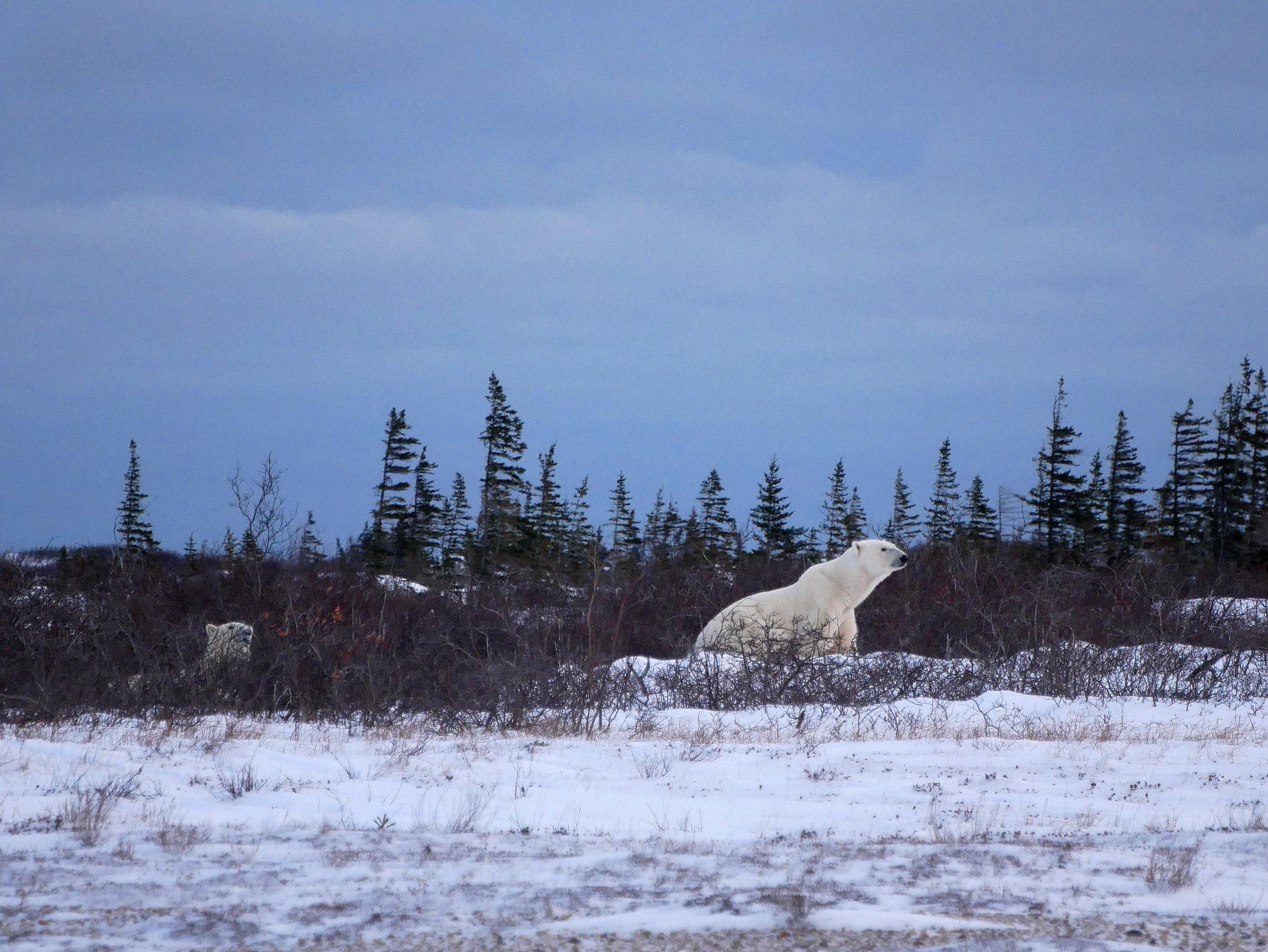
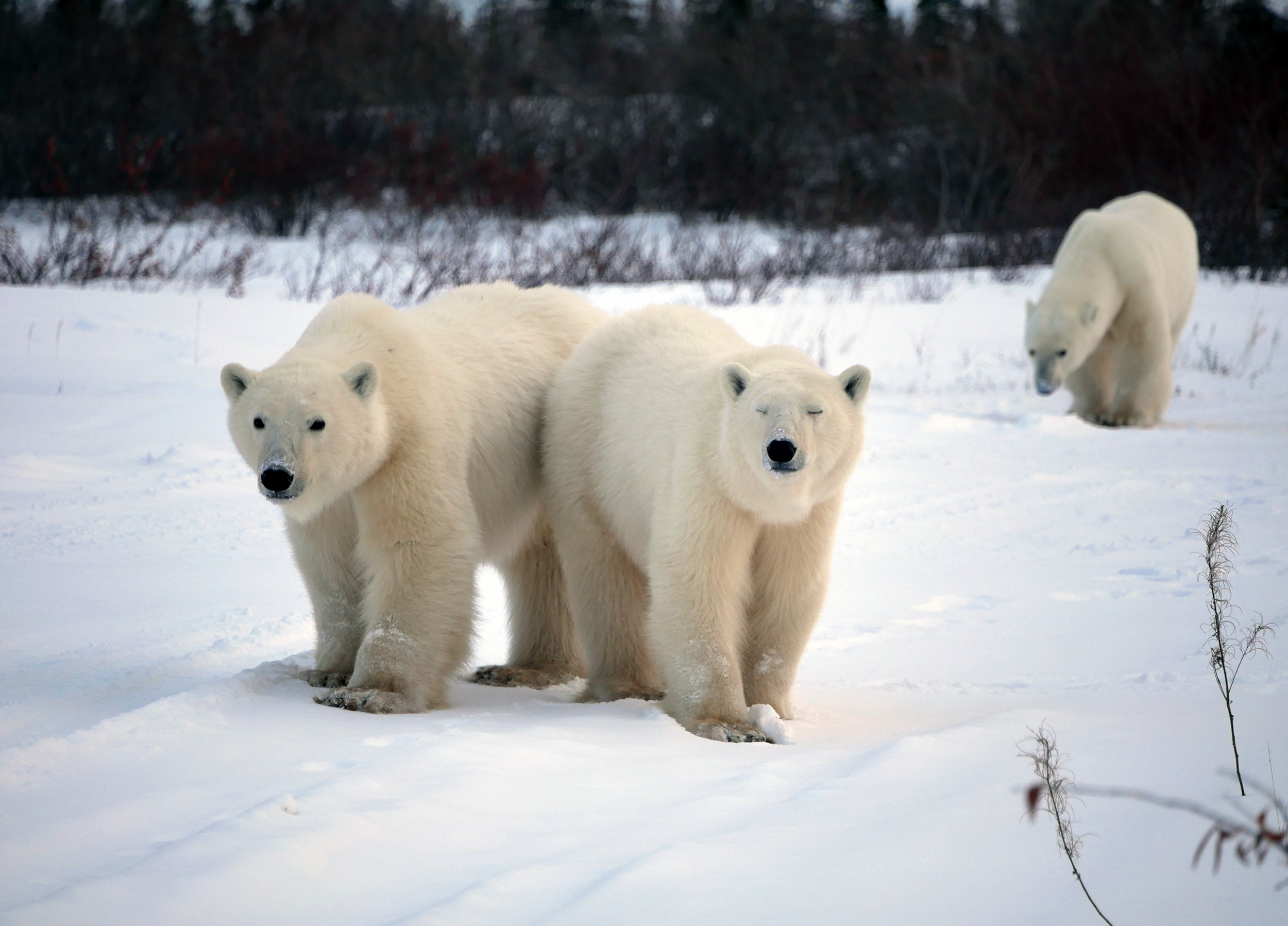
From a distance, the trio gave our group a proper once over, then proceeded to walk across a frozen lake. We followed along in the van, catching up to them on the other side of the waterbody. The bears were out foraging for anything they could find, having been forced inland, as they waited for the sea ice to form. As our paths crossed with them again, the female cub seemed most intrigued, eventually making her way toward us, along with her brother. Their mother, thankfully, stayed back. Our guide, meanwhile, put himself between the advancing cubs and our group – we’d been outside the van all this while – and managed to talk them into turning around. Back in the van, as we gradually thawed out, the realization dawned. We’d just gotten incredibly close to these magnificent creatures, and had it not been for our very able guide, things could’ve easily gotten out of hand.
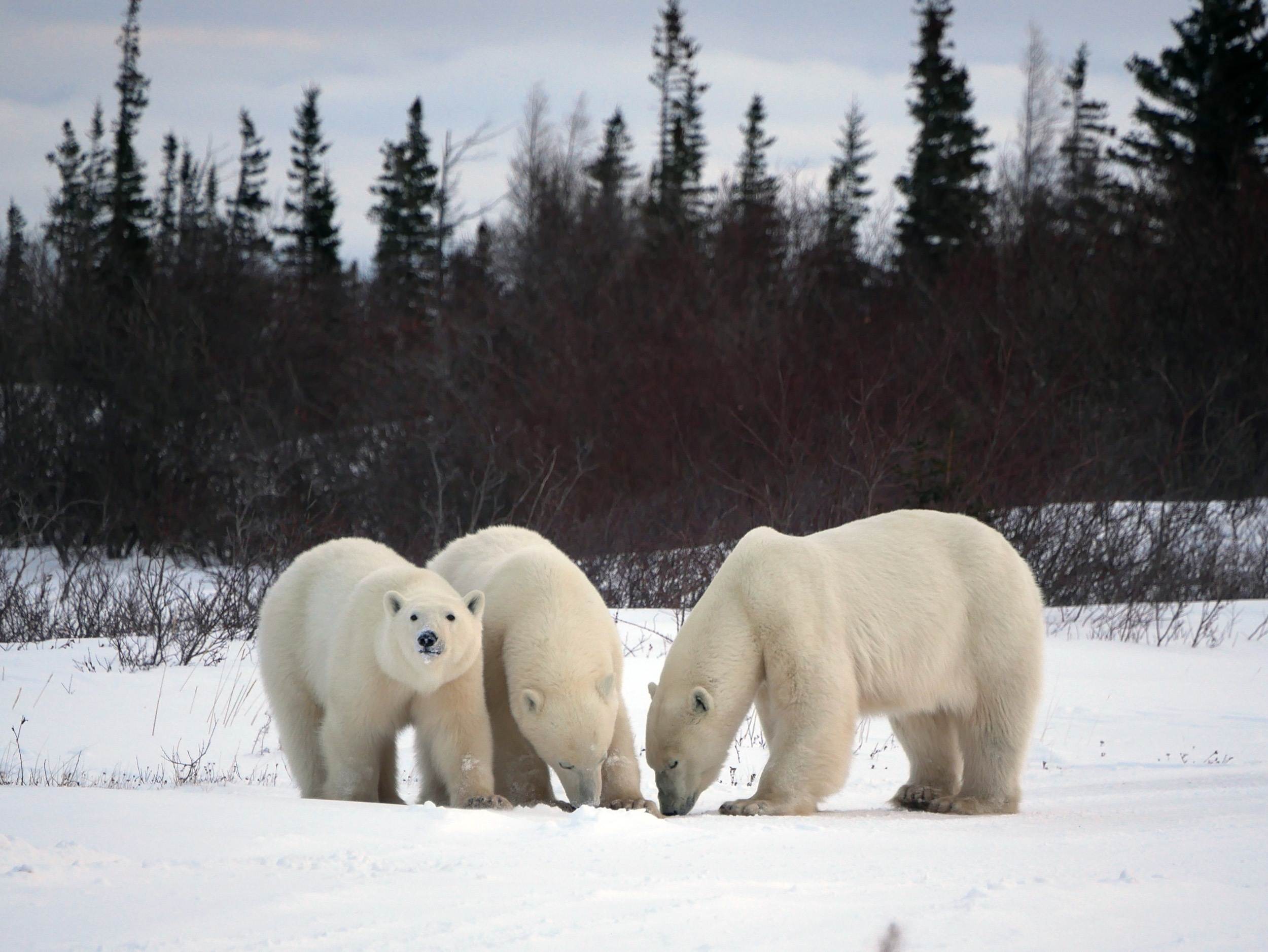
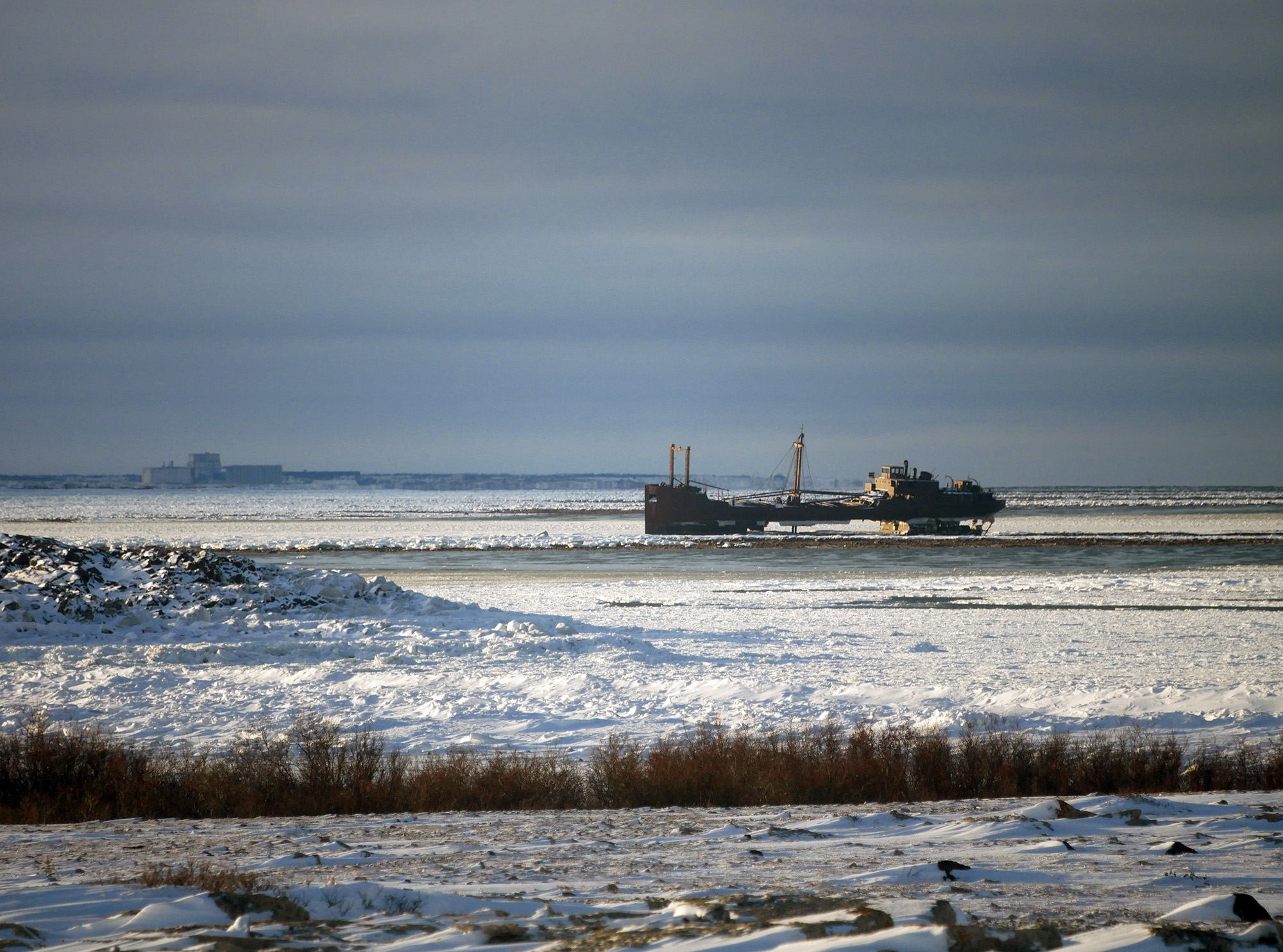
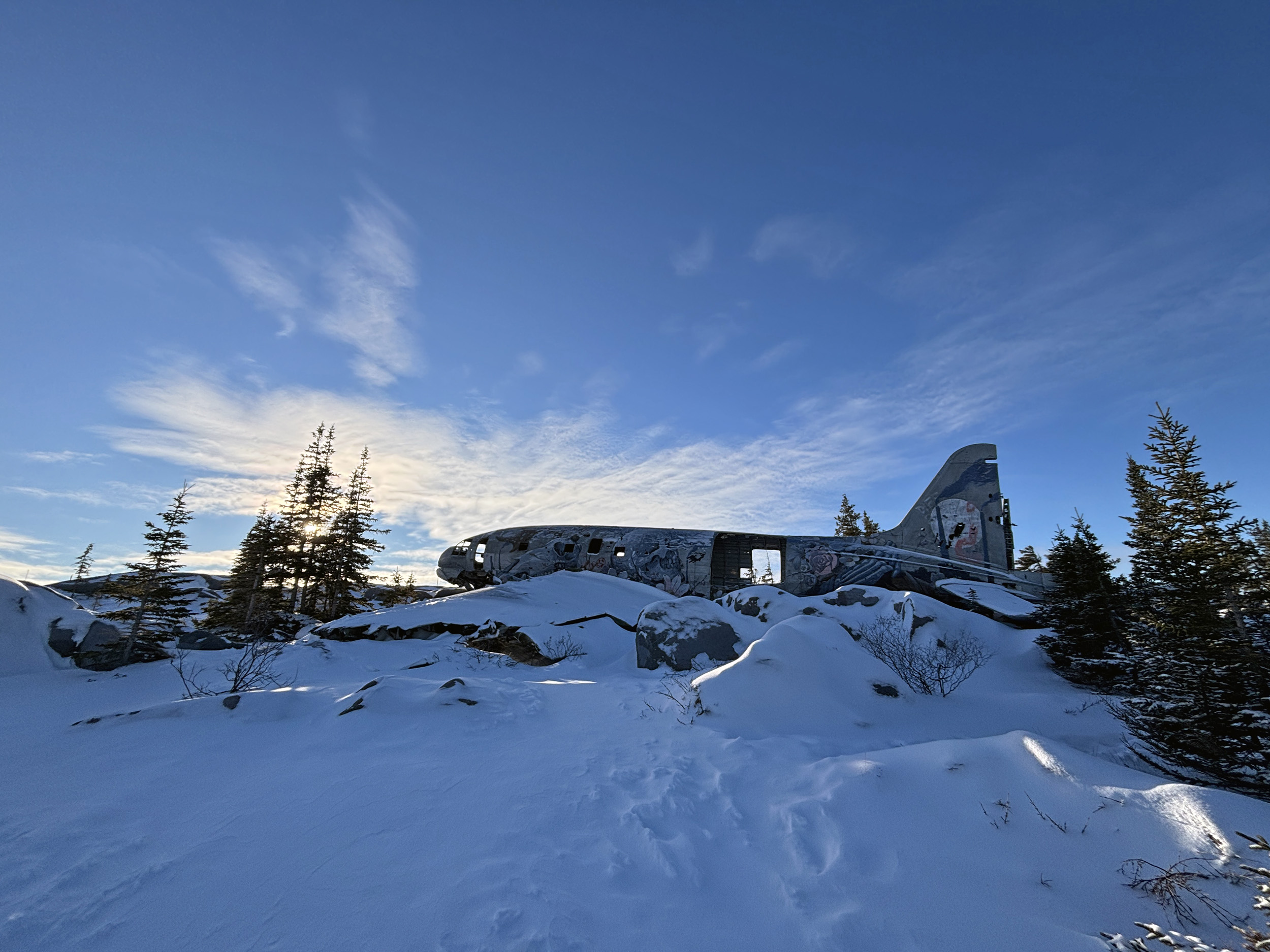
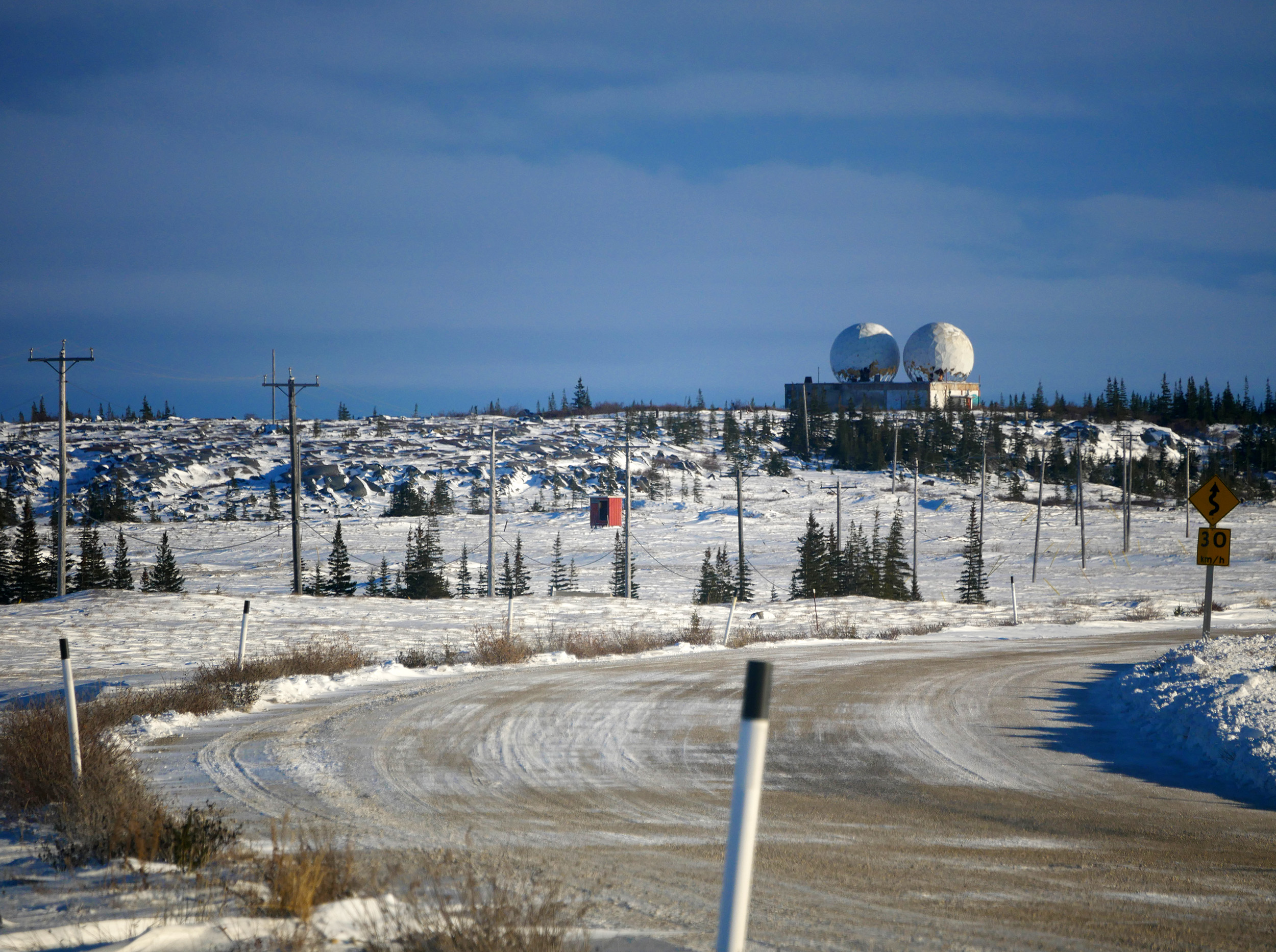
Every October and November, in anticipation of the sea ice forming, polar bears congregate by the hundreds in and around Churchill, making it one of the best places in the world to spot them. In the summer months, people flock to Churchill to view beluga whales, of which Hudson Bay boasts the world’s largest population. And given its location in the far north, Churchill is undoubtedly a great venue to observe the Northern Lights. For a while now, Churchill has been a coveted destination for wilderness and wildlife enthusiasts, but that wasn’t always the case. Its envious geography in the subarctic made it a magnet for military installations of all kinds; an air force base, a naval radio station, and at the peak of the Cold War-era, a joint US-Canadian rocket research station. Remnants are everywhere. Throw in the wreckage of a ship, and that of a plane, and the tundra scape around Churchill takes on a surreal quality. The little town, it seems, has seen it all.
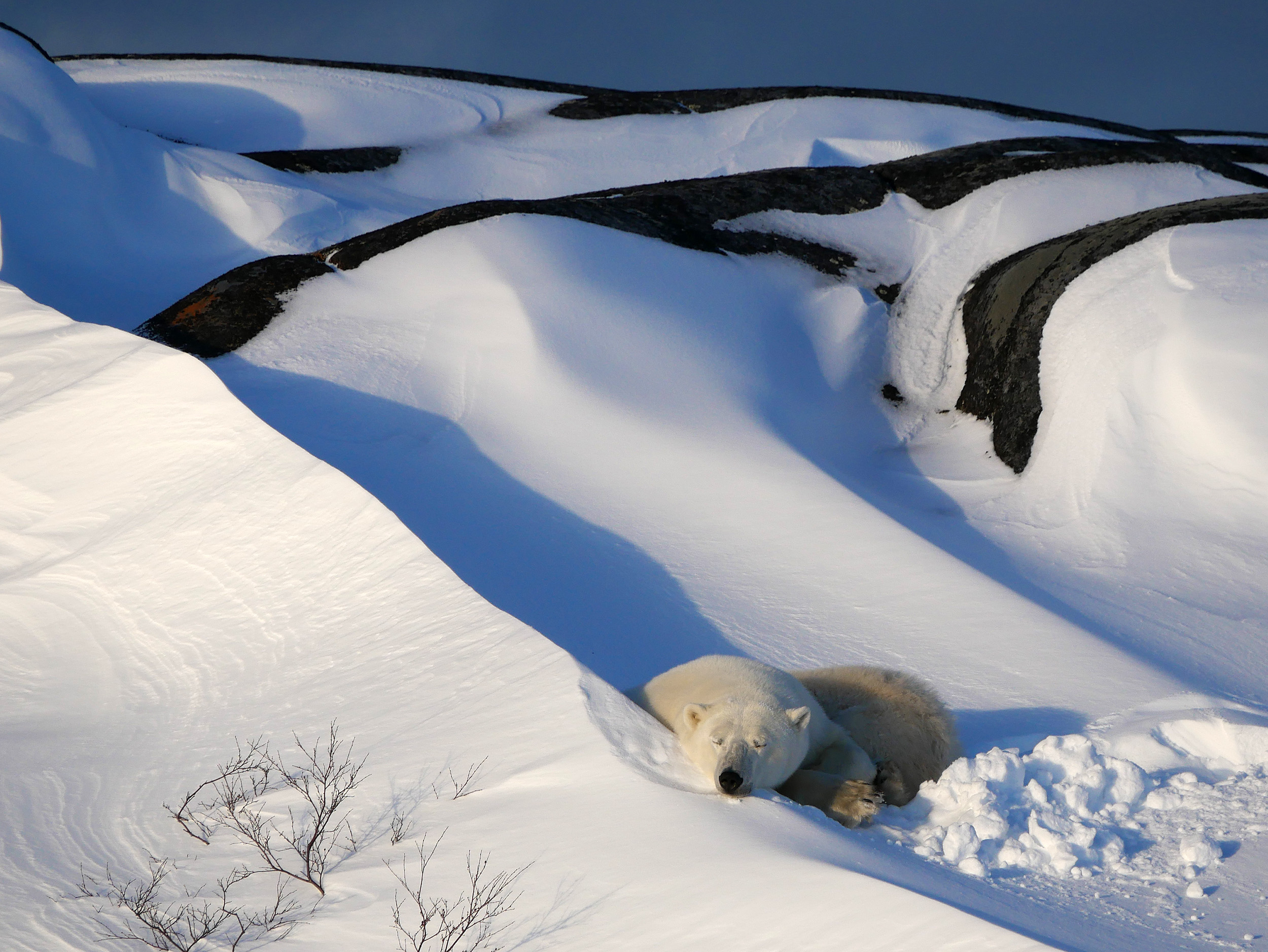
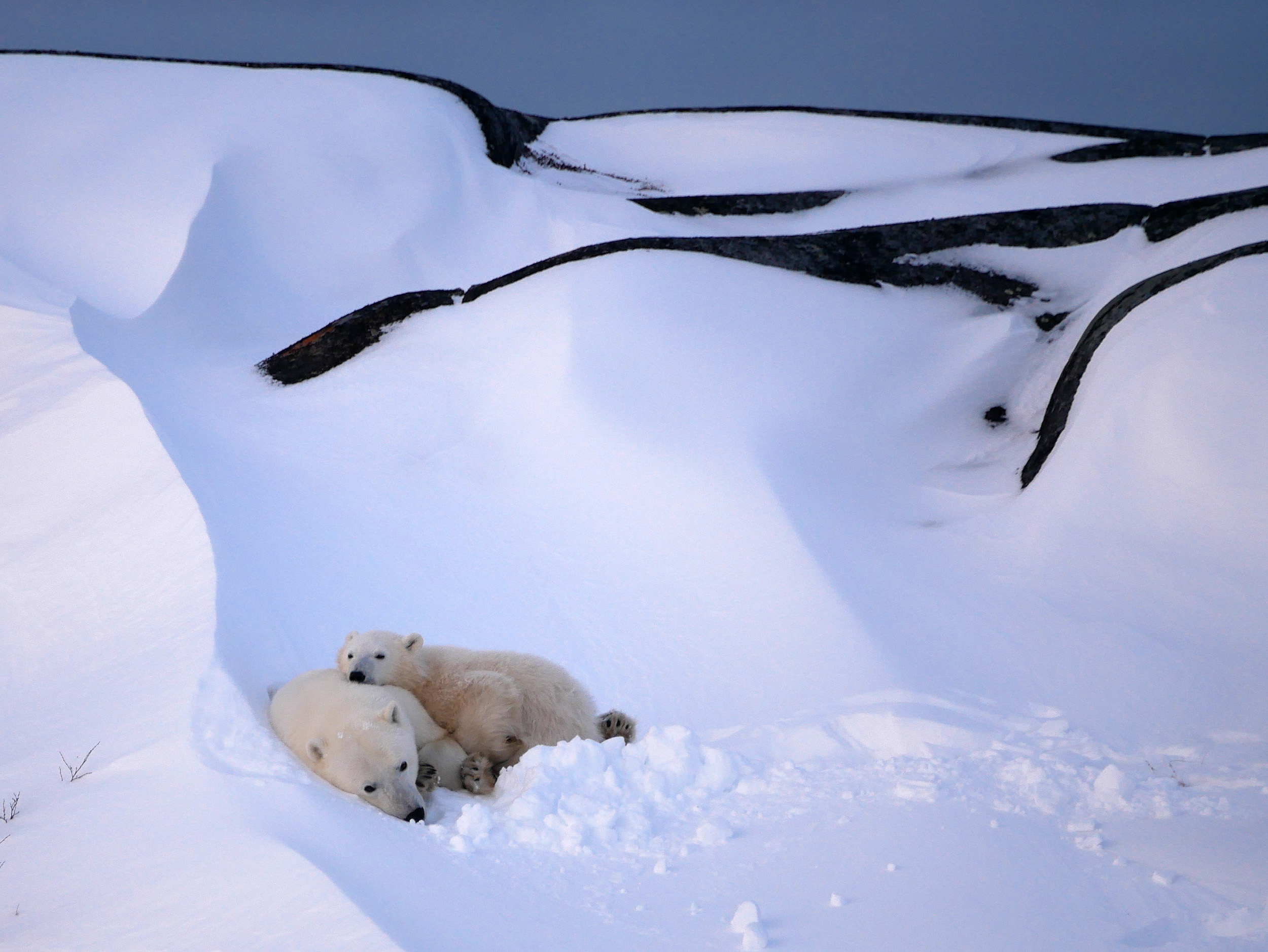
Polar bears are sexually dimorphic, with the adult females being considerably smaller in size than adult males. With every new sighting though, we grew no wiser, just more excited. The solitary ones made for a striking sight as they stalked the tundra, and we invariably took them to be males. Anytime there were cubs involved, an adult female had to be accompanying them. What had started off as a gloomy morning turned into a brilliantly clear day, with ample sunshine and miles of visibility. But by 245 local time, the sun was already getting low, and not entirely satiated with the nine bears we had sighted already, we were hoping for a couple more. A row of tour vans was an instant giveaway to what lay ahead. We joined a battery of photographers – with far more serious-looking gear than ours – to find an adult female basking in the evening light, making good use of the snow drift to rest her head. She adjusted her position, revealing a cub snoozing beside her! Polar bears sleep close to eight hours a day on average, utilizing various positions, and we patiently watched as the duo did just that – every curl up more endearing than the last. We could’ve hardly scripted a better finale.
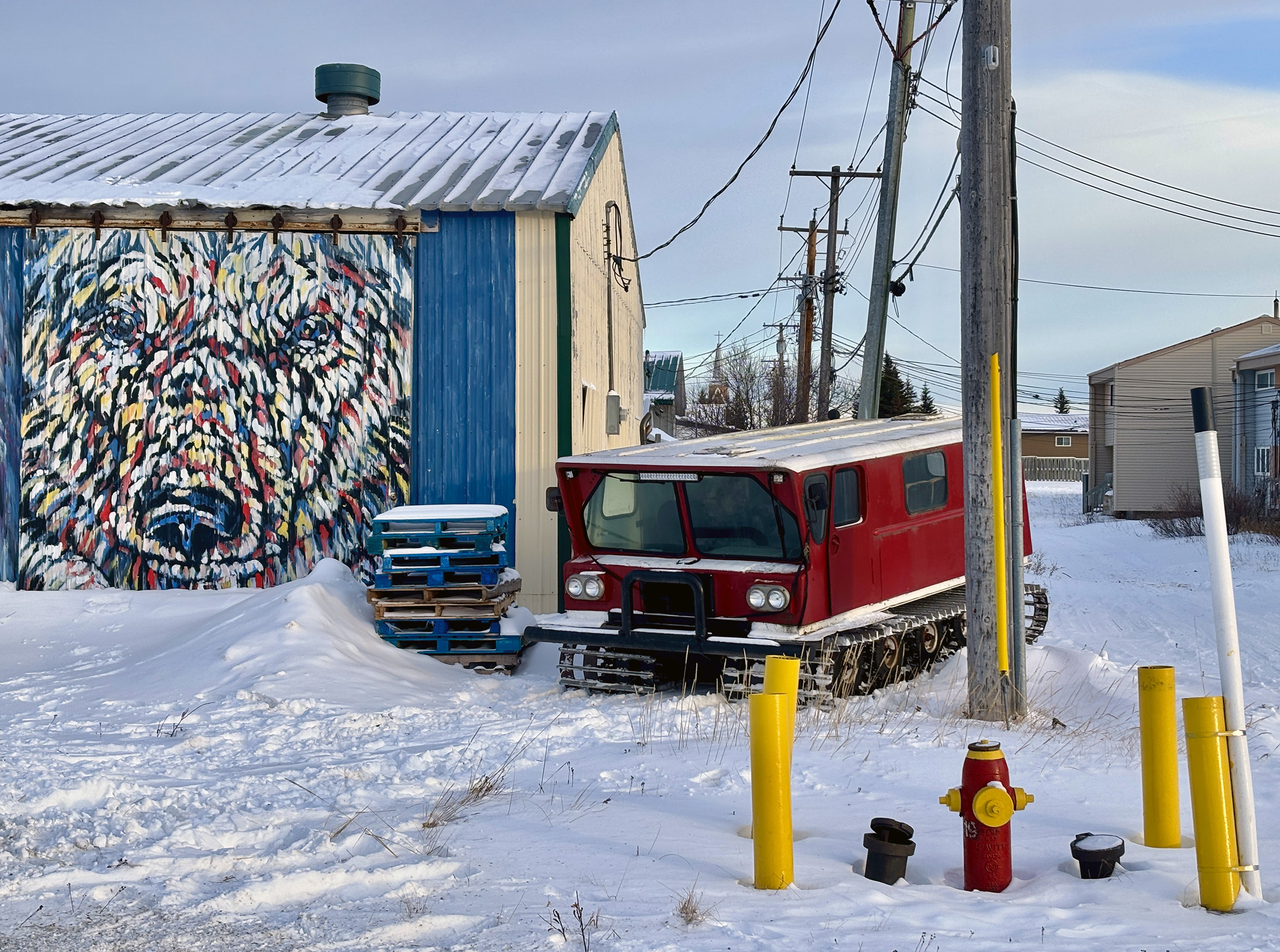
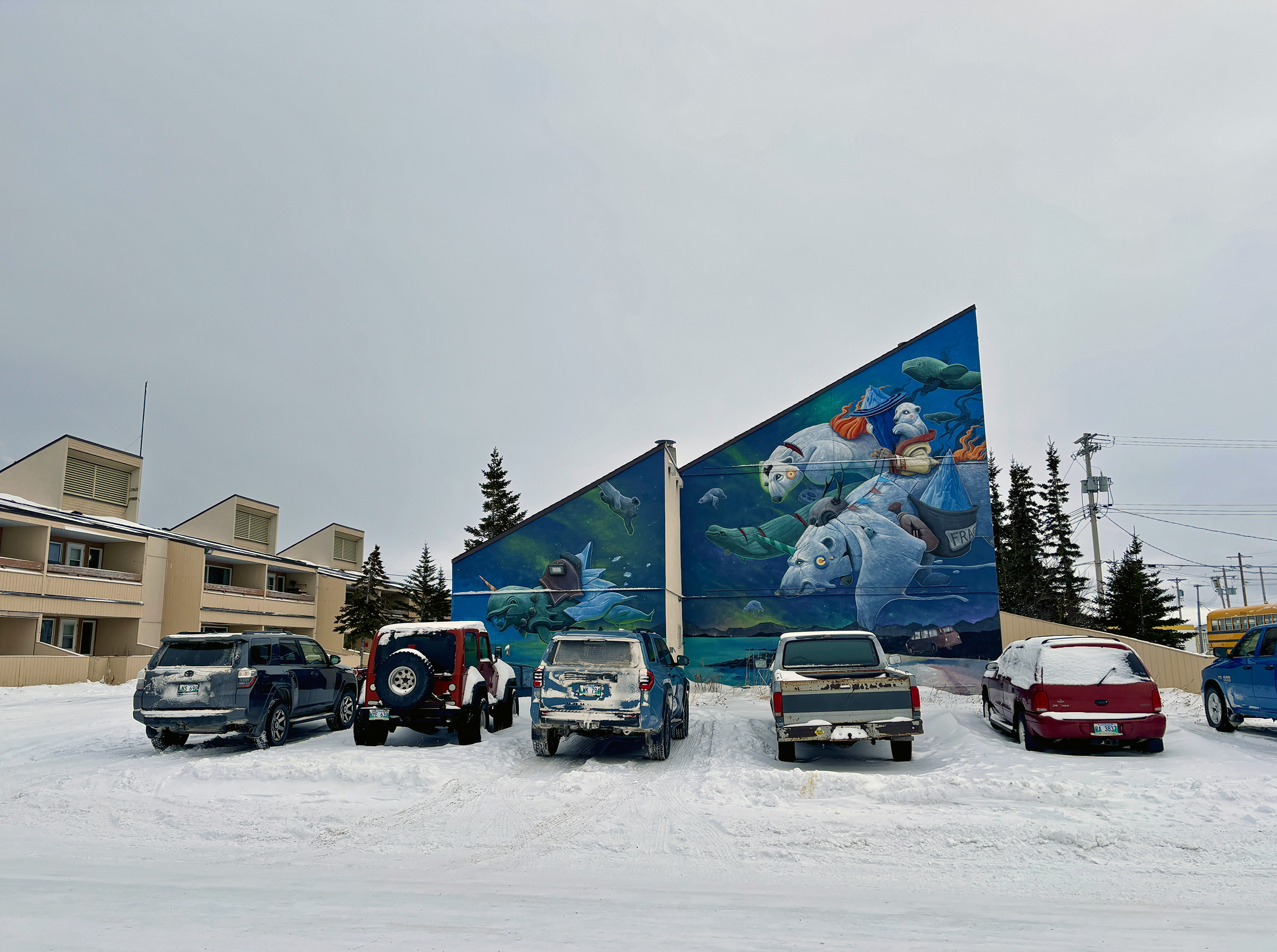
My train back to Winnipeg wasn’t until the following evening, so I had all of that day to “explore” Churchill. If you’re on foot though, like I was, your options are somewhat limited, given that several areas are out of bounds due to the likely presence of polar bears. What’s left then is a handful of large-scale murals to look at around town, a small museum (free to visit) dedicated to Inuit culture, and the Parks Canada visitor center, located within Churchill station. I started my day at the last of those and got chatting with the young ranger stationed there.
This was the last weekend of their tourism season, he told me; one that keeps getting pushed out every year. It should’ve been a lot colder this time of year, he continued. The bears should’ve left by now. But the waters of Hudson Bay have been warming a lot faster than the global average, resulting in the sea ice melting earlier, and forming later. The result: human-animal conflict that is increasingly unavoidable. Polar bears, desperate to embark on their hunting season, have been left with no choice but to come into town in search of food. In less than three decades, the Western Hudson Bay polar bear population had fallen by nearly half, he lamented. It was a sobering reminder of the state of our planet today. And as fortunate as I’d been to witness those bears in their natural environment, I couldn’t help but wonder how much longer Churchill could hold on to its tagline.
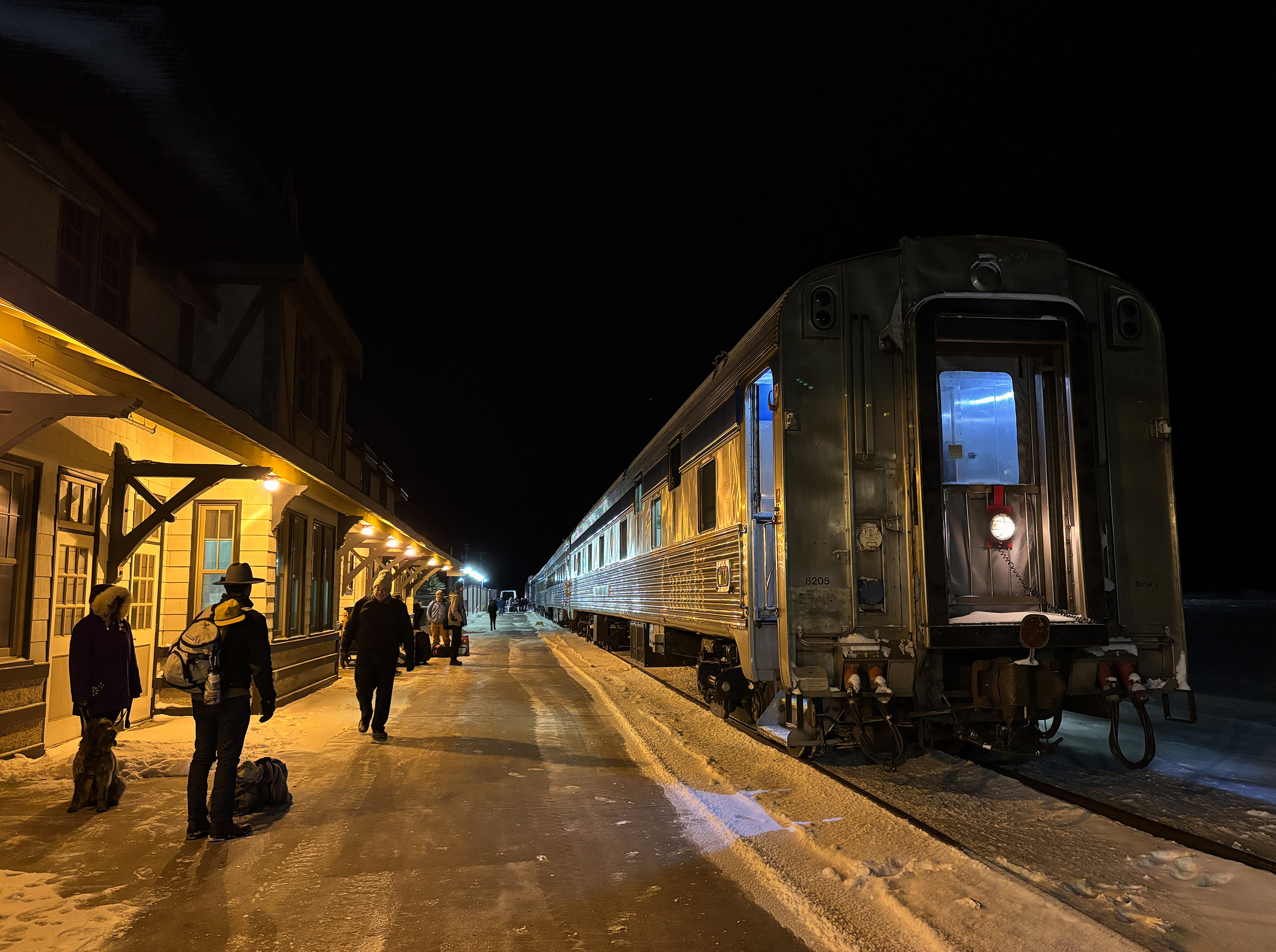
Built to connect the Prairies with the Port of Churchill, and offer an alternate route for the export of grains to Europe, the line to Churchill was completed in 1929 by the Hudson Bay Railway. The northernmost passenger station in Canada, Churchill today is served by three trains a week; a twice-weekly service to Winnipeg, and a weekly service to The Pas (pron. The Pah), providing the only dry-land connection between Churchill and the rest of Canada.
The very last carriage on Train 692‘s short five-car configuration was our sleeping car, comprising berths, private cabins (for 2 and 3 pax), as well as single occupancy cabins. Solomon, our sleeping car attendant, helped me with my bags as I clambered aboard “Château Closse”, and made my way to the front section of the carriage where the sleeper berths were. The dining car was the carriage adjacent to us, and beyond it lay two economy class carriages with seating accommodation. A well patronized baggage car separated the locomotives from the rest of our train. At 2030 local time, we eased out of Churchill depot, to begin our two-night, 1052-mile (1694 km) trudge south to Winnipeg.
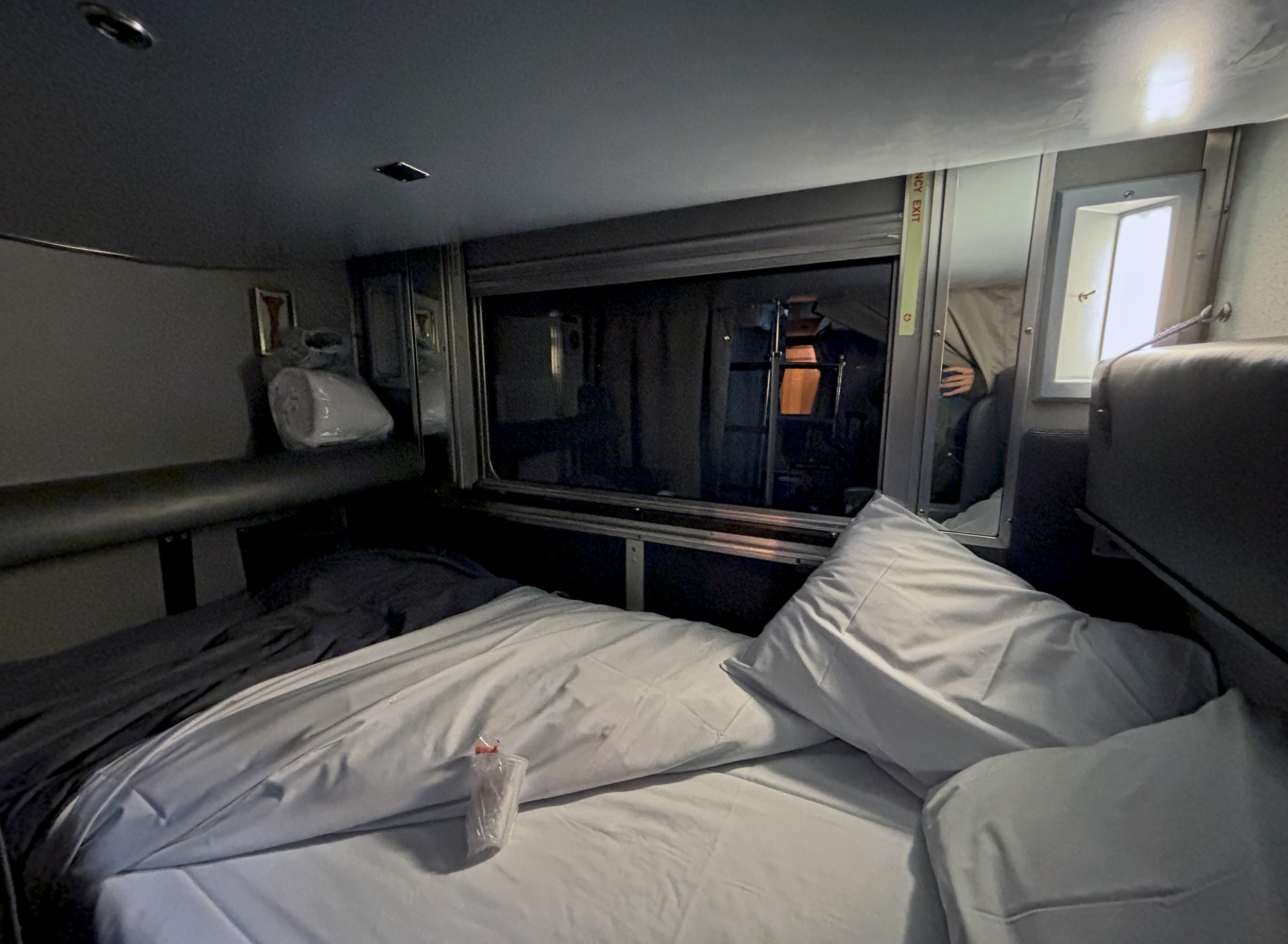
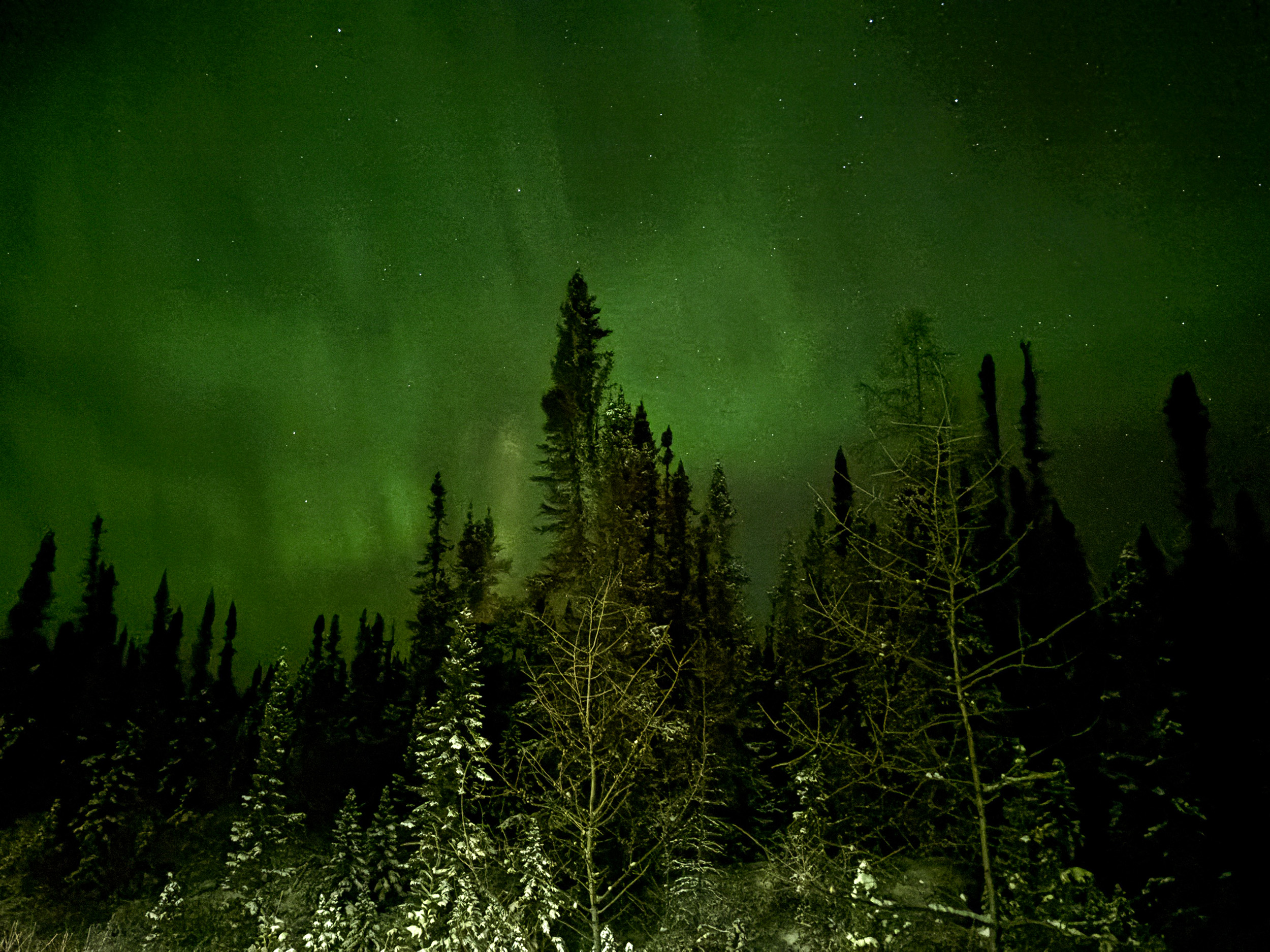
I turned in early that night. With a mattress underneath, and a plush duvet to tuck myself into, my humble sleeper berth was most comfortable, and sleep came easy. My less-than-stellar bladder, however, ensured I was up around 0321 local time. Trying to get snug once more, I looked out of the window and chanced upon a spectacle that would keep me awake for at least a few hours. There they were – the lights that had eluded me in Alaska some years ago, and that I was somehow hoping to see while in Churchill. Till the bay freezes over, the ranger had told me, it remains cloudy over Churchill. If you come back early next year, you’d definitely see them. We were quite a bit inland, of course, and some ways south by now, but I was least expecting to see the Northern Lights, and that too from a train! I could hardly believe my eyes, and I could never thank my bladder enough.
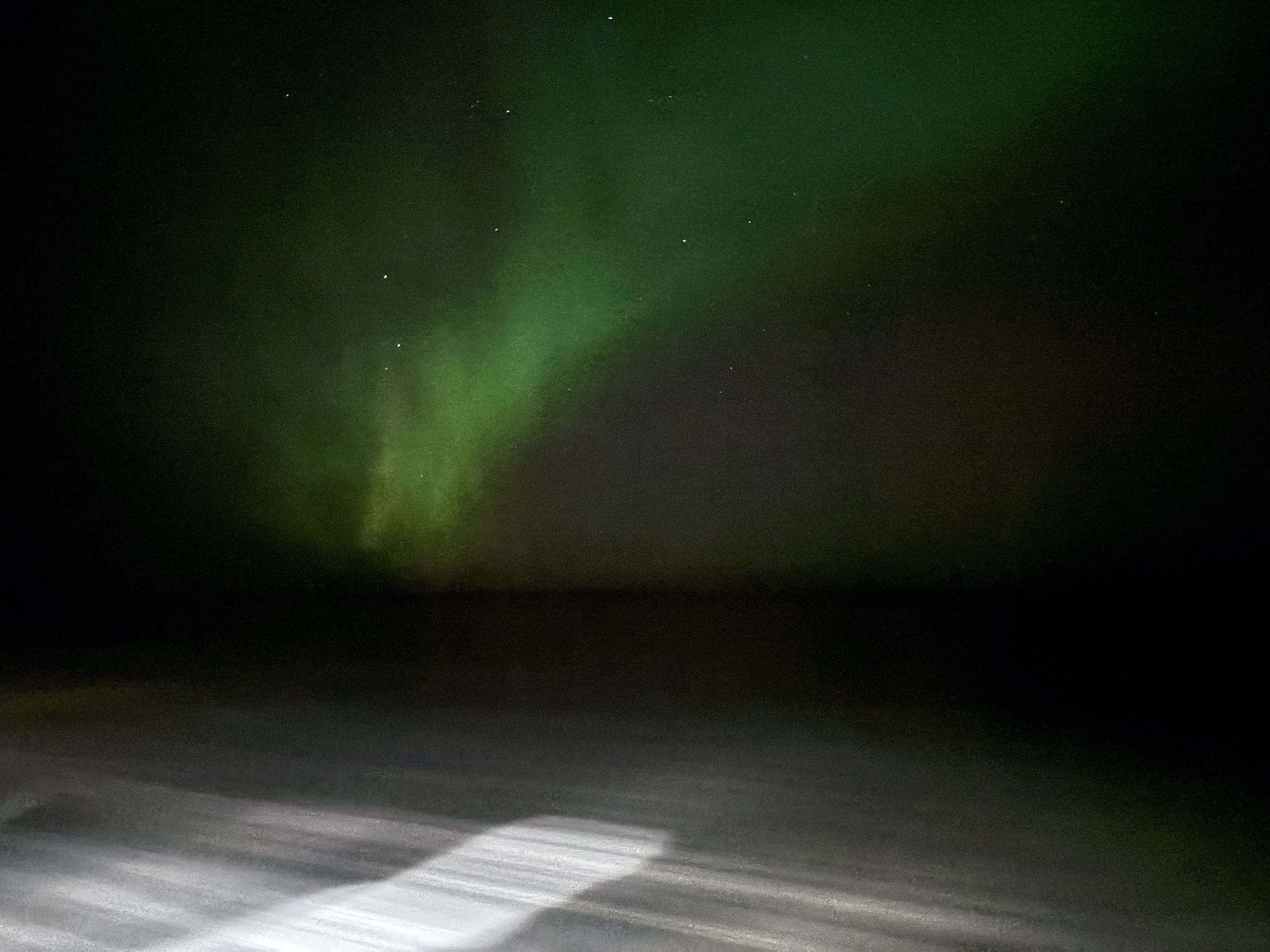
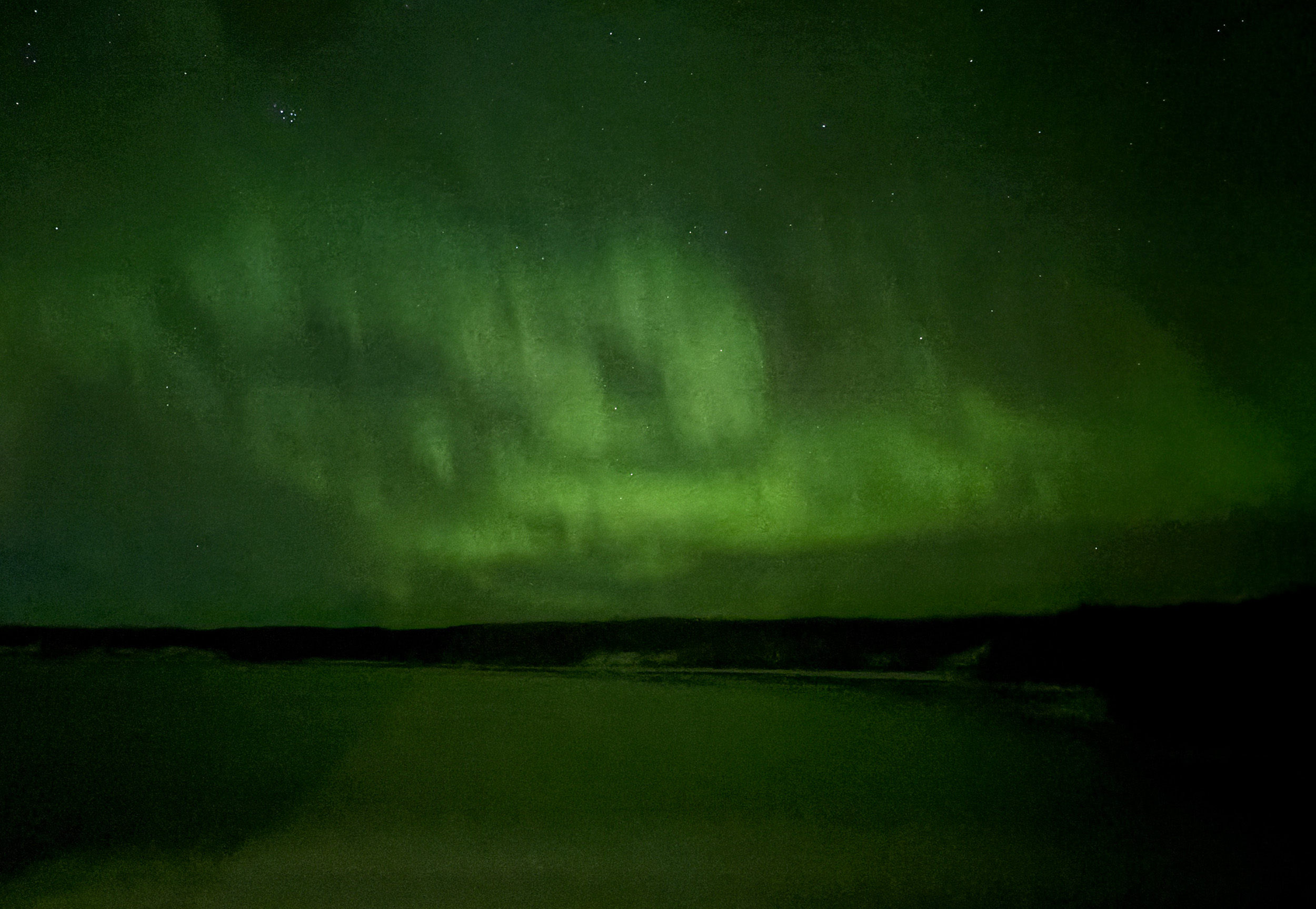
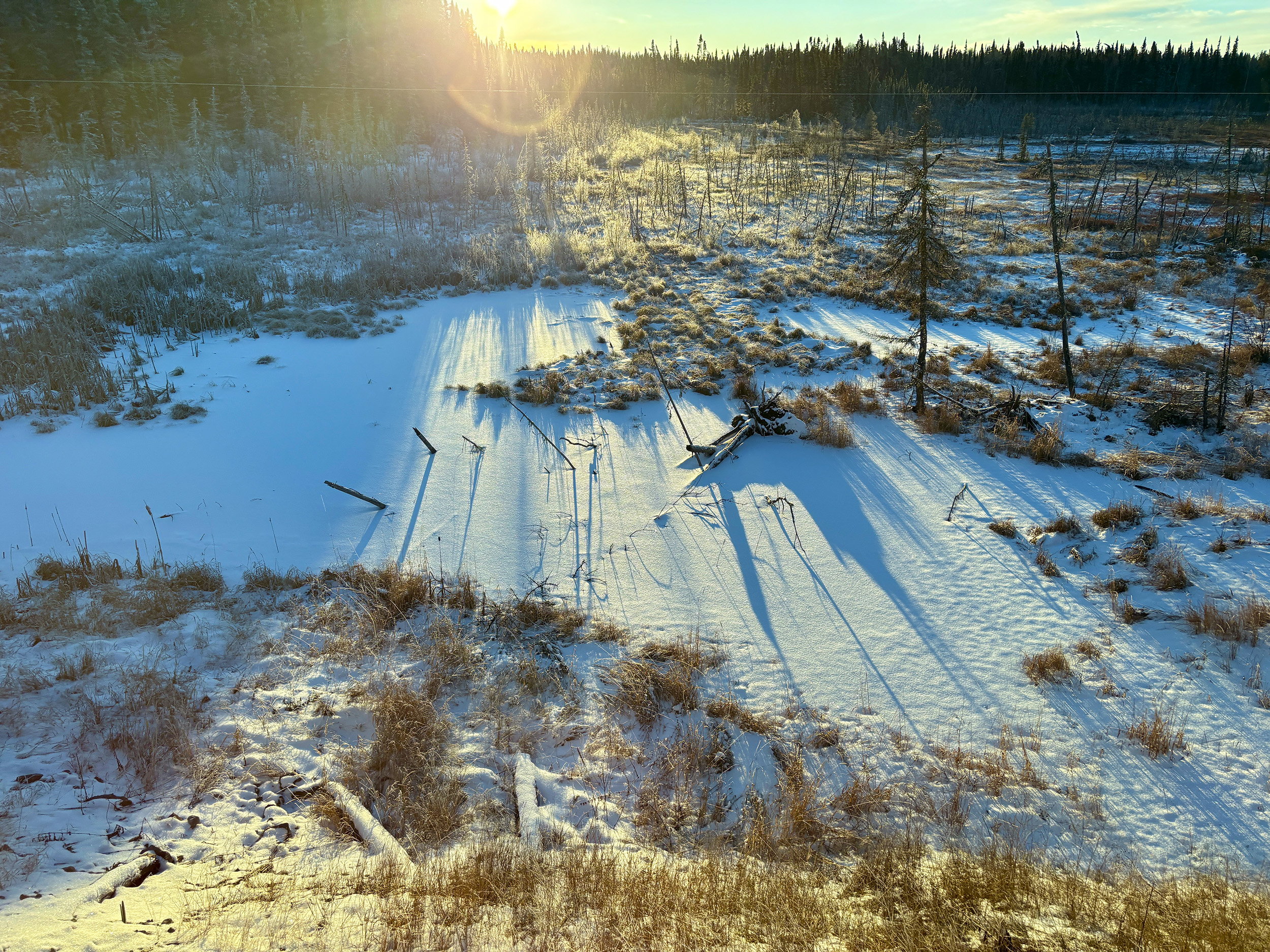
It was close to six in the morning and the Aurora was still discernible in the pre-dawn light. I shut my eyes for an hour, perhaps, and awoke to daybreak – crisp and clear as only a winter morning could afford. From my west-facing seat in the dining car, over a serving of scrambled eggs, hash browns and bacon, I took in the sights of Northern Manitoba. An abandoned telegraph pole picking up a sliver of sunlight. Boreal forests casting long shadows on a frozen lake. Wind-battered spruces bent over a rivulet. The ever-captivating winterscape of the tundra.
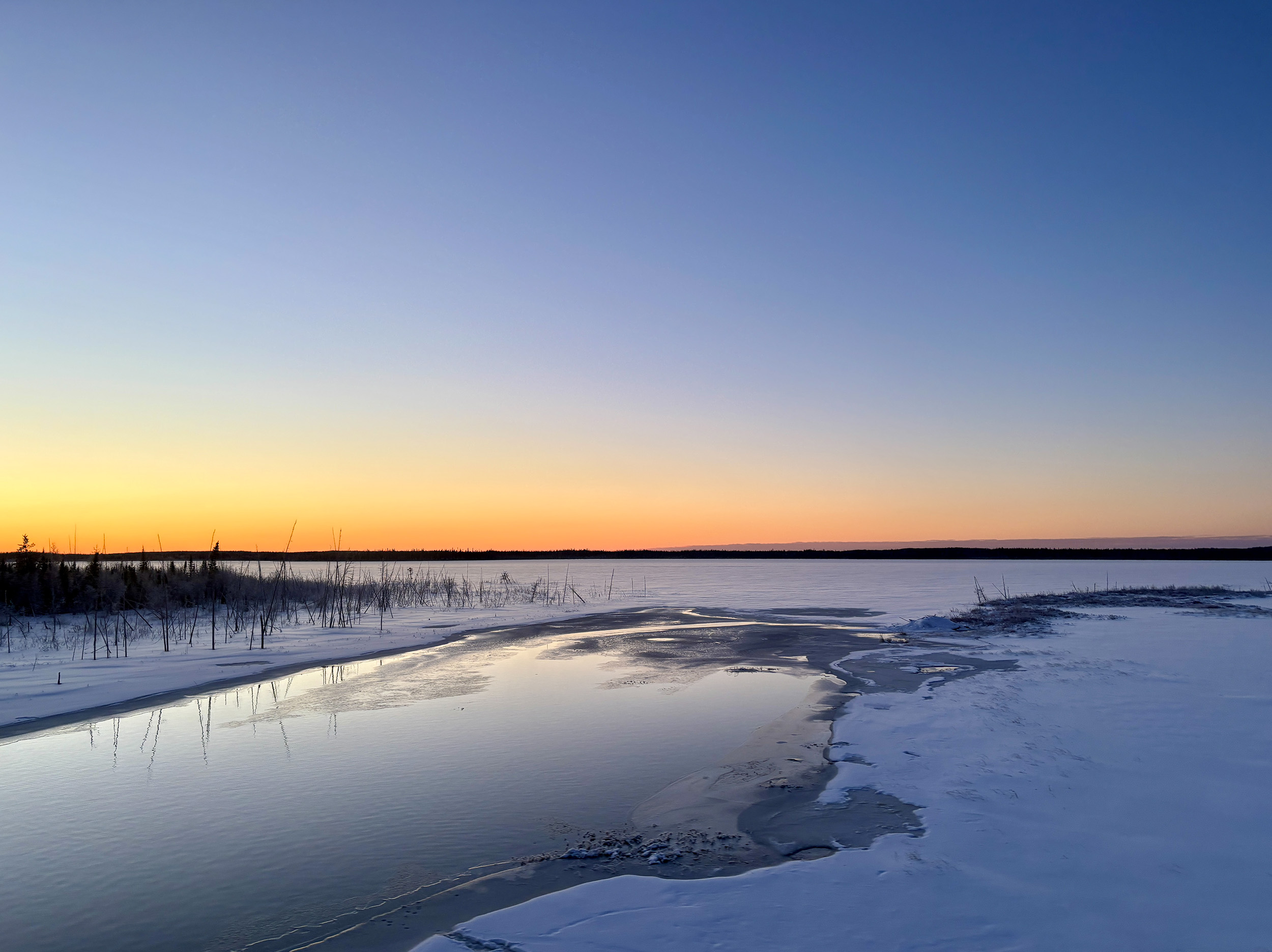
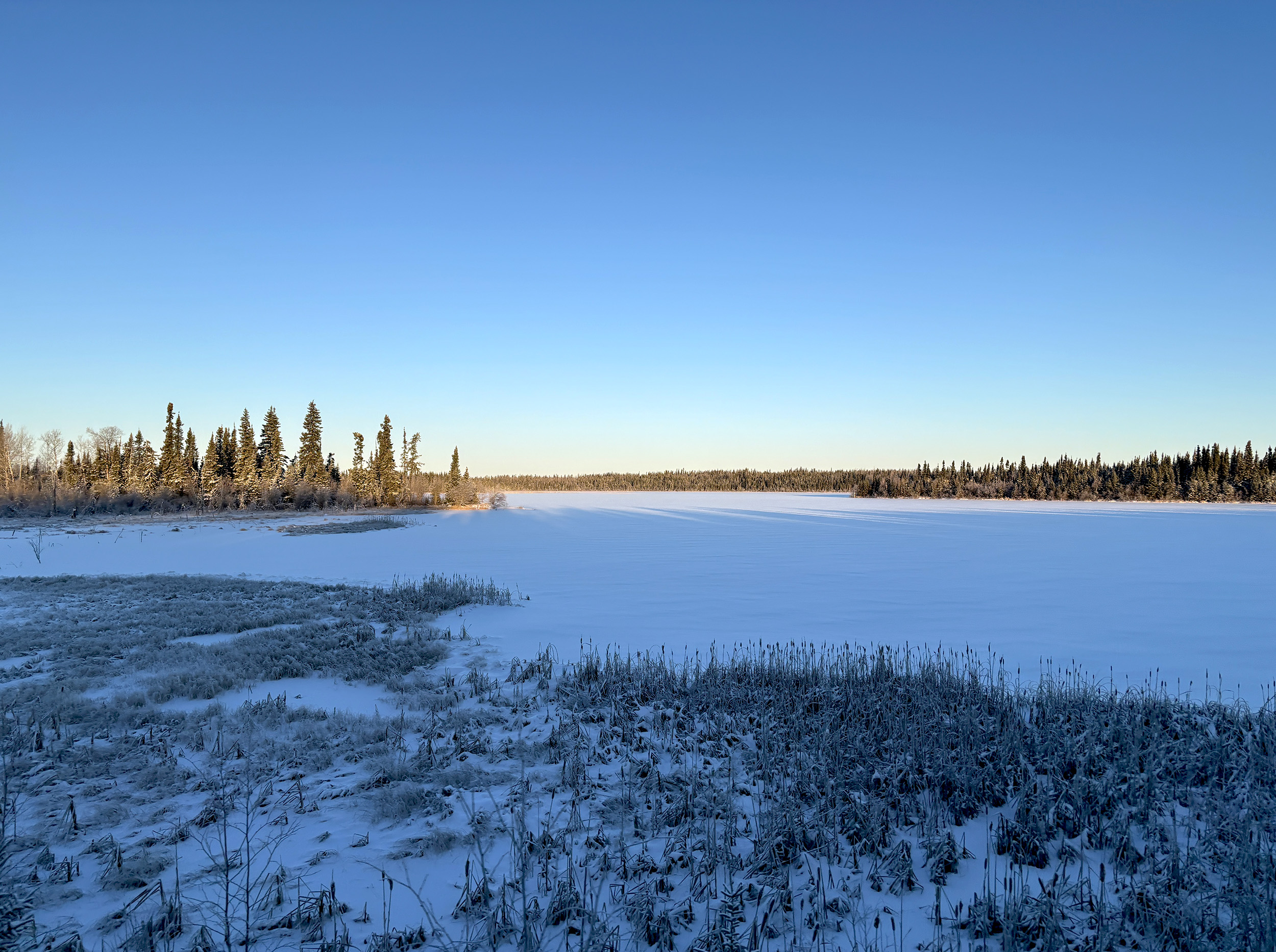
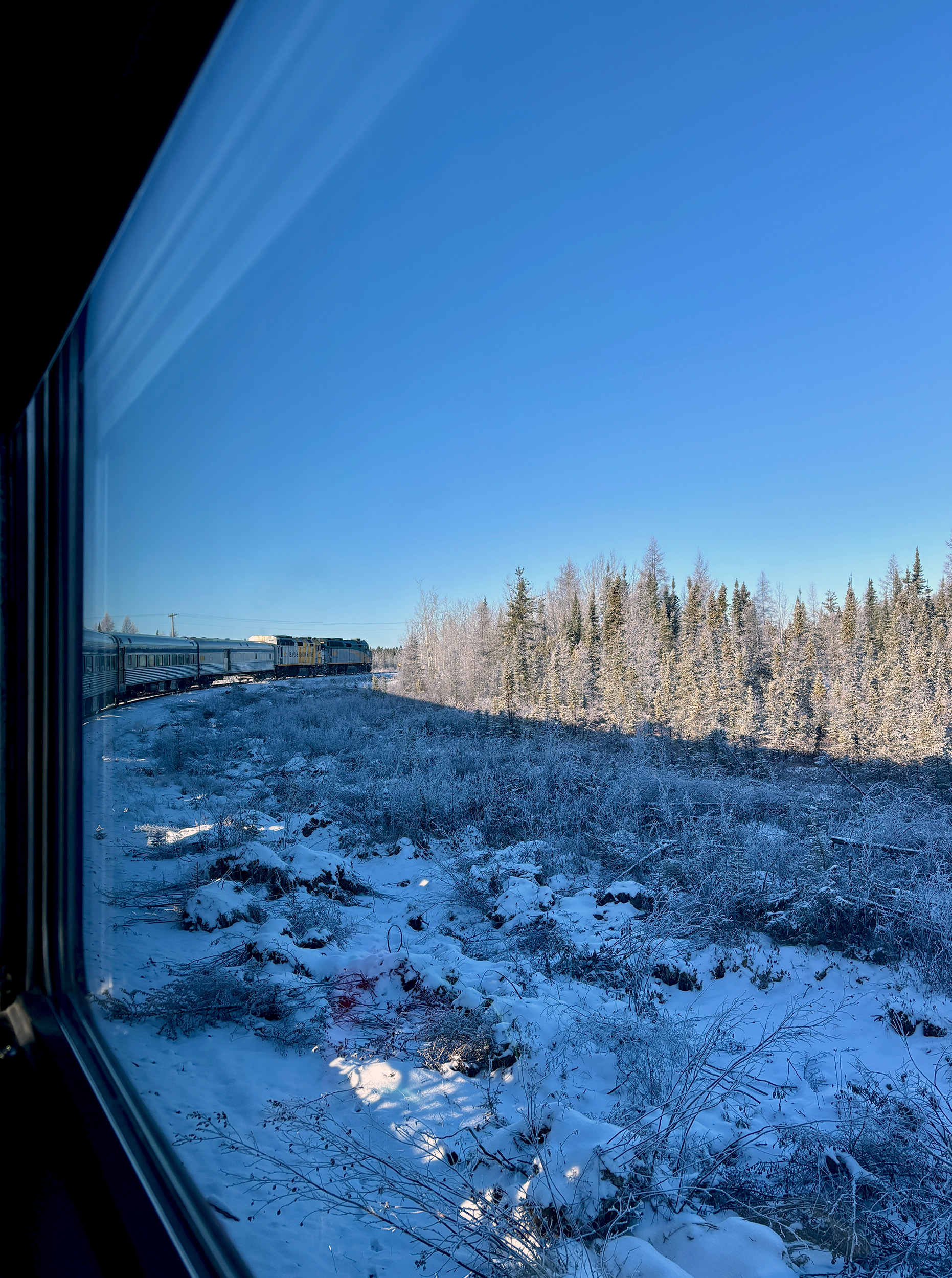
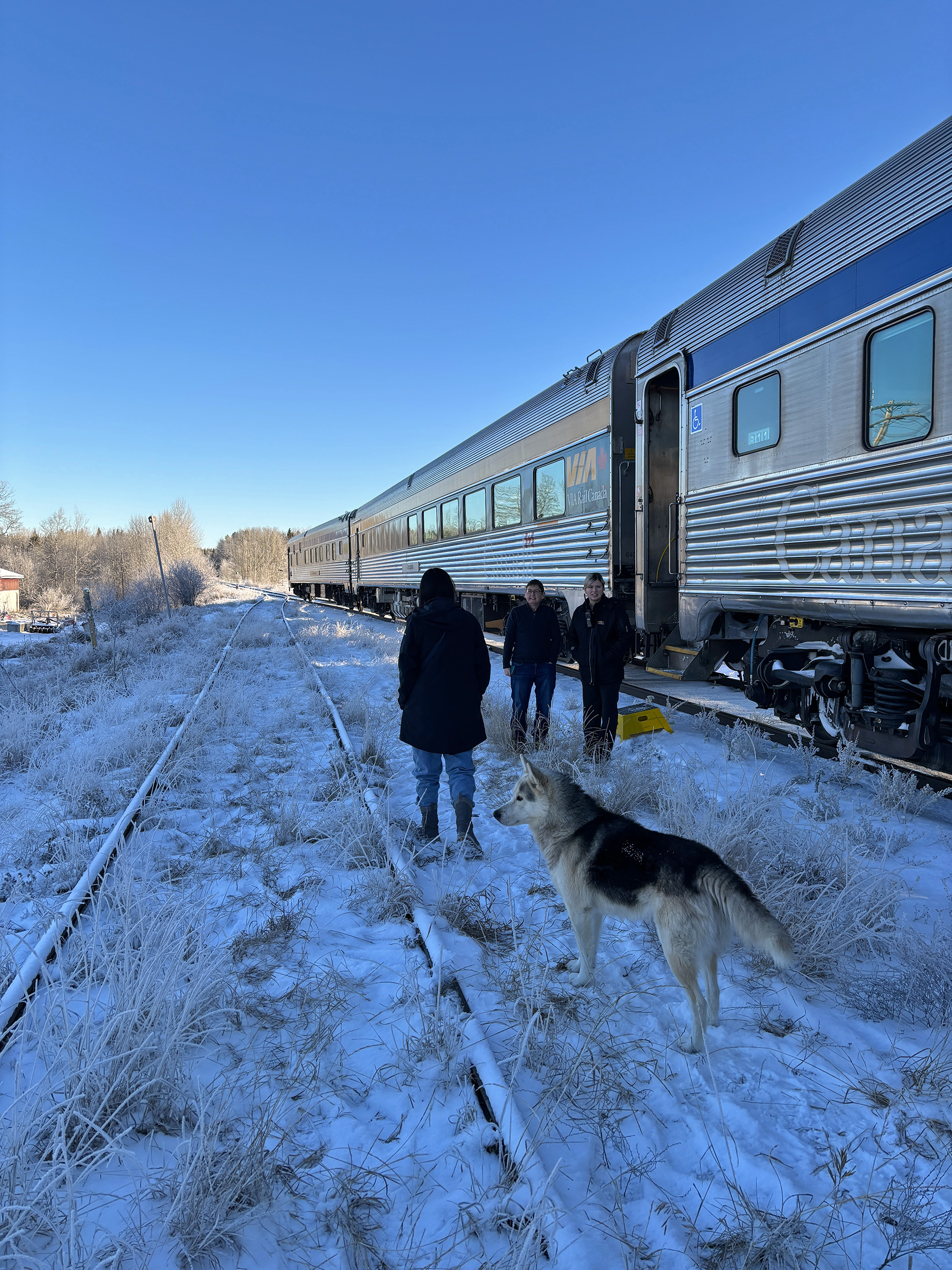
At Pikwitonei (Pop. 98), our first stop for the day, two stunning huskies came out to meet the train. It was the first semblance of habitat since leaving Churchill; a reminder of just how remote this subarctic region was. For the residents of Pikwitonei, and numerous other communities along the route, the railway is a lifeline, bringing in food, supplies and fuel, and linking them to the outside world. As a result, Train 692 stopped a fair bit, and the going was slow. Very slow. Much of the Hudson Bay Railway’s route to Churchill was built over permafrost and muskeg. A feat of engineering for its time, undoubtedly, the tradeoff was a significant reduction in speed.
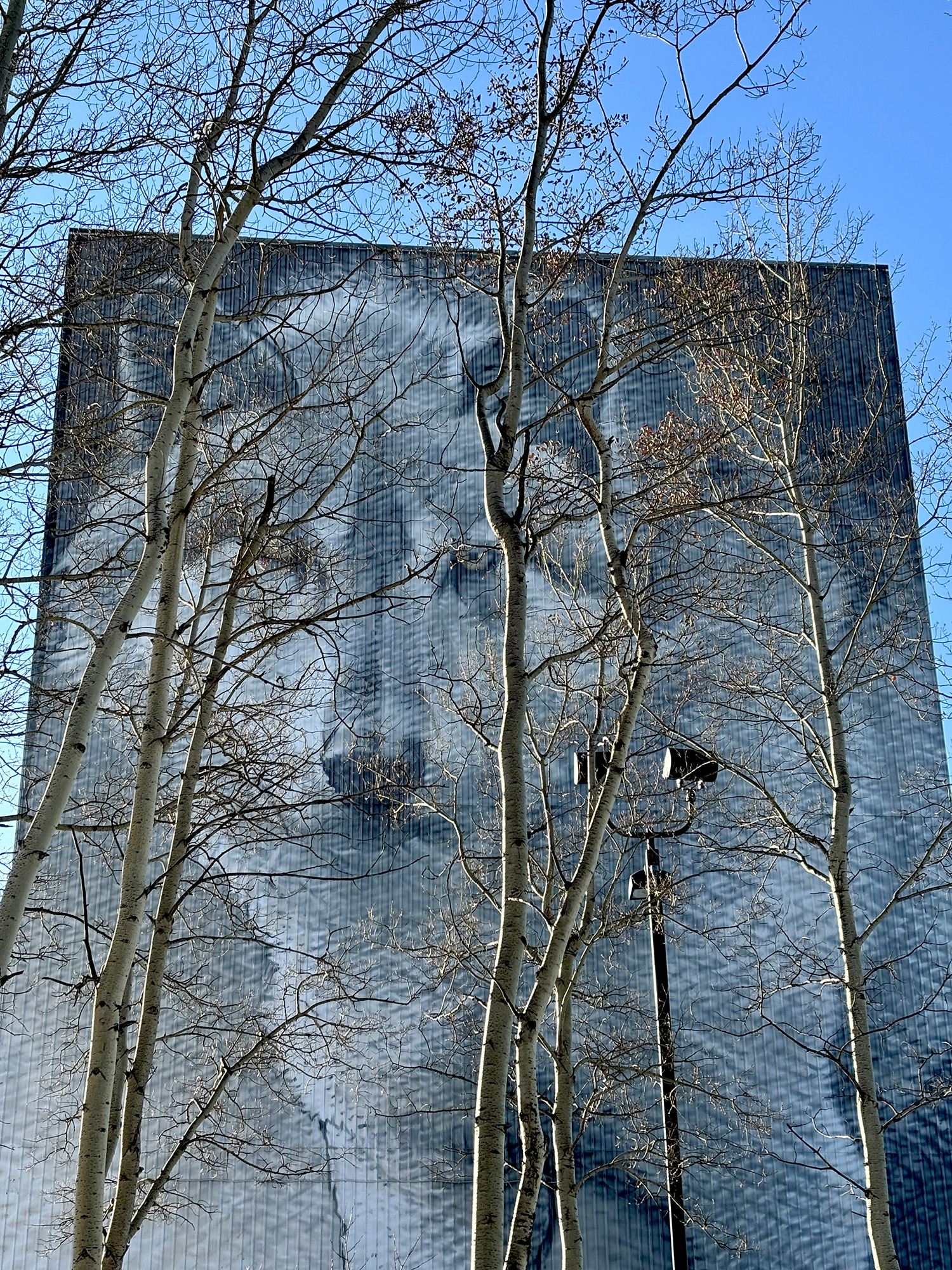
At Thompson, we were greeted by a fresh coating of snow on the ground. The halt there – over an hour long – meant we were free to head into town for a bit. The largest town in Northern Manitoba, Thompson lies at the end of a 30-mile branch line, built in the late 50s to serve a mining operation there. While the mine still exists, and accounts for much of the town’s economy today, Thompson is probably better known for being the “Wolf Capital of Canada”. So while the rest of my fellow passengers went in search of food, I decided to get in some steps, trekking a mile through some very pillowy snow to pay homage to a ten-storey mural dedicated to that handsome canine.
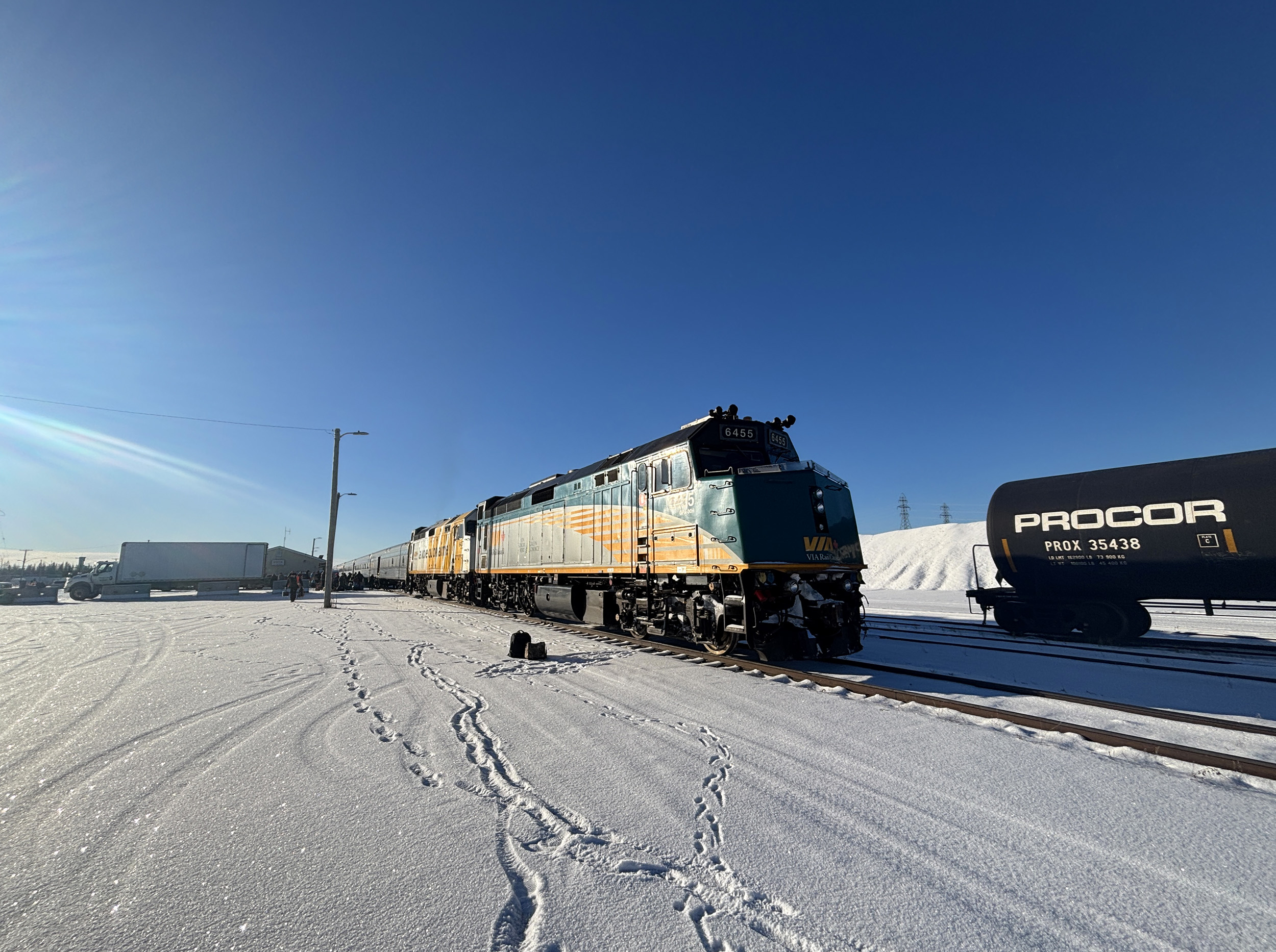
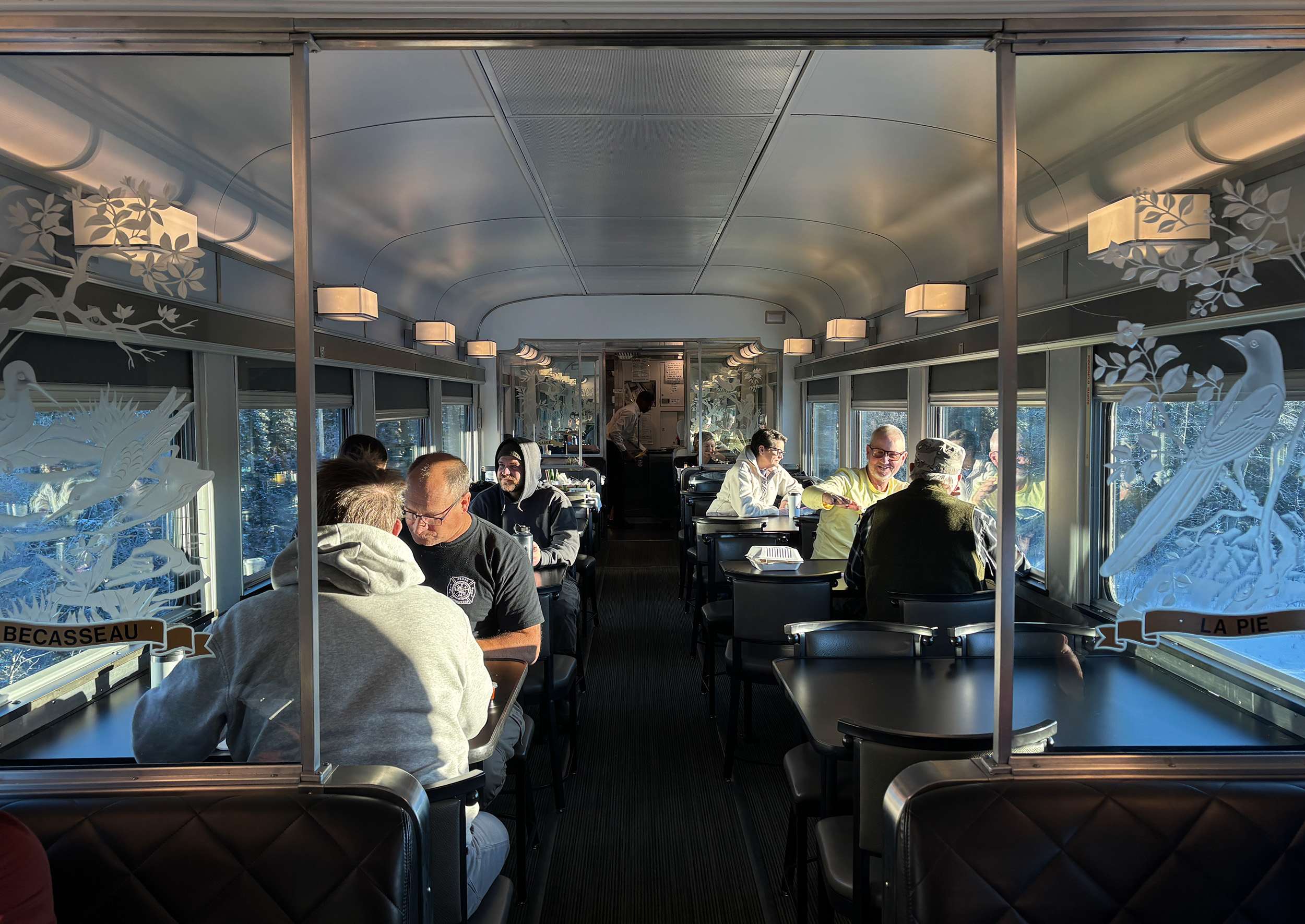
Back in the dining car for lunch, Prashant, the chef on board, suggested I try the falafel wrap. It was surprisingly good. Given all the constraints, the menu on board Train 692 was rather impressive. Via Rail, yet again, outperforming their counterparts south of the border. Sharing my table at lunch were Donald and Colin, both hailing from Saskatchewan. Donald, I knew from our stay at the Blueberry Inn. Colin was headed home, after working the tourist season in Churchill. The train was actually full. Full of seasonal workers like Colin, and full of tourists like myself and Donald. All lingering in the dining car, trading stories of memorable times spent in Churchill.
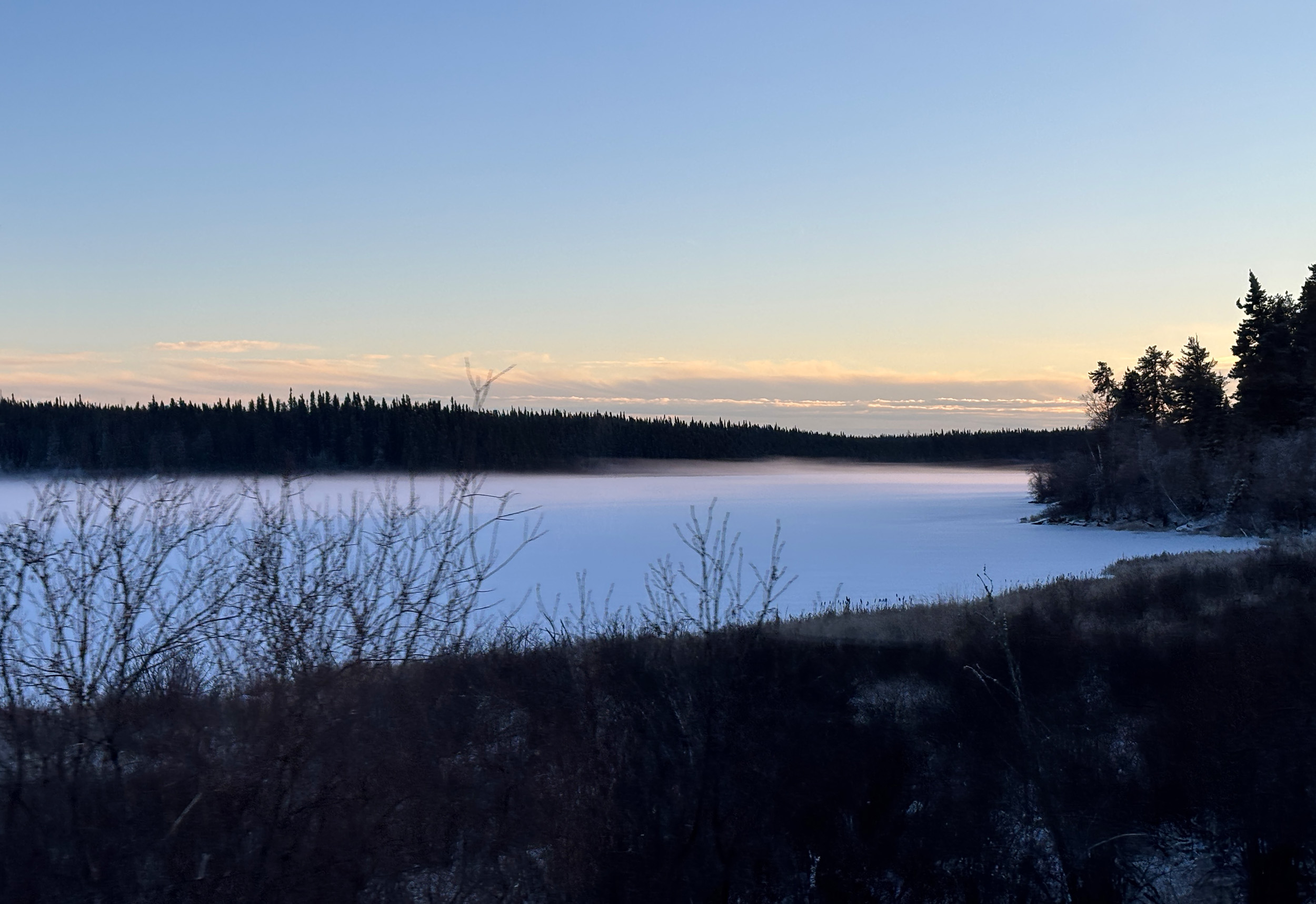
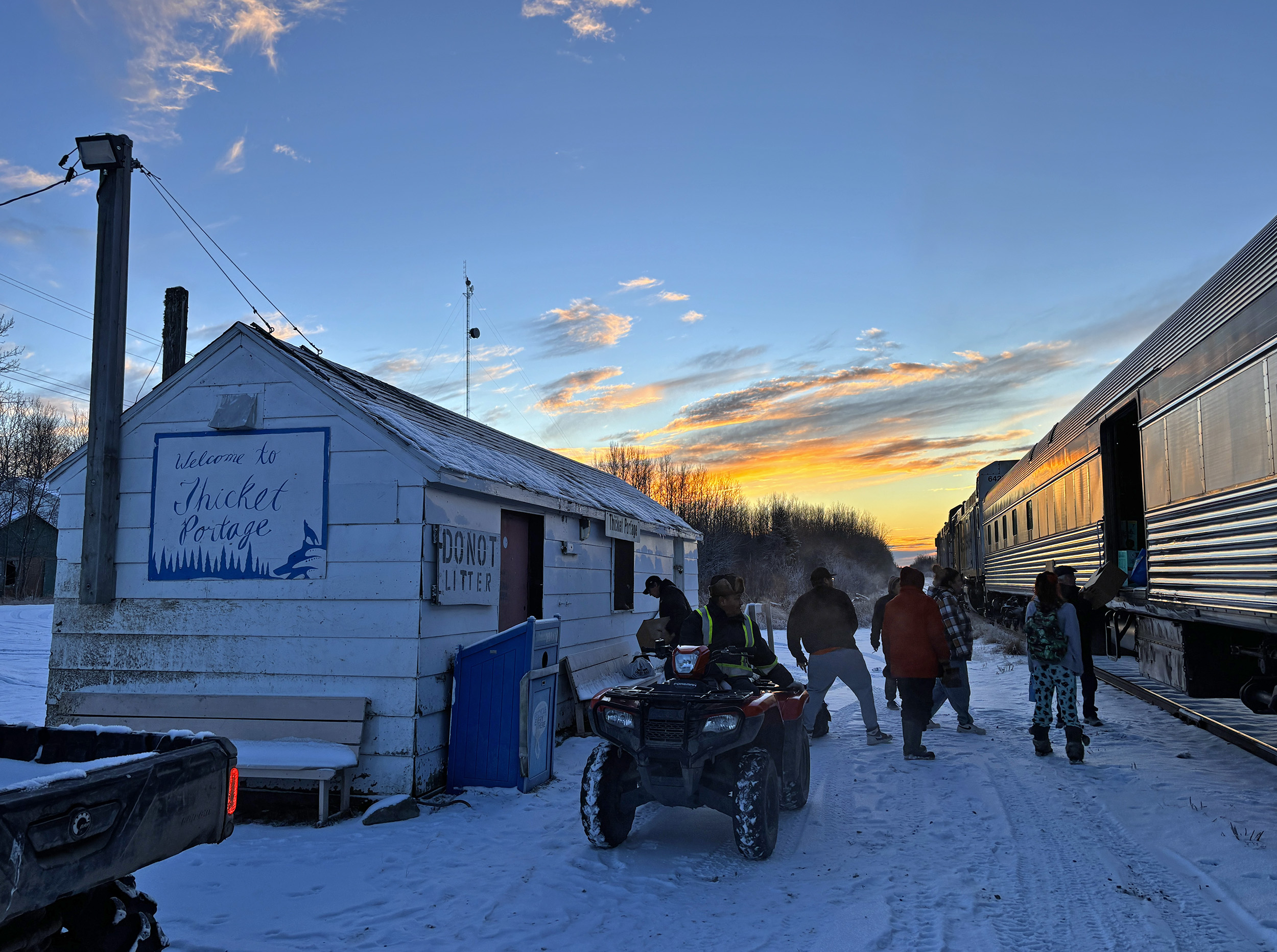
Long shadows began forming once again, as the clock inched closer to 3 pm. Further along, mist hovered along the edge of a frozen lake, as magic hour set in. A dazzling sky contrasted sharply with the starkness of the tundra, as we pulled into Thicket Portage (Pop. 148), our last daylight smoke stop; its quaint station shed providing the backdrop to a frenzy of unloading activity, complete with ATVs and snowmobiles.
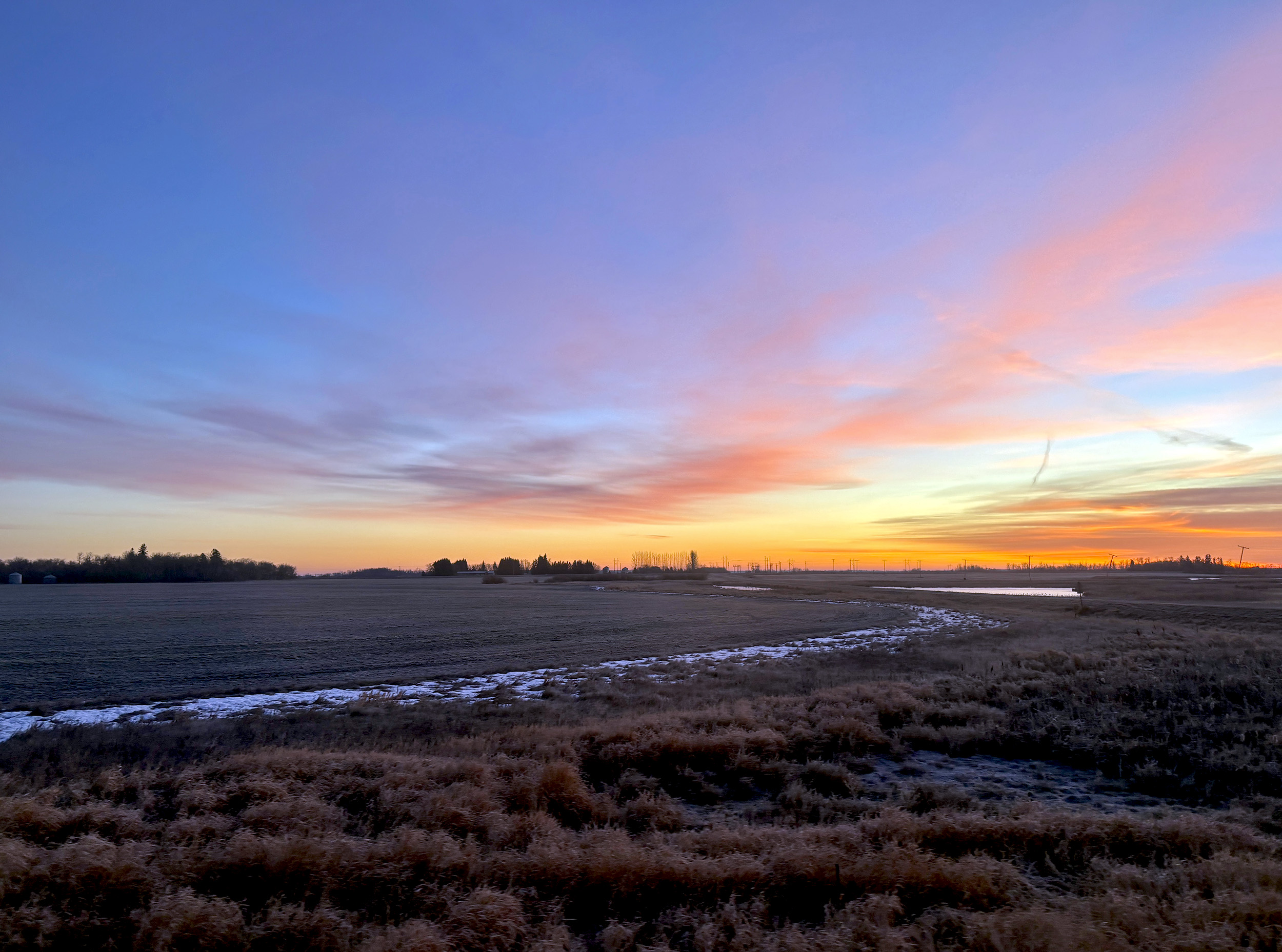
Another mesmerizing sky announced dawn, as we pulled into Canora. By the time I stepped out on to the platform, a fresh crew was standing by the locomotives, ready to take charge. We were in Saskatchewan, on Canadian National Railway territory, and the previous crew would’ve brought us in from The Pas; a longish stop for Train 692 in the dead of night. It was where Colin and Donald would’ve alighted too. There were still plenty of familiar faces in the dining car though, as I sauntered in. The Poles, the young Kiwi couple, and Rufus, the veteran from Virginia, amongst them. I opted for the pancakes at breakfast, and Prashant dished out two perfectly fluffy ones, much too large for me to finish in one sitting. Outside, things looked quite different. Gently rolling countryside and occasional tracts of farmland characterized much of the route east of Canora, as we traversed the last few miles through Saskatchewan. Once across provincial lines, we were in the heart of Canadian Prairie country, and would remain so till Winnipeg was reached.
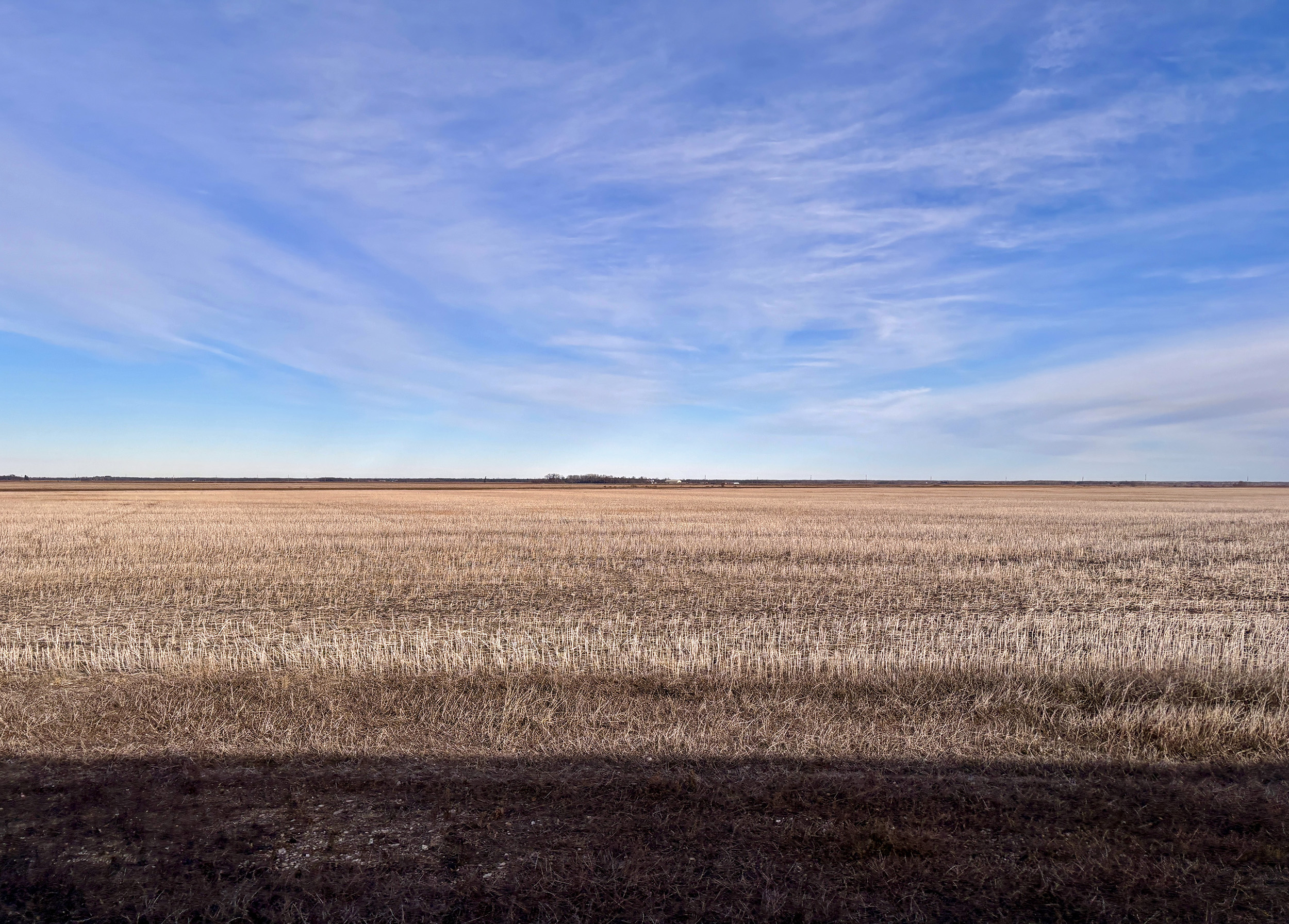
The landscape, featureless, and devoid of any snow, was not quite as spellbinding as the tundra had been, but the day was just as brilliant, and gazing out into that vastness had its own charm. I spent pretty much the entire day in the dining car, chatting with Rufus, and anyone else who cared to join us. Breakfast morphed into lunch. Afternoon libations followed, and flowed. Train 692, short as it was, and slow as it might have been, offered an experience that was hard to beat. Cozy, convivial, and with a remarkable crew on board, caring. Not to mention those views! All of it reaffirming, yet again, why there is no better way to travel.
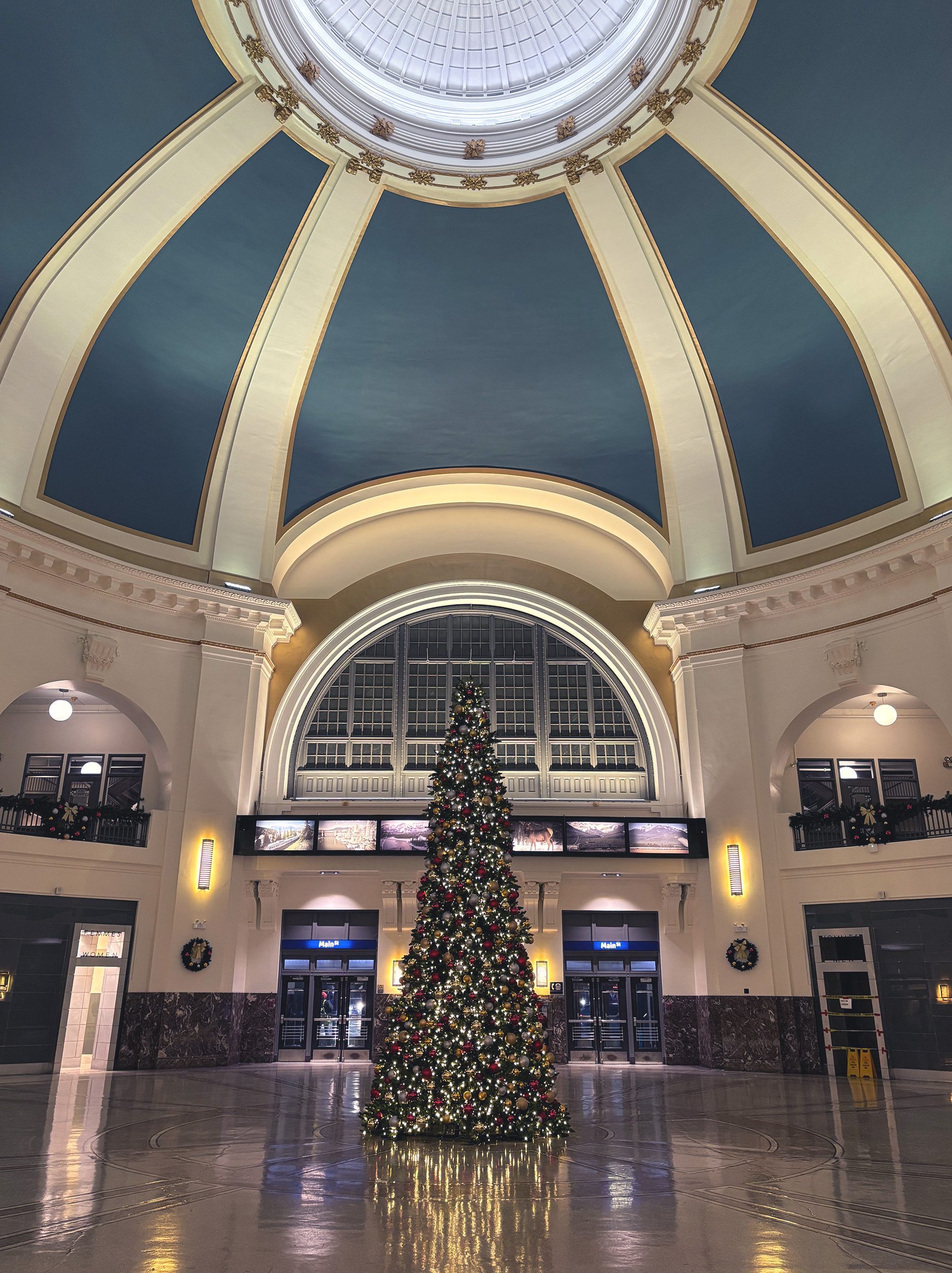
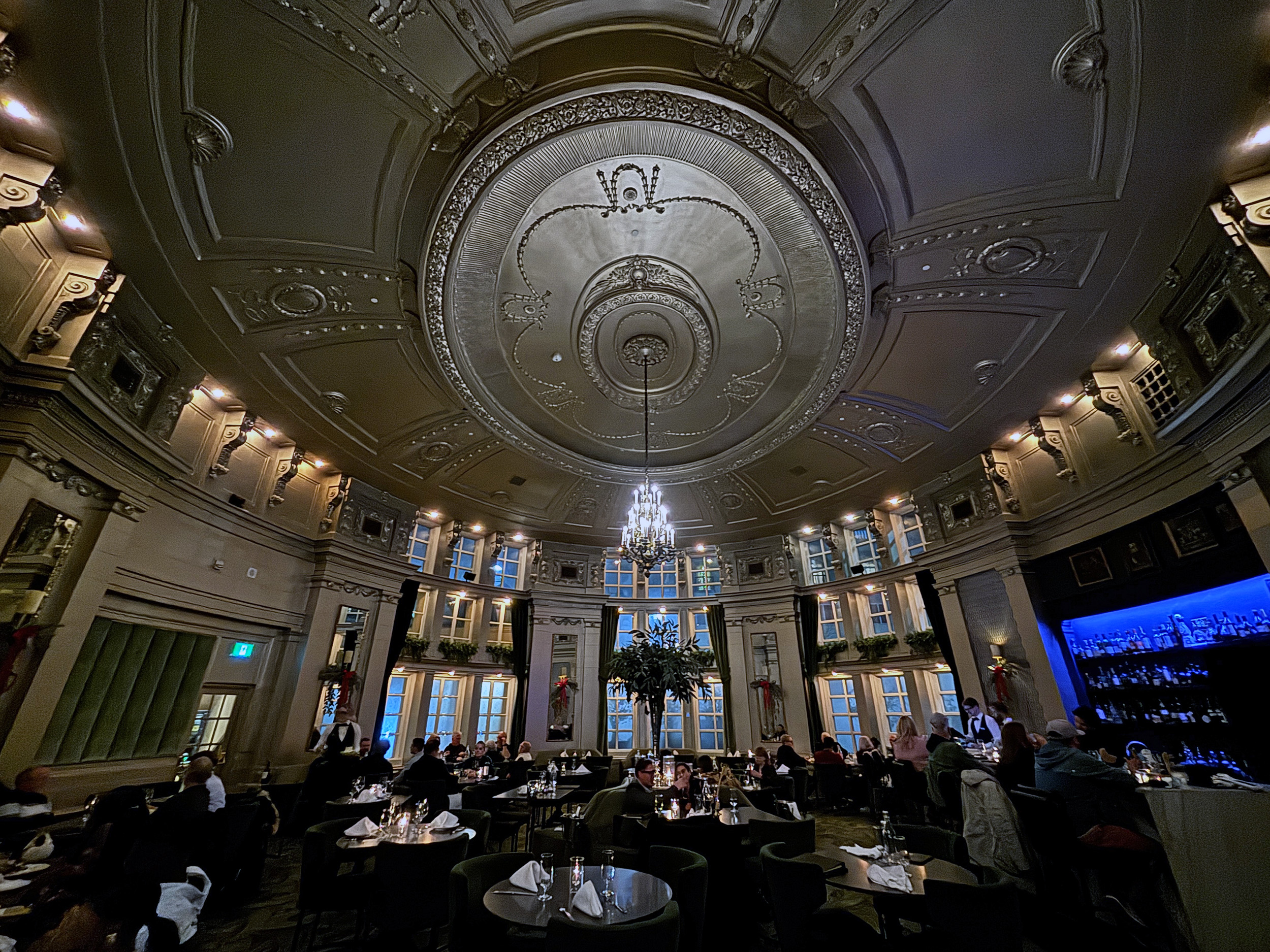
Back in Winnipeg, I persisted with the railway theme some more. Dinner was at The Forks, a well-thought-out development in downtown Winnipeg, occupying the site of an abandoned rail yard. A short walk from there lay the stately Fort Garry Hotel. Completed in 1913 in the Château-style by the Grand Trunk Pacific Railway, its magnificent oval room was a fitting venue for a nightcap. I raised a glass to 2025 – an unparalleled year of travel for me. Bookended like I could hardly have imagined.
A full set of photos from my visit to Churchill can be seen on my Flickr.
 brat's ramblings
Spectacular ❄️ ❤️