
In the moments leading up to our boarding call, there’s much debate between SK, JB and me on whether Alaska Seaplanes flight 507 to Skagway is in fact a seaplane. It turns out not to be. This, despite Juneau International having a seaplane port parallel to its main runway. Regardless, the short 25-minute flight along Alaska’s Inside Passage is spectacular, and not one of us is lamenting the lack of pontoons on our craft.


Nestled at one end of the Chilkoot inlet is the tiny settlement of Skagway, often referred to as the “Garden City of Alaska”. Part wild west movie set, part gold rush-era holdover, the little hamlet is home to less than a thousand permanent residents. Each morning during season however, it’s besieged by a flotilla of behemoth cruise liners, and resultantly, its population swells fivefold. Come evening, once the cruise hordes have decamped to their respective vessels, the streets wear a desolate look, and for the few who choose to stay the night there, you practically have the town to yourselves.

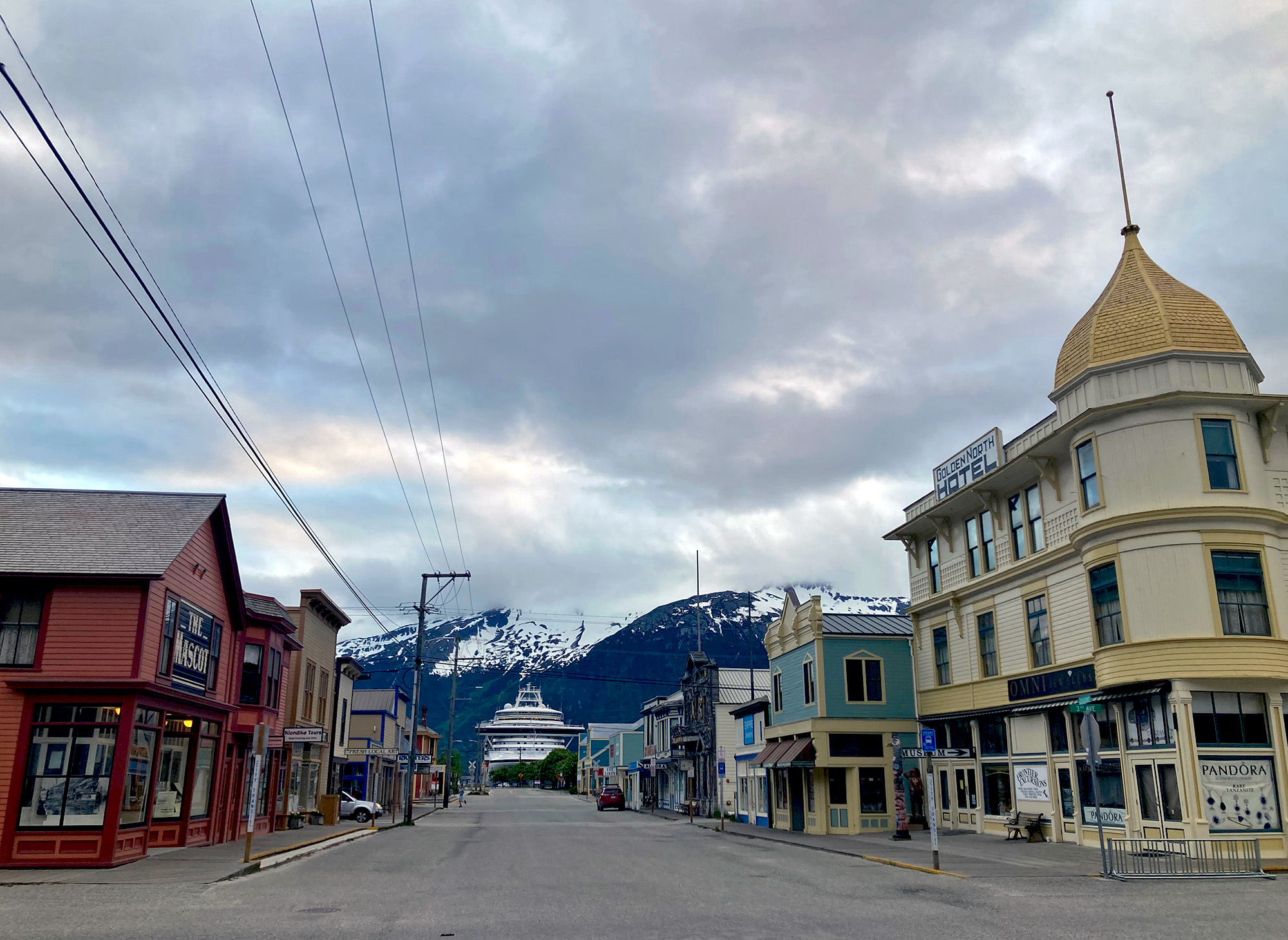
Skagway’s most notable resident is, without doubt, the White Pass and Yukon Route (WP&YR). Built at the height of the Klondike Gold Rush, as a means to get prospectors from the port to the interior, the narrow gauge railroad transformed a once arduous journey on foot and horseback that often took weeks, into a matter of hours. When completed, in the summer of 1900, it also put Skagway on the map, making it the first city to be incorporated in the State of Alaska.
Today, with mining operations having long ceased, the narrow gauge railroad serves as a tourist attraction, ferrying visitors through largely unchanged landscapes, from sea level at Skagway, over the White Pass and on to Carcross, in Canada’s Yukon Territory. Featuring heated interiors, padded seats, a hygienic toilet, and balconies on both ends, our ride this morning is as far removed from the hardships of the earliest prospectors as is imaginable.


Only a handful of miles into the journey, the town of Skagway is nothing more than a speck on the horizon. The excursion train that departed after us, appearing toy-like as it meanders along the valley floor. Featuring steep grades of almost 4%, the railway does most of its climbing in the first third of the journey. Clinging tightly to the mountainside, clambering across old wooden trestles, twisting and turning all the while. Somewhere between milepost 18 and 20, we climb above the tree line and there’s plenty of snow still visible on the ground. White Pass, at 2,888 feet, is the highest point on the line, and also marks the international border between the US and Canada. A flag for each country calls attention to that fact, in what is otherwise just a railroad maintenance siding. Fraser, in British Columbia, is where our documents will be checked by border officers, and by the time we pull in there, the second departure of the day has already caught up to us.


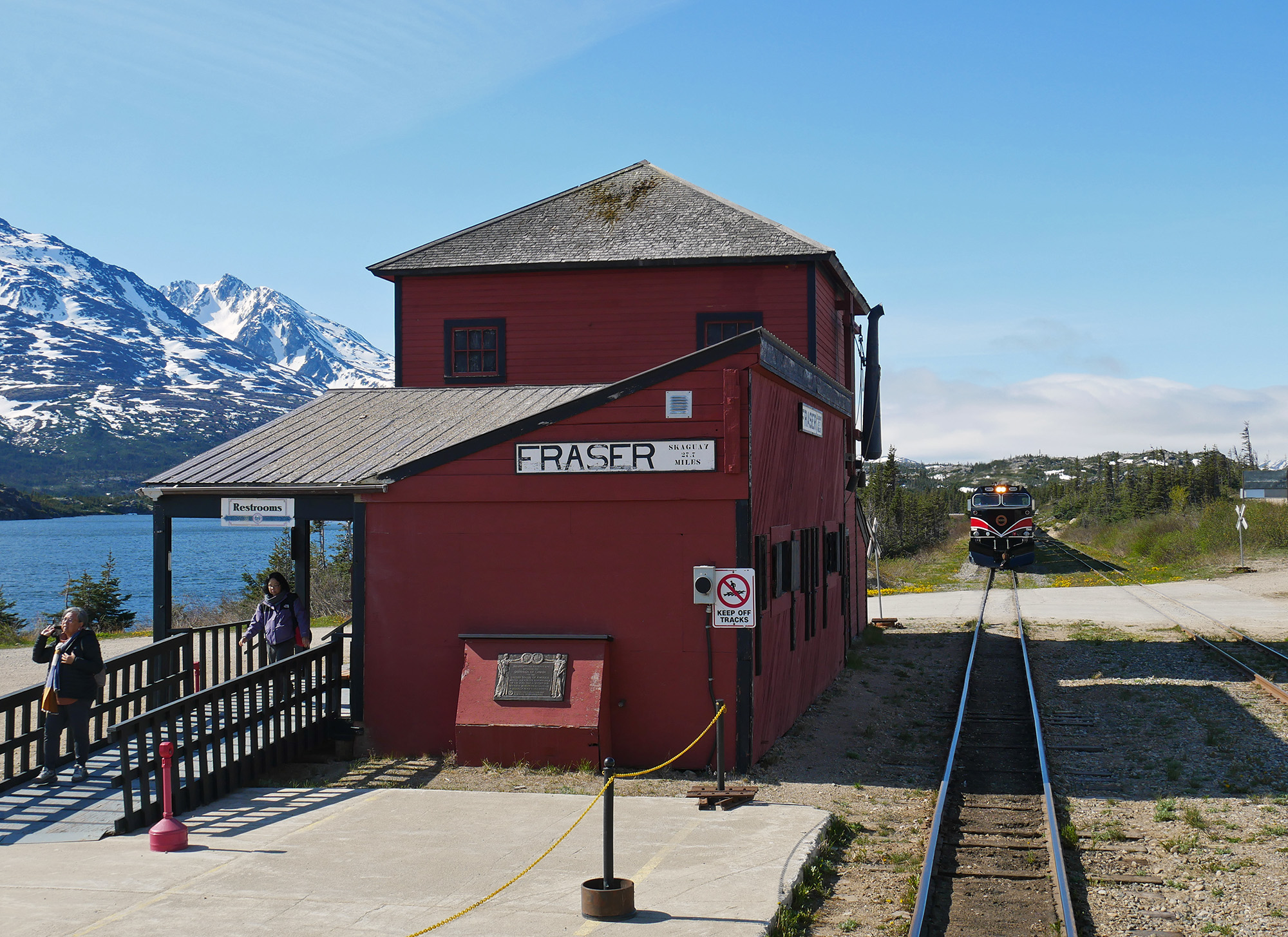
Fraser is also where most excursions terminate, with passengers returning to Skagway by bus, and those who’ve come up by road, swapping modes here. Only the first departure of the day – the one we’re on – journeys through to Carcross, and as we quickly discover, some of the most scenic parts lie ahead. At Bennett, we’re allowed to disembark, and the 45-minute halt there is plenty to take in the incredible setting of the station, located at the very southern tip of its namesake lake. With the majestic Coast Mountains cradling it, we follow the course of Lake Bennett for 27 glorious miles.


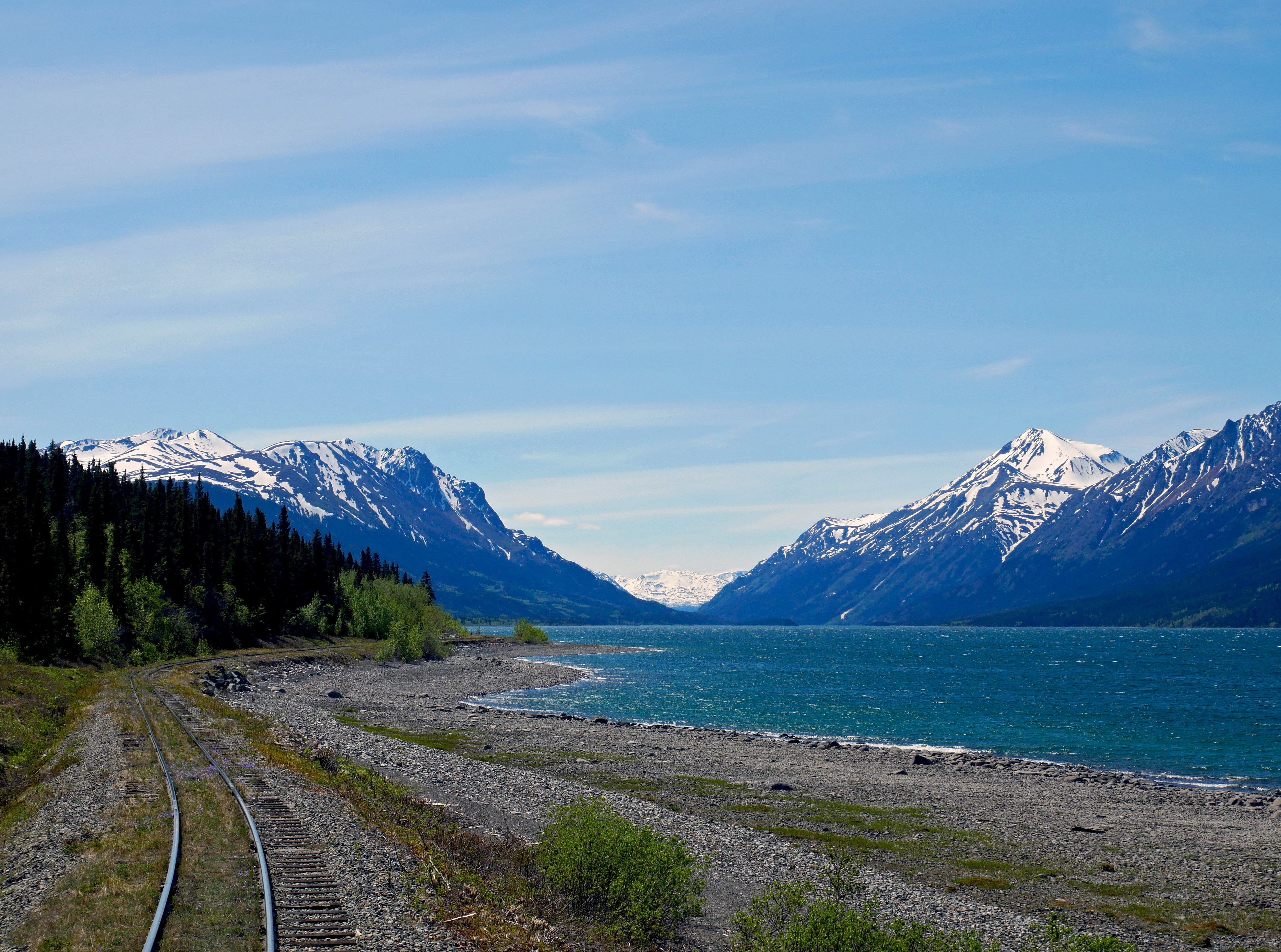
Located 67-miles north of Skagway, and boasting a population of ~300, Carcross is a one horse town in every respect. There are plans to someday reopen the line to Whitehorse, the Capital of Yukon, but for now, Carcross is where the WP&YRs operations terminate. Expectedly, the arrival, and subsequent departure of the once daily train, is the main event in town. As the three of us reluctantly file into the bus we’ve been assigned for our journey back to Skagway, we watch with envy as passengers who’ve gotten off it, now wait to board the train back. For the diehard railfans that we are, the bus is a sorry substitute, but our driver does his bit, making every effort, and a few stops, to show off the beauty of Yukon.


On the flight back to Juneau, the three of us are the only paying passengers, with the rest of the Cessna Caravan‘s revenue earning seats folded away to accommodate cargo. Our pilot runs the numbers and it turns out one of us would have to ride shotgun to balance things out. I’m first to the buzzer 😉


Day 4 of our trip, and we’ve caught up with the larger group of foamers in Vancouver. We’re all here to ride Via Rail’s train #2, The Canadian. I had ridden it previously, end to end, in the winter of 2017, and on account of a very late arrival, I barely made my flight out of Vancouver. This time around, things are a lot less rushed. We came in the day before, are headed in the opposite direction, and only going as far as Jasper, an overnight journey. Even on this relatively short run though, The Canadian proves yet again why it’s one of the most storied trains out there.


We pull in to Jasper earlier than scheduled, but don’t linger much. With our rental formalities complete, we hit the road, heading east along the very picturesque Yellowhead Highway, a major interprovincial route in Western Canada. Brûlé Lake is our first order of business in Alberta and we’re here to photograph the very train we got off, barely an hour ago. Skirting the north shore of the lake, The Canadian shows up on cue, and the shutterbugs amongst us make a meal of it.

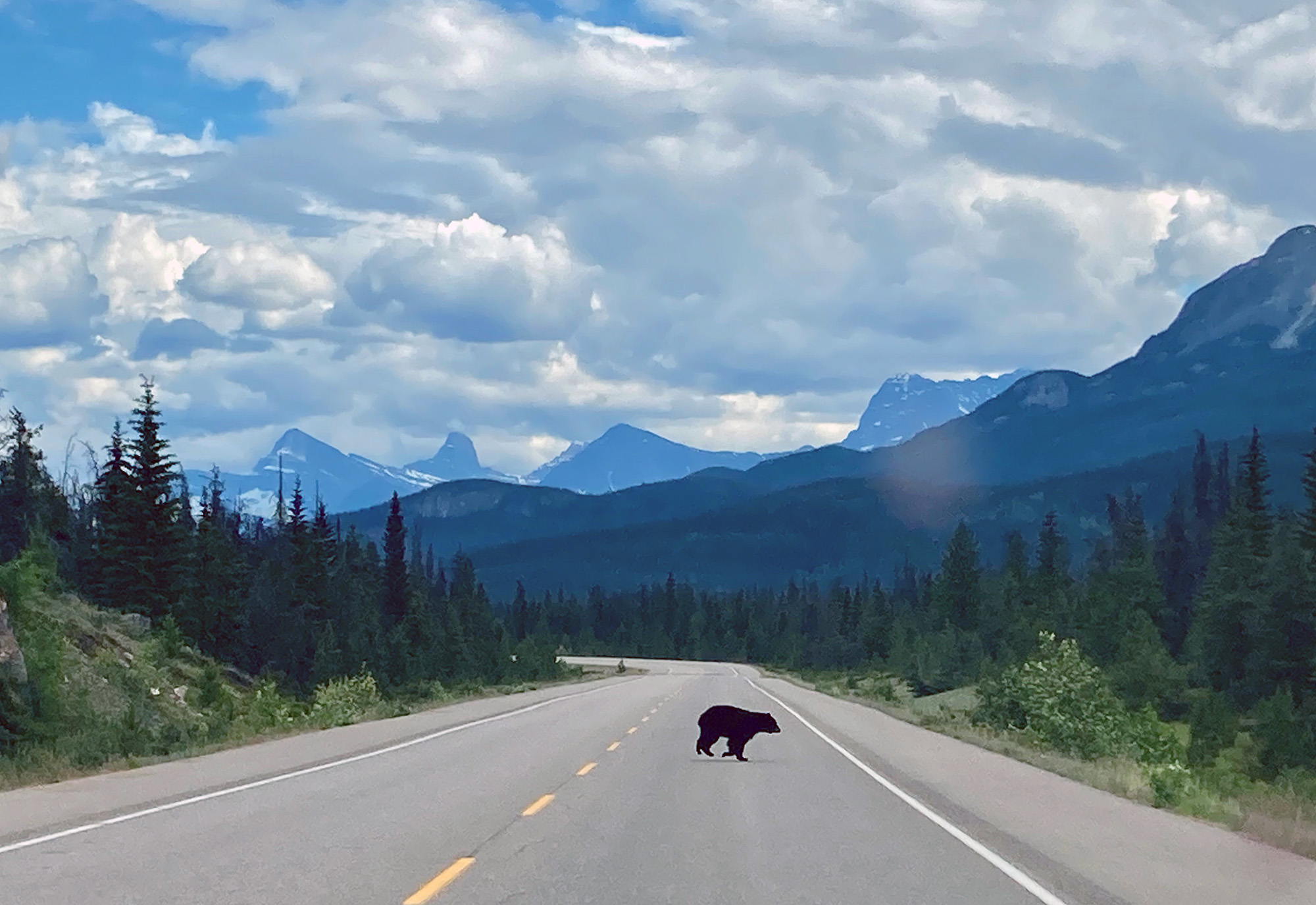
More often than not, thanks in no small measure to UK and his incredible knowledge of the area, plus the fact that HD always has his trusted railroad scanner tuned to the right frequencies, we’ve managed to show up right on time for a train. Whether it be the excursion to Moose Lake to see the train to Prince Rupert, or the heavily laden coal train going over the lofty bridge outside Hinton, or that intermodal on a dramatic curve, we’ve hit the jackpot each time. On the rare occasion that a train doesn’t show up, it gives us all a chance to appreciate the gobsmacking wilderness we find ourselves in.


A thick ice mass once made up most of the Canadian Rockies. Today, only a remnant of those icefields remain, and the eponymous Icefields Parkway, winding its way through sweeping valleys and past ancient glaciers, offers a glimpse of what was. Built along the Continental Divide, connecting Jasper National Park to Banff National Park, the parkway is considered to be one of the most scenic drives in the world. Lending ample credence to that fact is just how many times we’ve pulled over already.


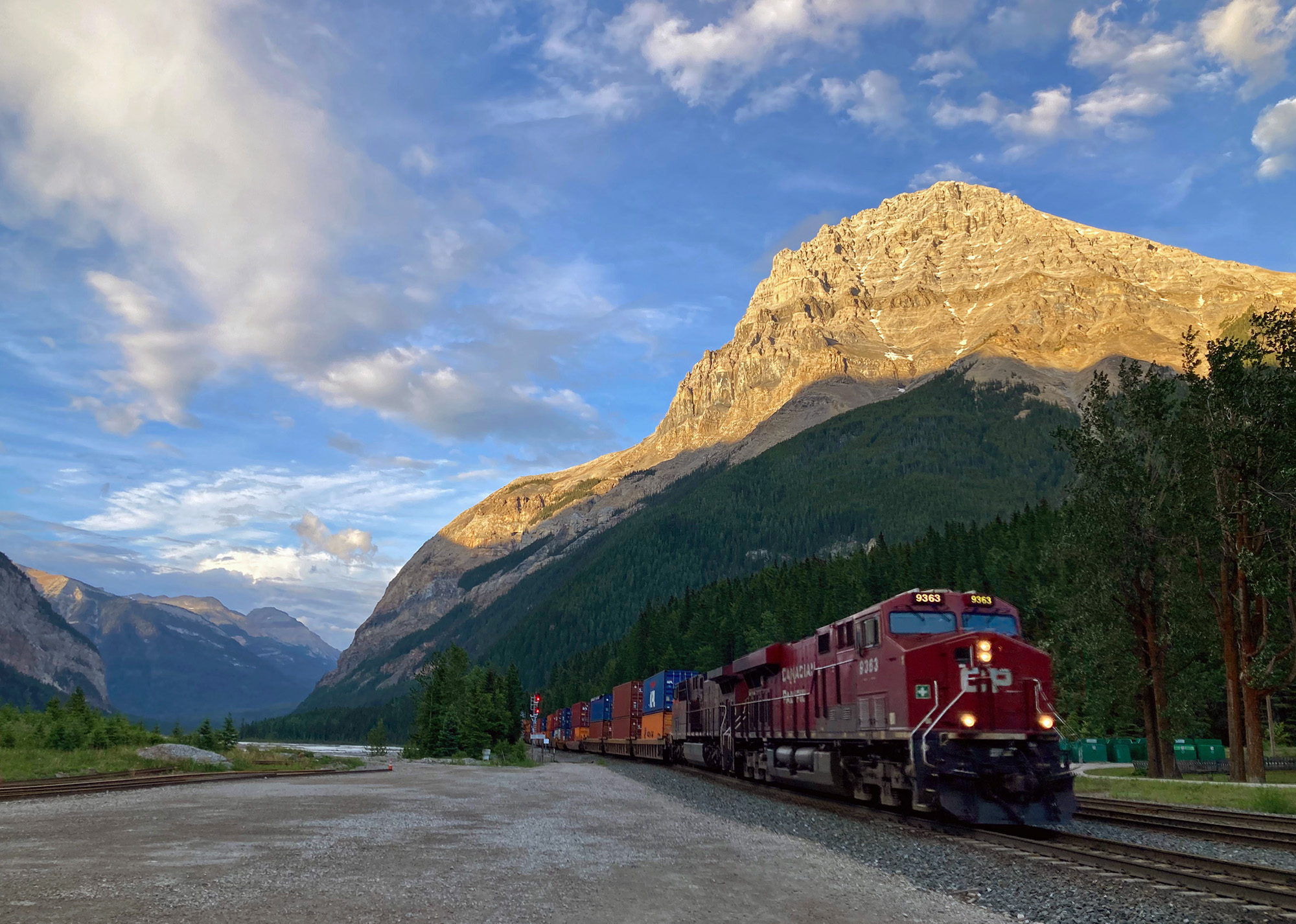
Rounding out Day 6, we find ourselves in the environs of Yoho National Park, having detoured briefly into British Columbia. We’re now firmly in Canadian Pacific territory (henceforth CP), having paid our respects to competitor railroad, Canadian National previously. At the hamlet of Field, the Kicking Horse River splits the alignments of the Trans Canada Highway and CP’s mainline. We stake out on the railroad side of the valley, obviously, and wait for a westbound train to appear. That all too familiar “chirp” on the scanner indicates the last freight car is through Kicking Horse Pass. The locomotive horn ricochets off the mountainside, and moments later, a colorful double stack intermodal appears.
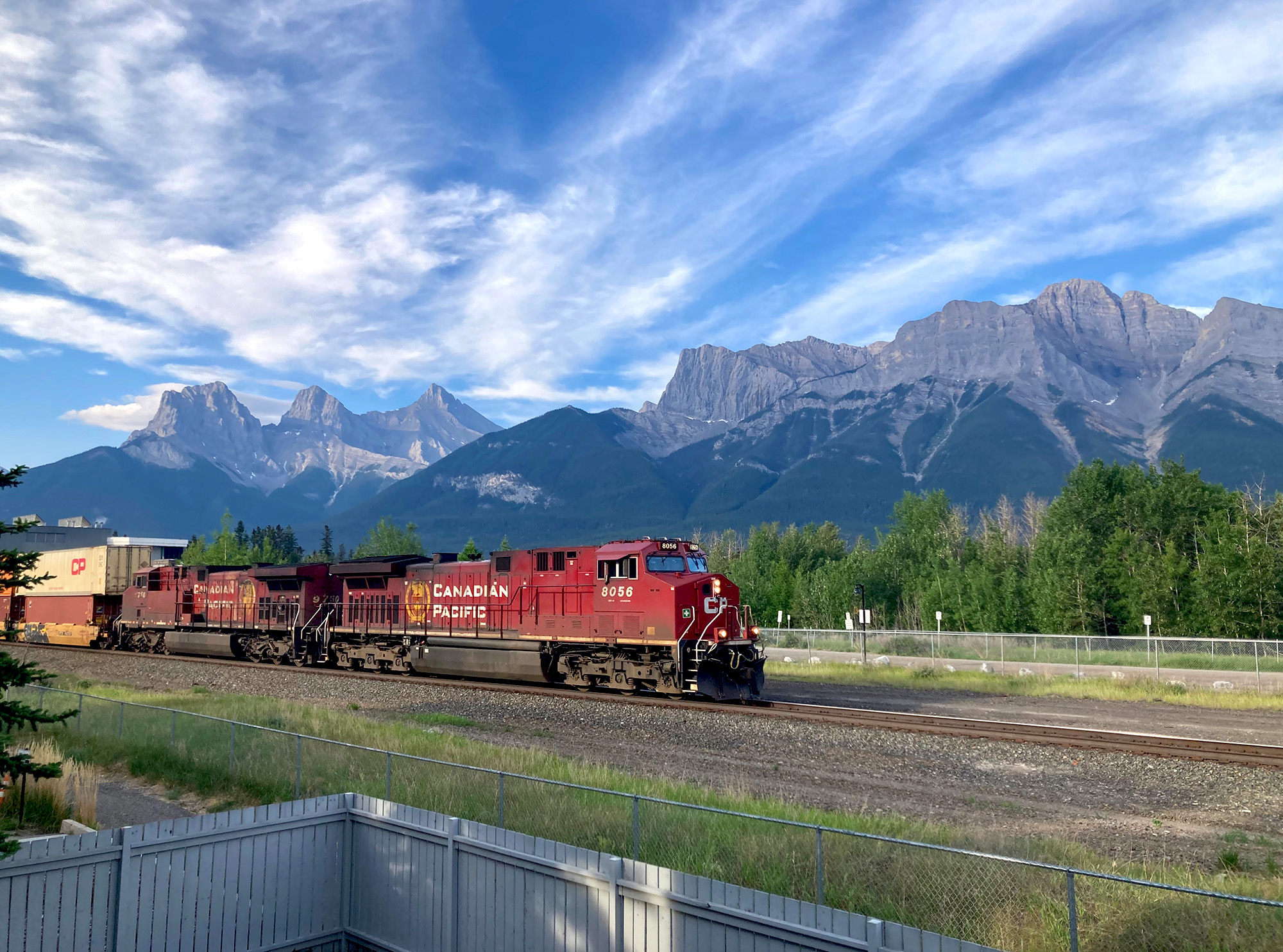
By now, JB has a reputation amongst us of picking the best hotels and Airbnb’s on our railfanning trips. We expect nothing less at Canmore – a town located just south of Banff National Park – but having checked in at nightfall, only come to the realization at first light. JB’s outdone himself. With a spacious balcony overlooking the busy CP mainline, and a not too shabby backdrop, it’s as though the Airbnb was purpose-built for us rail buffs. Truth be told, this one’s going to be a hard act to follow, even for him.

Probably the most dramatic trainspotting location in the vicinity of Banff National Park is Morants Curve. With the Bow River flowing in the foreground, thick pine forests hugging its banks, and the Canadian Rockies framing it all, the wait for a train here could hardly be described as agonizing. Only a short distance away lies the legendary Lake Louise, and following a fleeting, but customary interlude there, we spend the rest of the day chasing endlessly long freight trains under vivid blue skies, through postcard perfect settings. Making it back in time to our much coveted perch in Canmore, for a well deserved sundowner. Día última done right.


A full set of photos from my visit to Alaska and Western Canada can be viewed on my Flickr.
 brat's ramblings
“I’m first to the buzzer 😉” Haha.. why am I not surprised. I’m so happy to read about another adventure. It had been a while and just last week I checked your blog to see if I had missed one of your travelogues. It’s always a nice break from winter to read one of these stories. Loved it.
Wow, what a trip – green with envy!
Your trips are my bucket list, period.
Whoa! As always, a treat for the observer. Love that the trains are the heroes of your majestic vistas.