
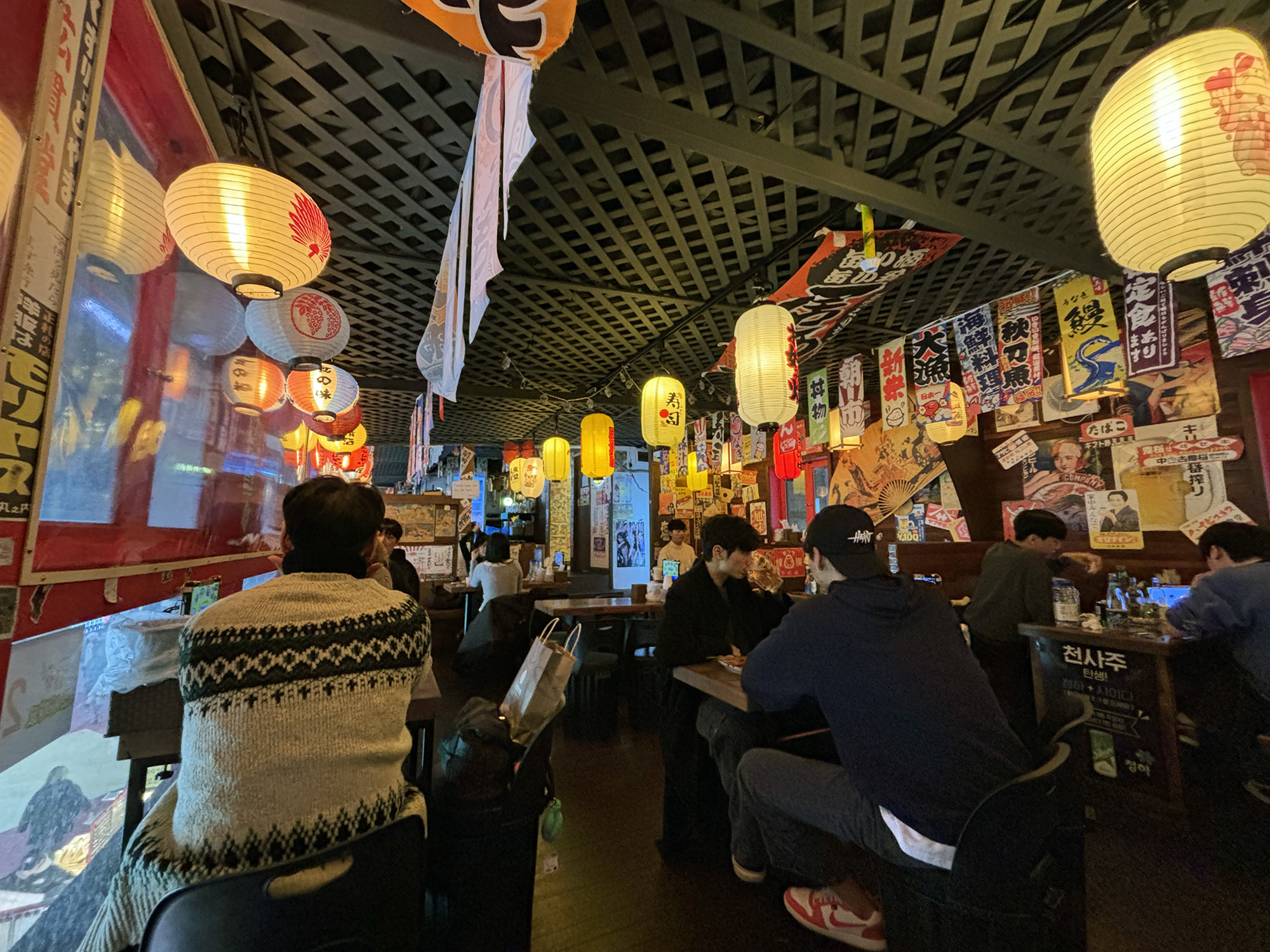
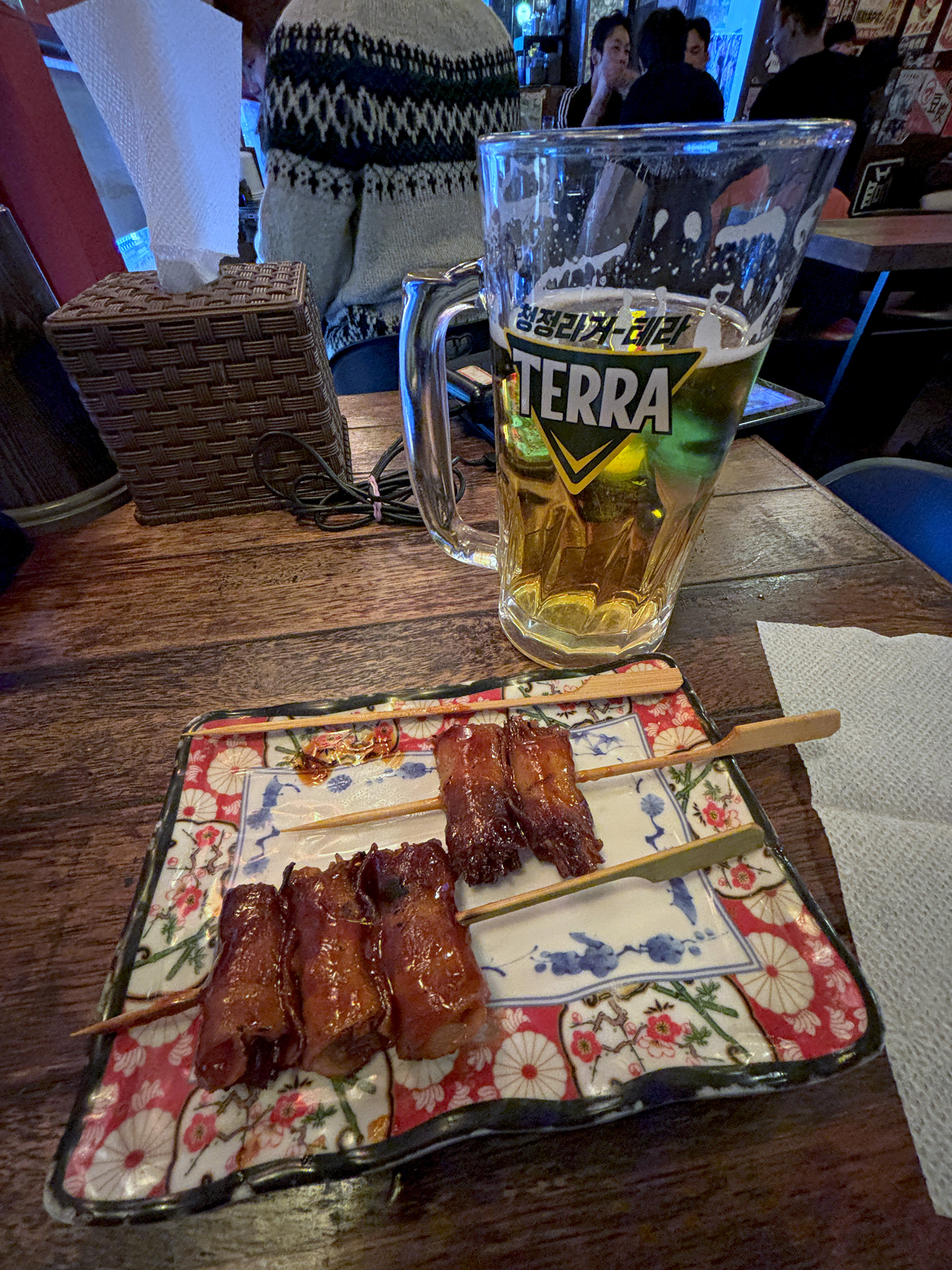
It was most likely that chutney at Mumbai’s Terminal 2 that did the trick. A miserable first leg ensued, with nausea and cold sweats dominating, and not a wink of shut-eye as a result. While in transit at Bangkok’s Suvarnabhumi, a little sleep was made up for, but having starved myself for the better part of a fairly lengthy travel day, I was glad to be walking up that flight of steps, into the warm embrace of an Izakaya-style bar. Skewers of enoki mushroom wrapped in pork belly were hurriedly summoned, along with a pint of Terra to wash it all down. A fairly audacious order, no doubt, given the fragile state of my stomach. Thankfully, I survived.
Bright lights, big city
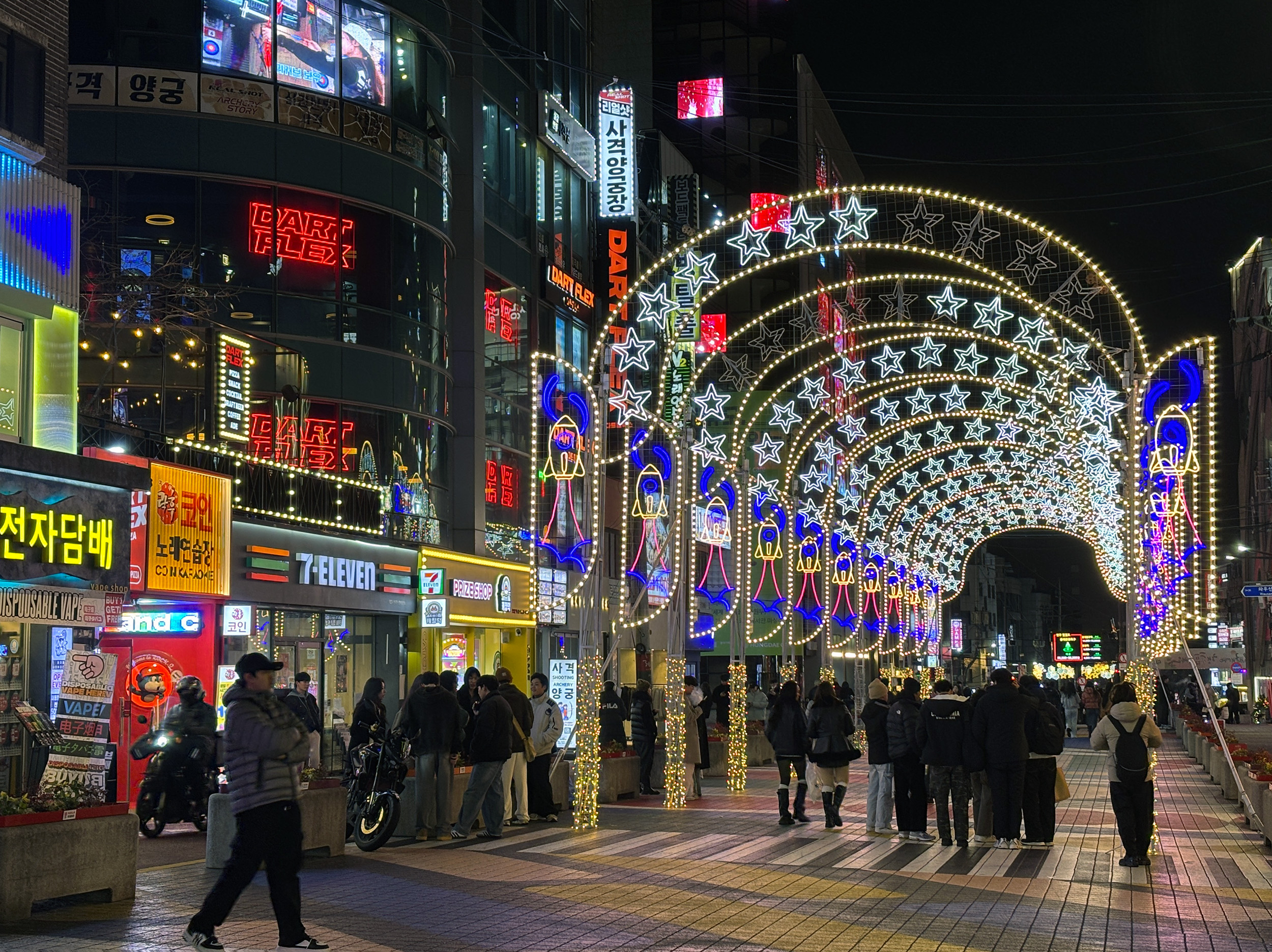
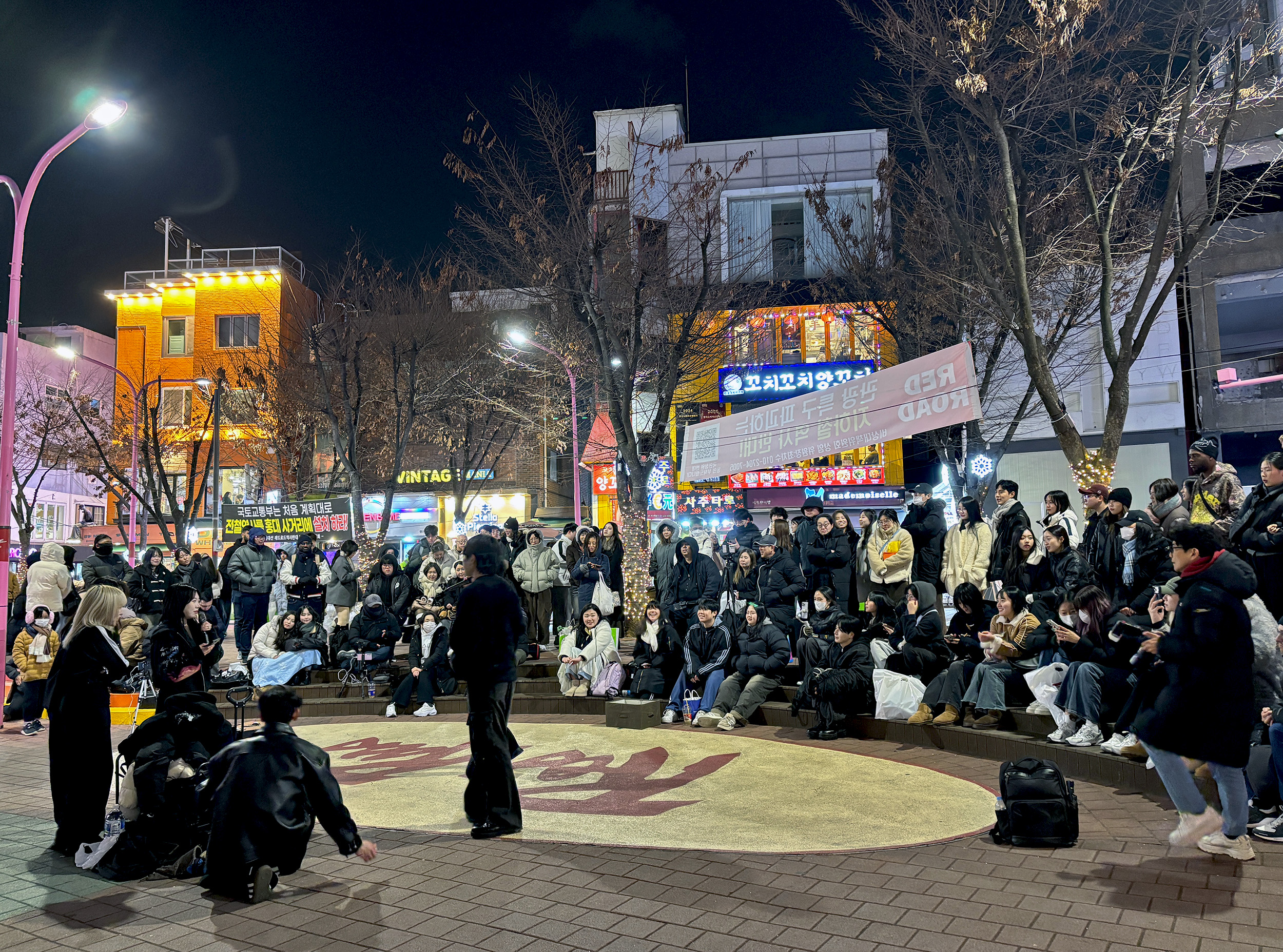
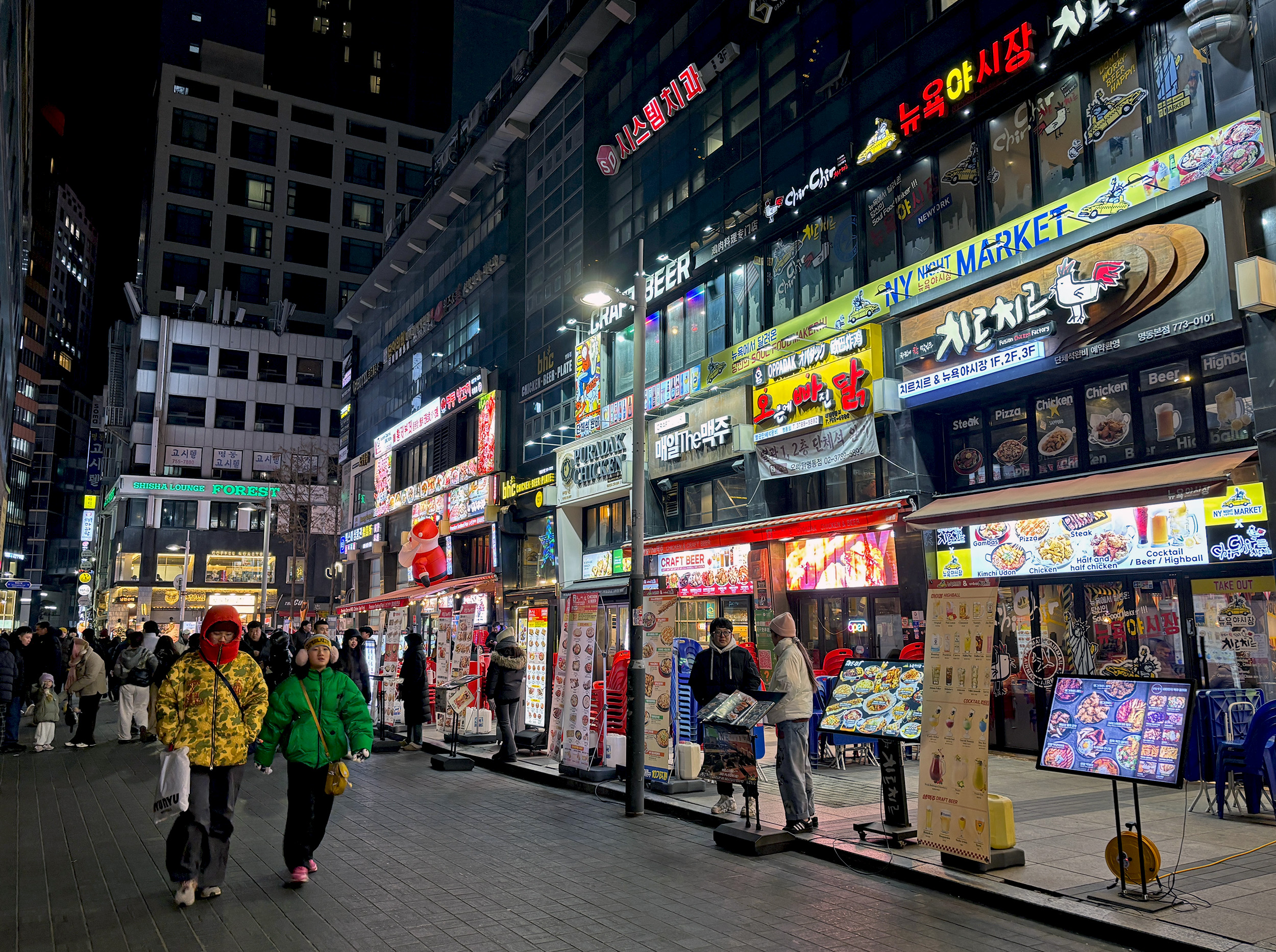
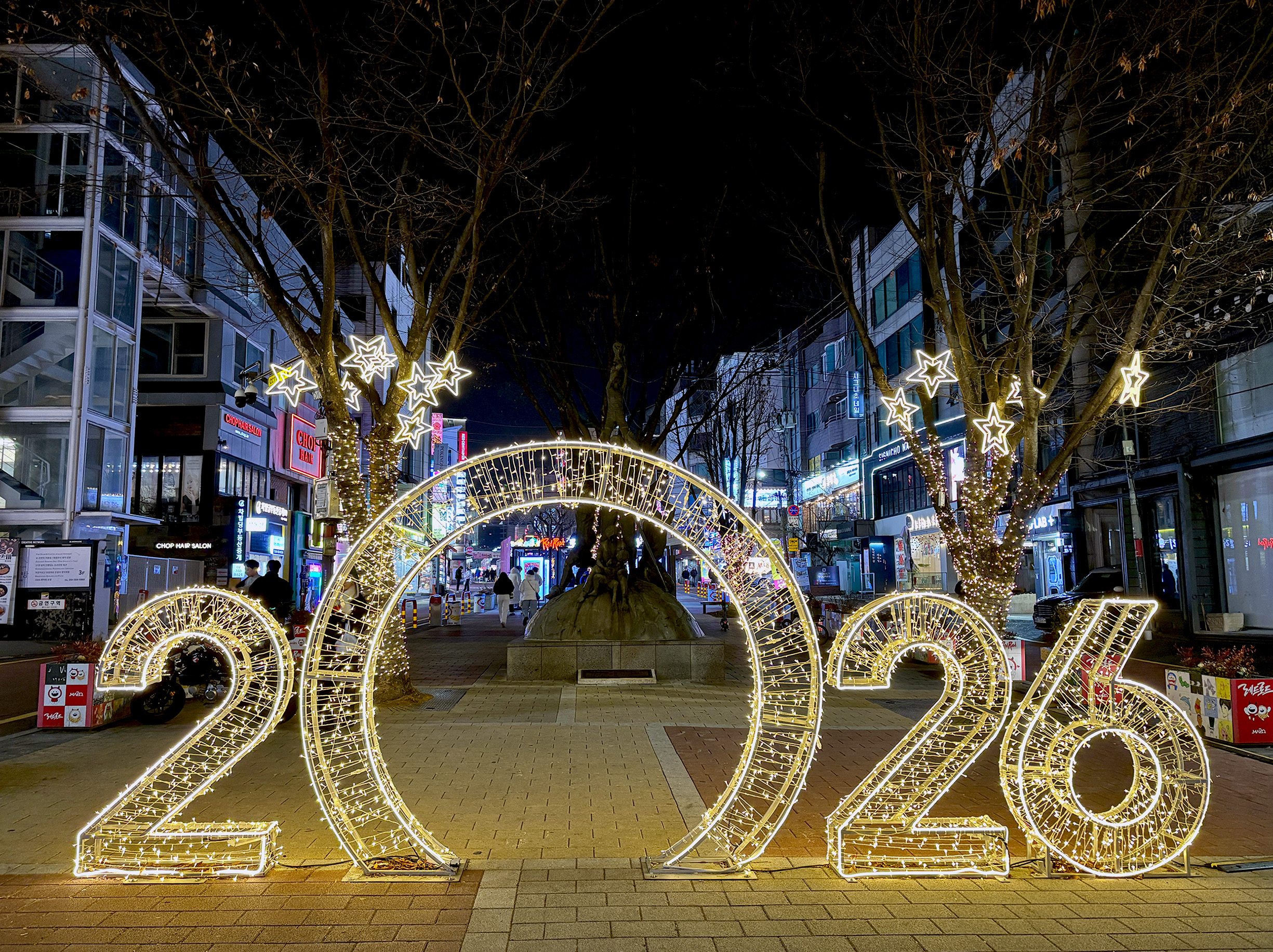
I was in the the Hongdae neighborhood of Seoul, a popular nightlife destination located close to Hongik University. It was well below freezing, and fairly late for a weeknight, but the streets of Hongdae were packed; its pedestrian thoroughfares bedecked in colorful festive lights, and buskers performing to sizable crowds. Caricature shops were brimful of eager customers, karaoke bars had lines out the door, and restaurants serving chimaek (chicken and beer) vied for attention. And then there was Gacha – plenty of it! Different neighborhood, different night – same story. It didn’t have to be a weekend, or the right kind of weather, for Seoulites to be out and about. I was hugely impressed.
One Seoul, many vistas
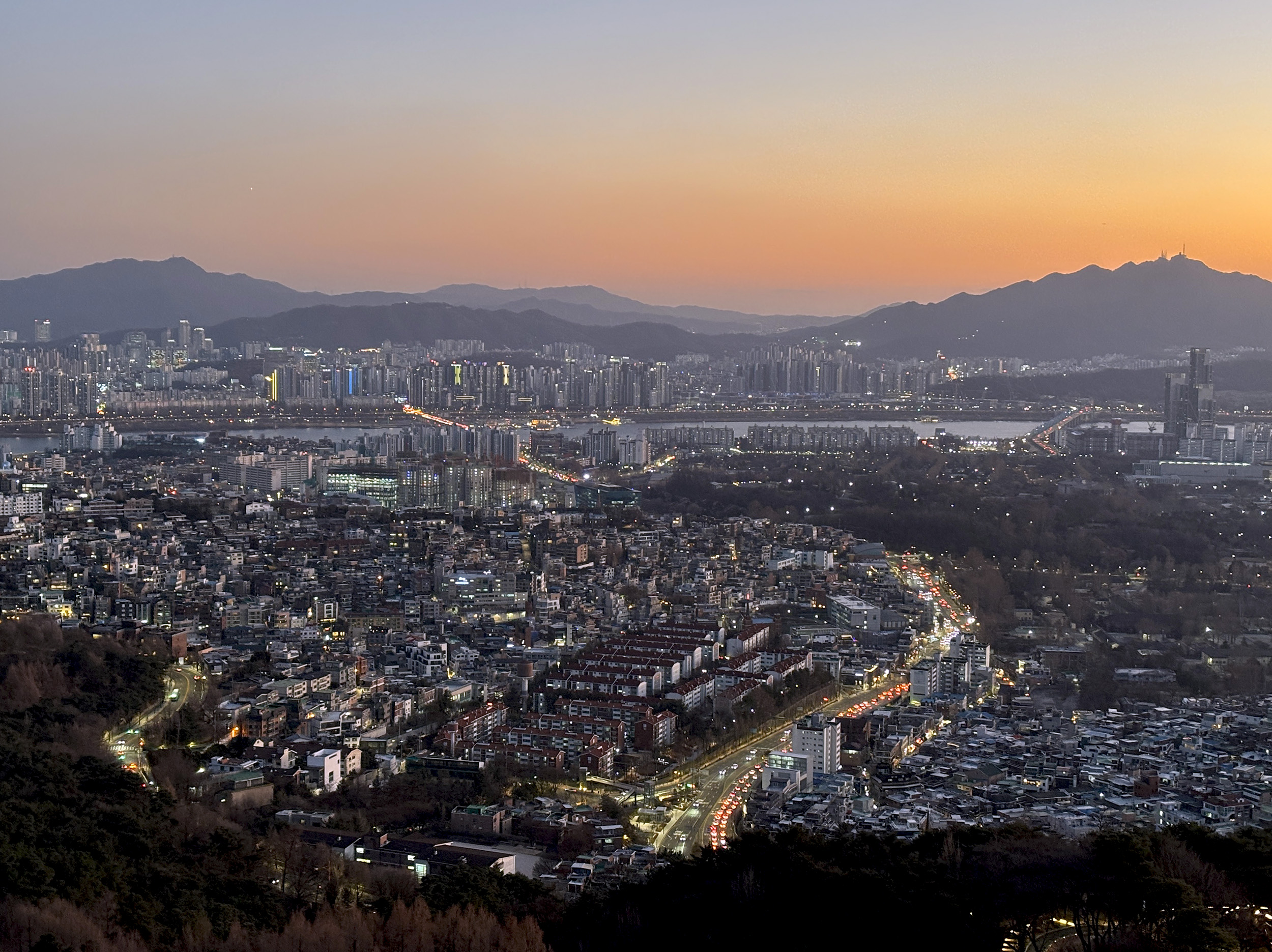
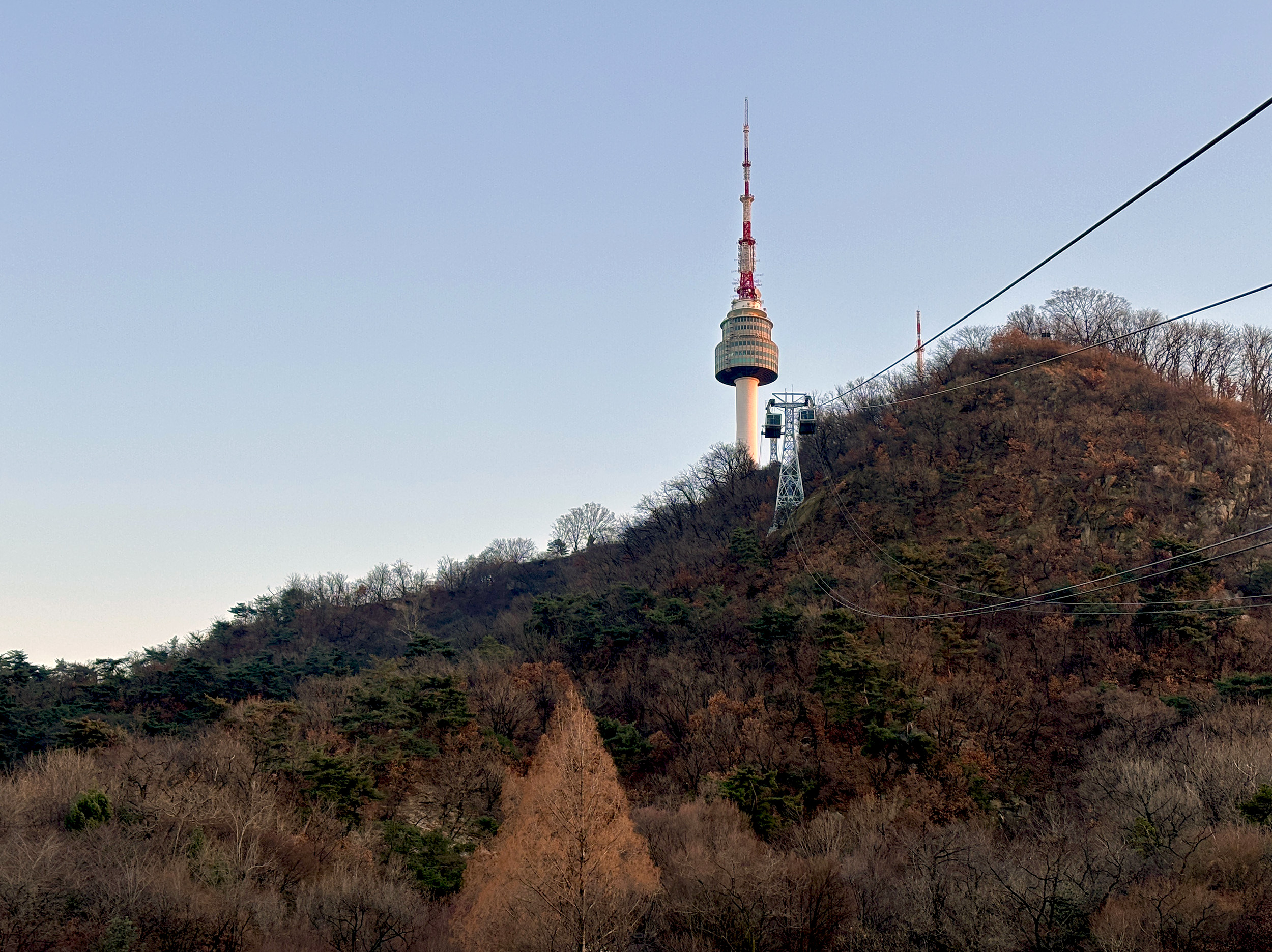
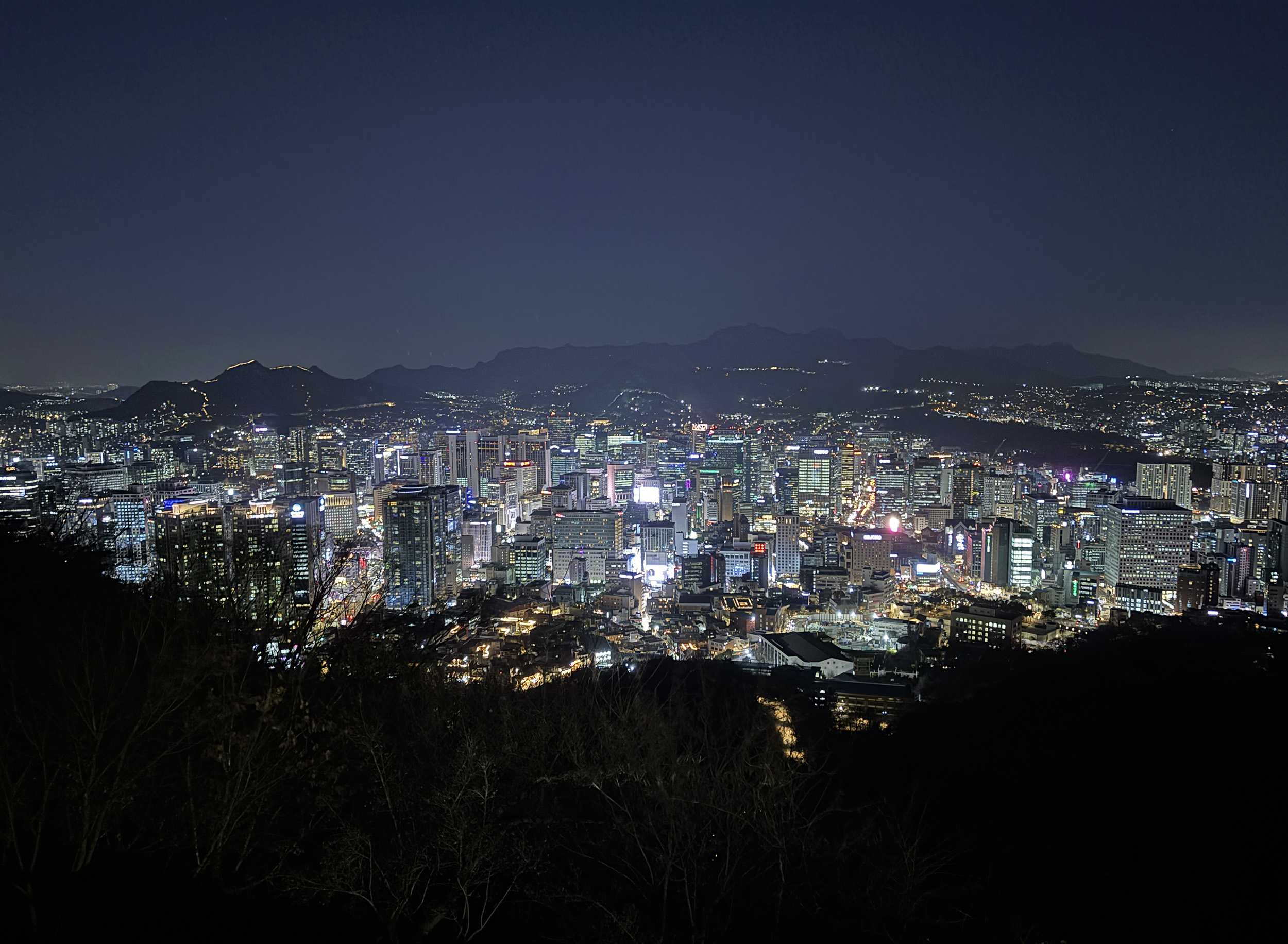
Seoul is settled around the Han River plain, the waterway splitting its northern and southern halves almost evenly. The city’s geography, while dissected by the Han, is also hemmed in by surrounding mountains. Even within Seoul’s 600 km2 footprint lie four peaks, two of them rising over a thousand feet in altitude. Not surprisingly, there is hardly any scarcity of vantages throughout the city, but while most of them require some physical effort to get up to, the summit of Namsan can easily be reached by cable car. Namsan is also the geographic center of Seoul, affording 360° vistas of the Korean capital, and capping its summit is the city’s iconic TV tower. Whether or not you shell out the extra wons to access it, the views from Namsan are guaranteed to delight.
A culture of villages
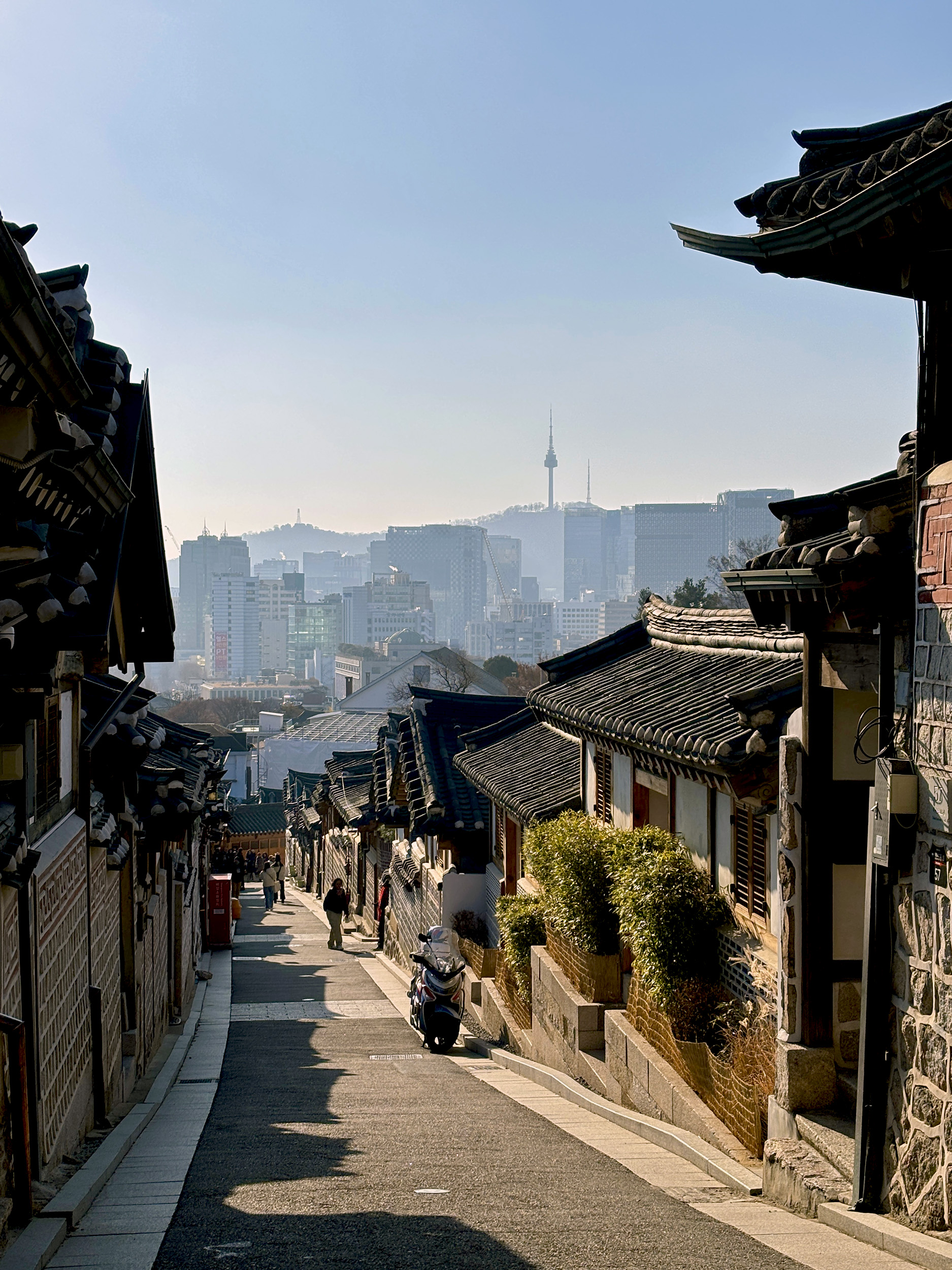
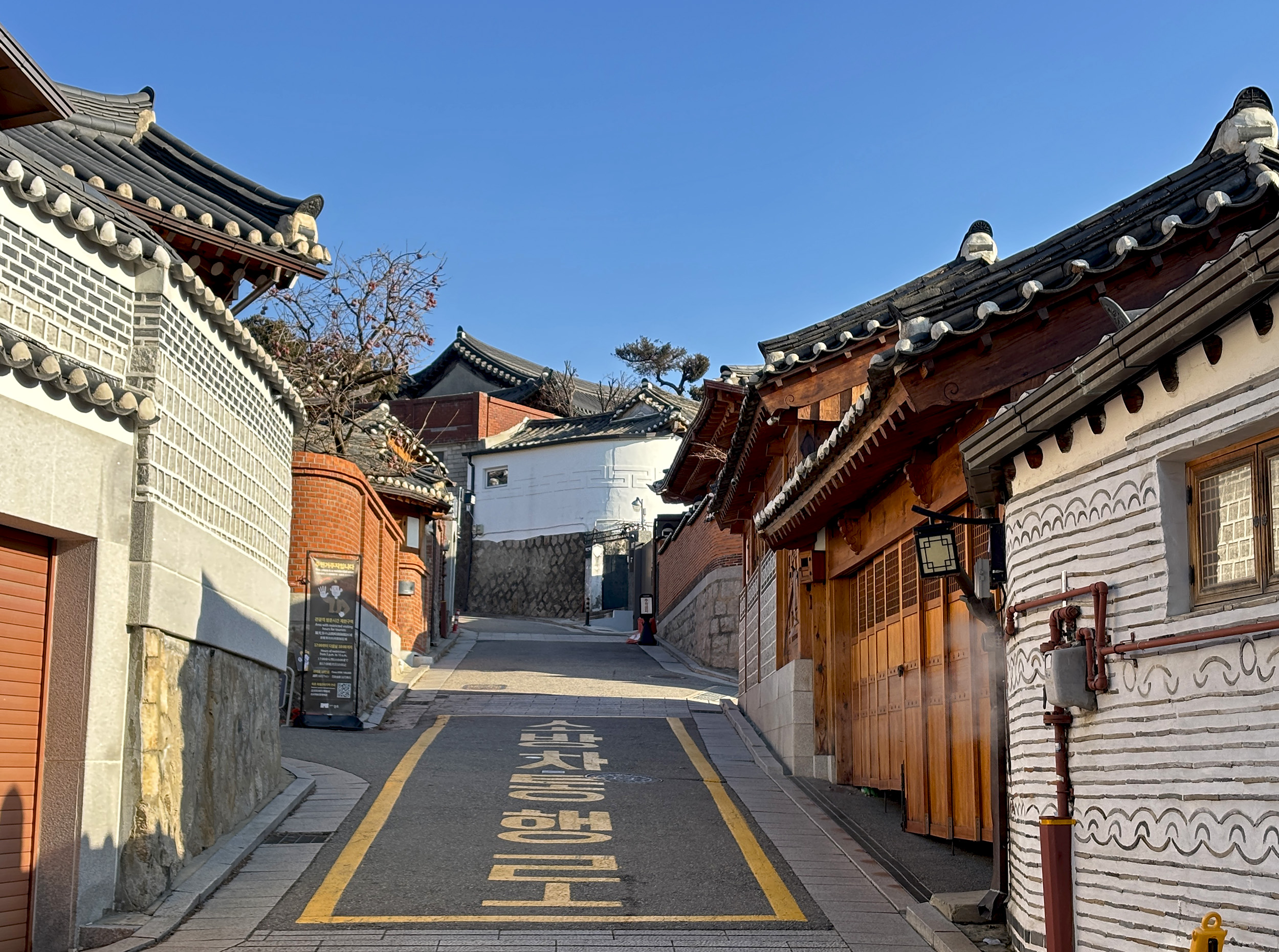
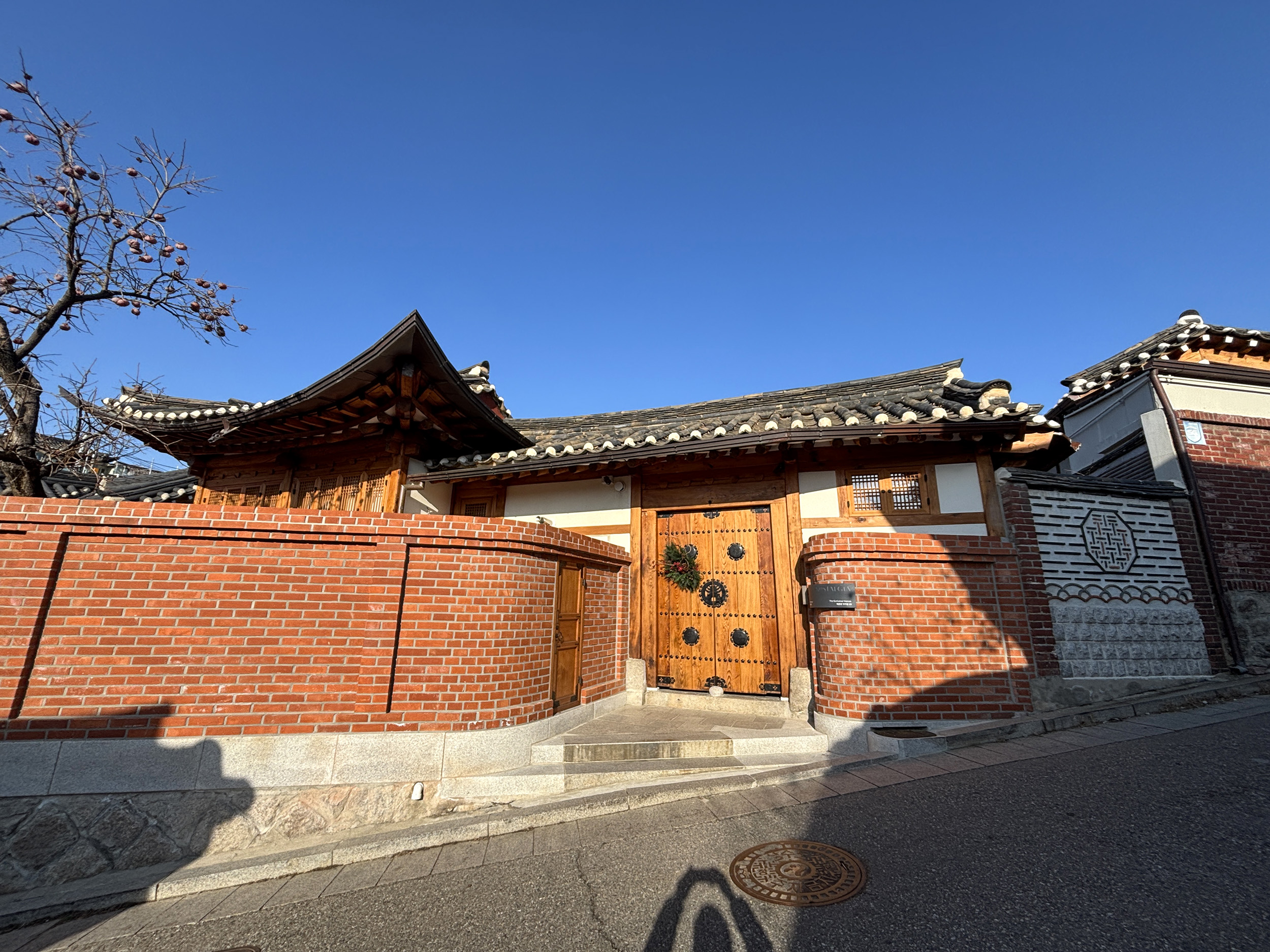
Nestled at a milder elevation than Namsan is Bukchon Hanok Village, a phenomenal juxtaposition to the modern city that lies at its feet. You could come here for the views – the most famous of which is southward toward the aforementioned mountain – but Bukchon is perhaps better known for having one of the best preserved collections of hanoks, or traditional Korean houses. While the ones found in Bukchon are relatively recent, the earliest hanoks date from the 14th-century, their design credited to the Joseon dynasty. Bukchon is one of eight such traditional villages located across the city, and while a lot of them are now commercial, Bukchon remains steadfastly residential, with strictly enforced hours for visitors. Get there on the early side if you can, for the many hanoks, and the alleys they stand on, look absolutely resplendent in the morning light. Plus, you’ll have less influencers to deal with.
A nod to the past
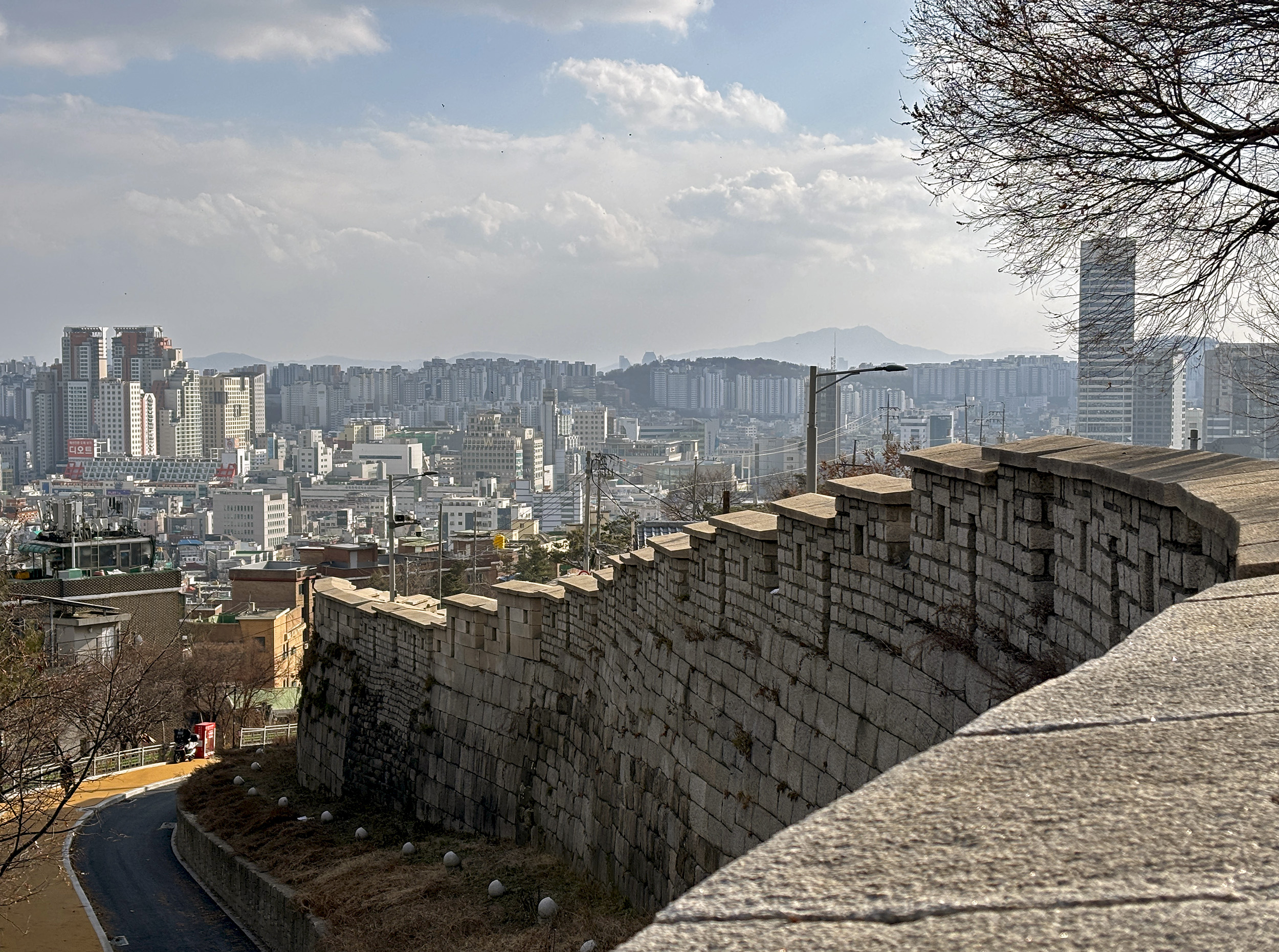
Ihwa-dong is one of Seoul’s oldest neighborhoods, one that starts out flat, then gradually arches up to match the contours of Naksan, one of the city’s four inner peaks. At its very top lies a “mural village”; a collection of narrow alleys, steep stairways and tightly-packed homes, replete with an eye-catching collection of murals, that beg you to keep exploring. When there’s nothing left to devour, artistically, you’d more than likely end up by a stretch of Seoul’s old city wall. Another relic from the Josean dynasty, the rampart is a part of Naksan Park today, a location that’s perhaps recognizable to fans of the Netflix show, KPop Demon Hunters. For the rest of us, it’s an invitation to follow an extensive trail system, which the city of Seoul has masterfully built along remaining sections of that fortification.
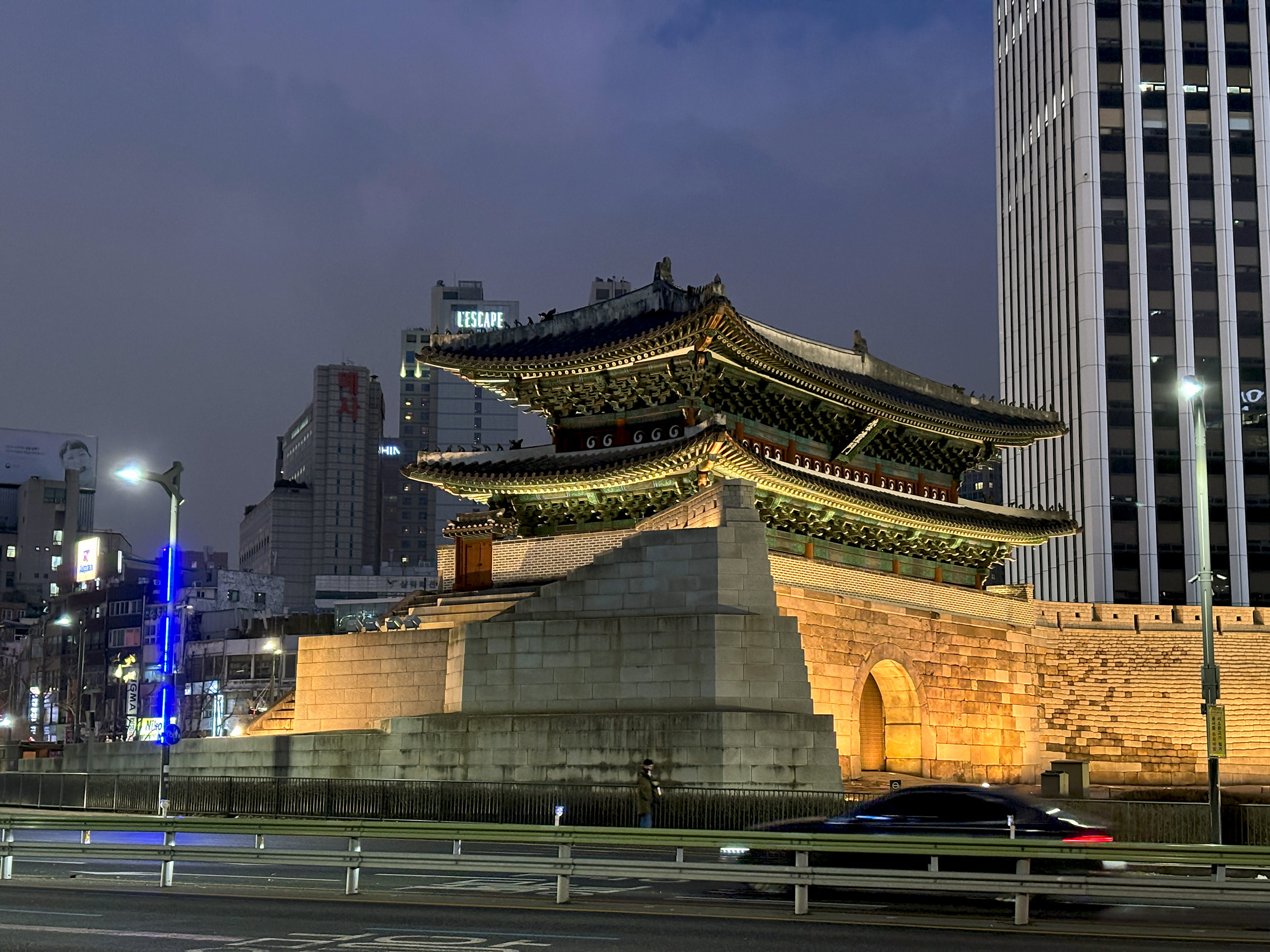
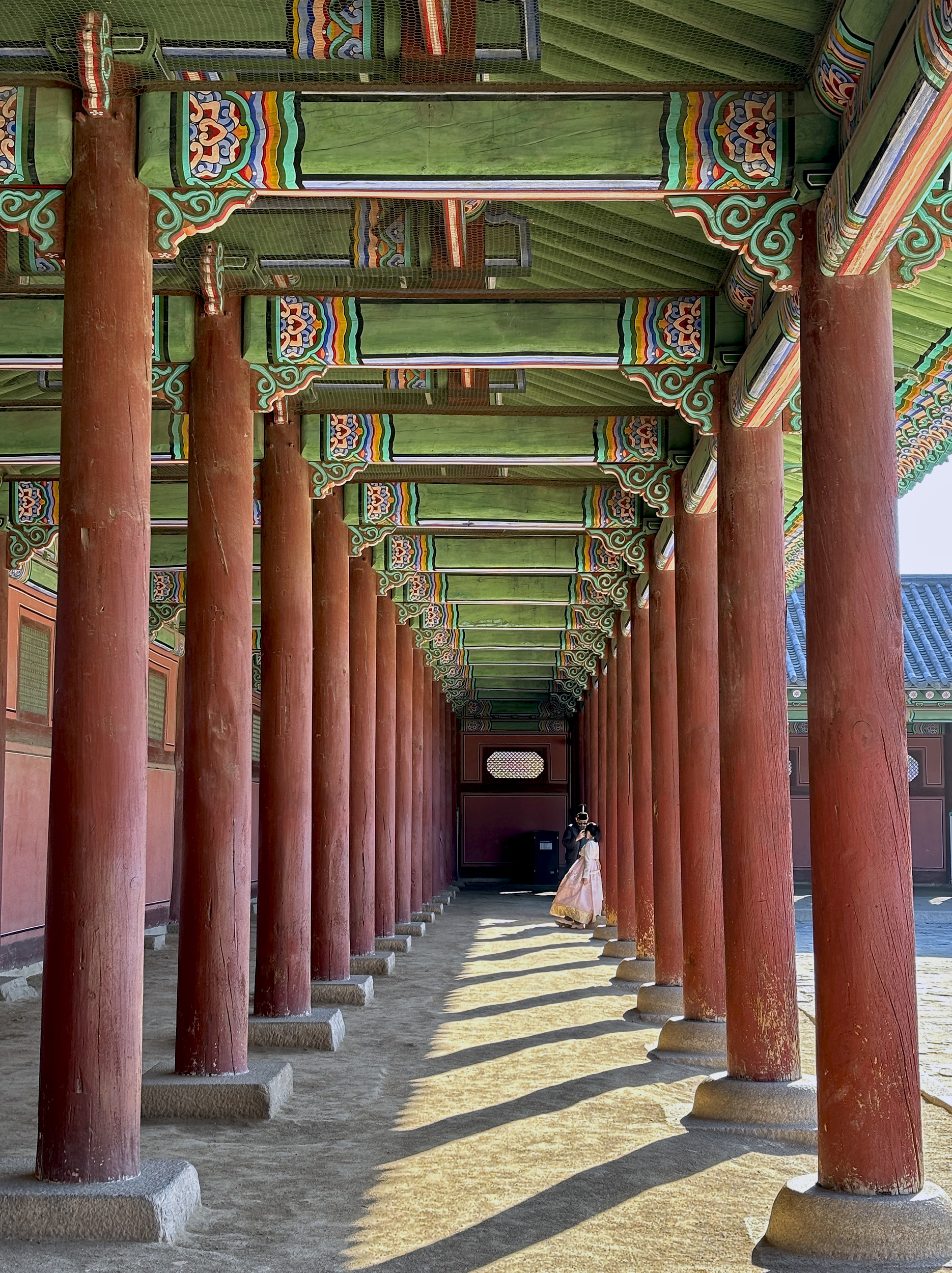
During their savage 35-year occupation of the peninsula, Japanese imperialists wreaked havoc on the city of Seoul, as they did with the rest of Korea. Those remnants of the city wall, a handful of historic gates that have survived, and the labor of love that has gone into restoring the city’s palaces, are a testament to how well the past has been preserved, and persevered with, despite the city’s overarching leap into modernity.
Reuse and renewal
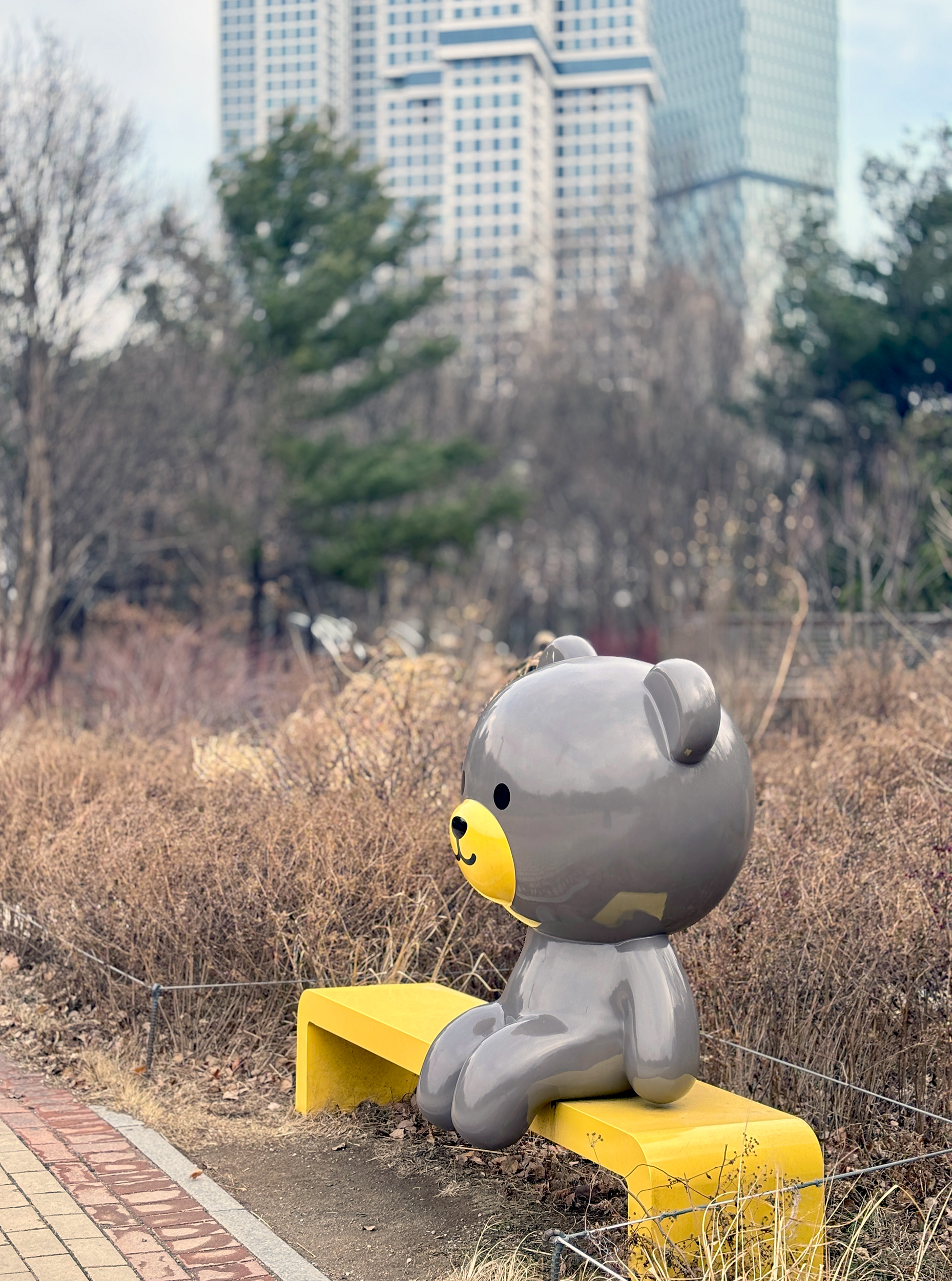
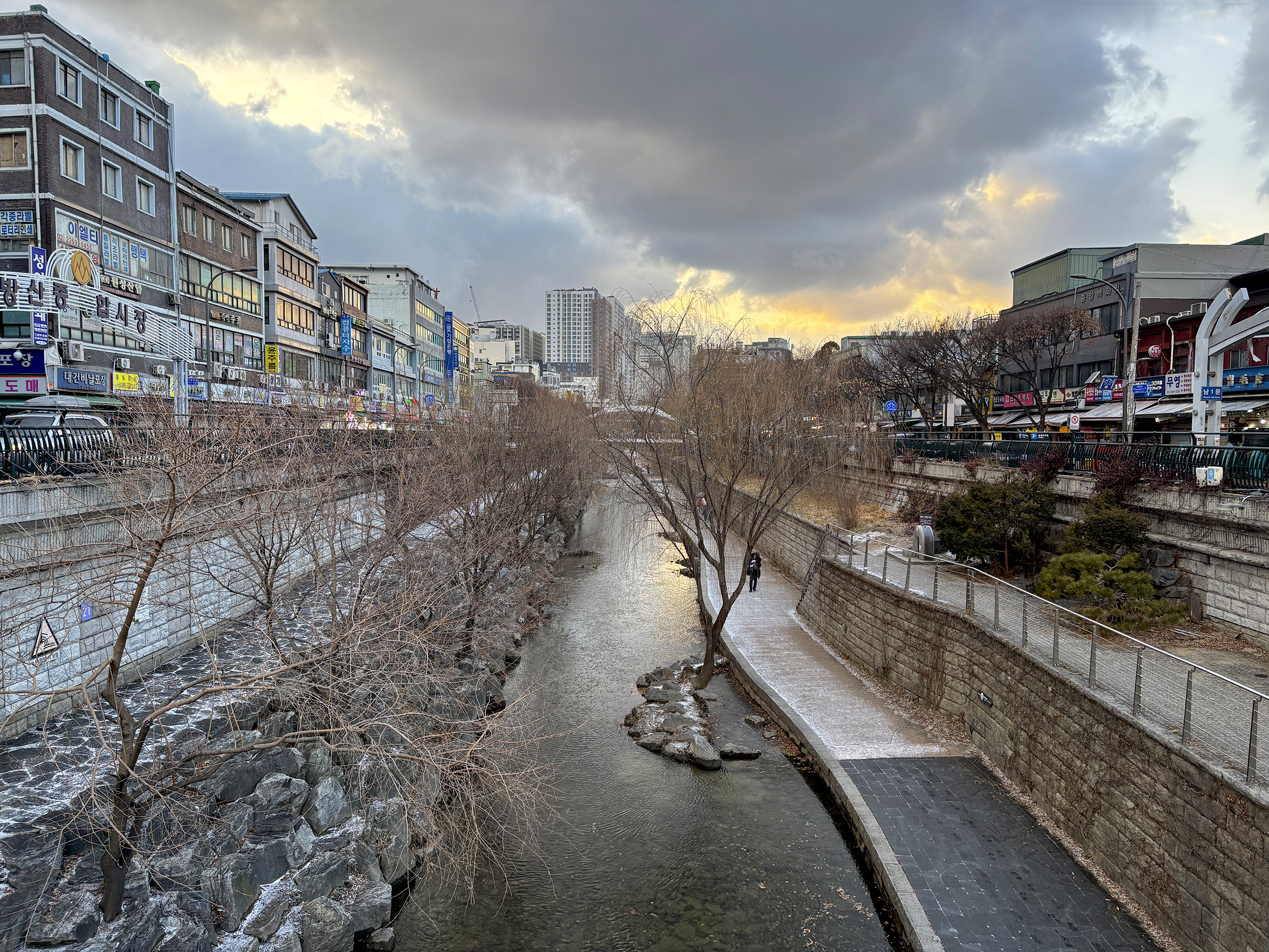
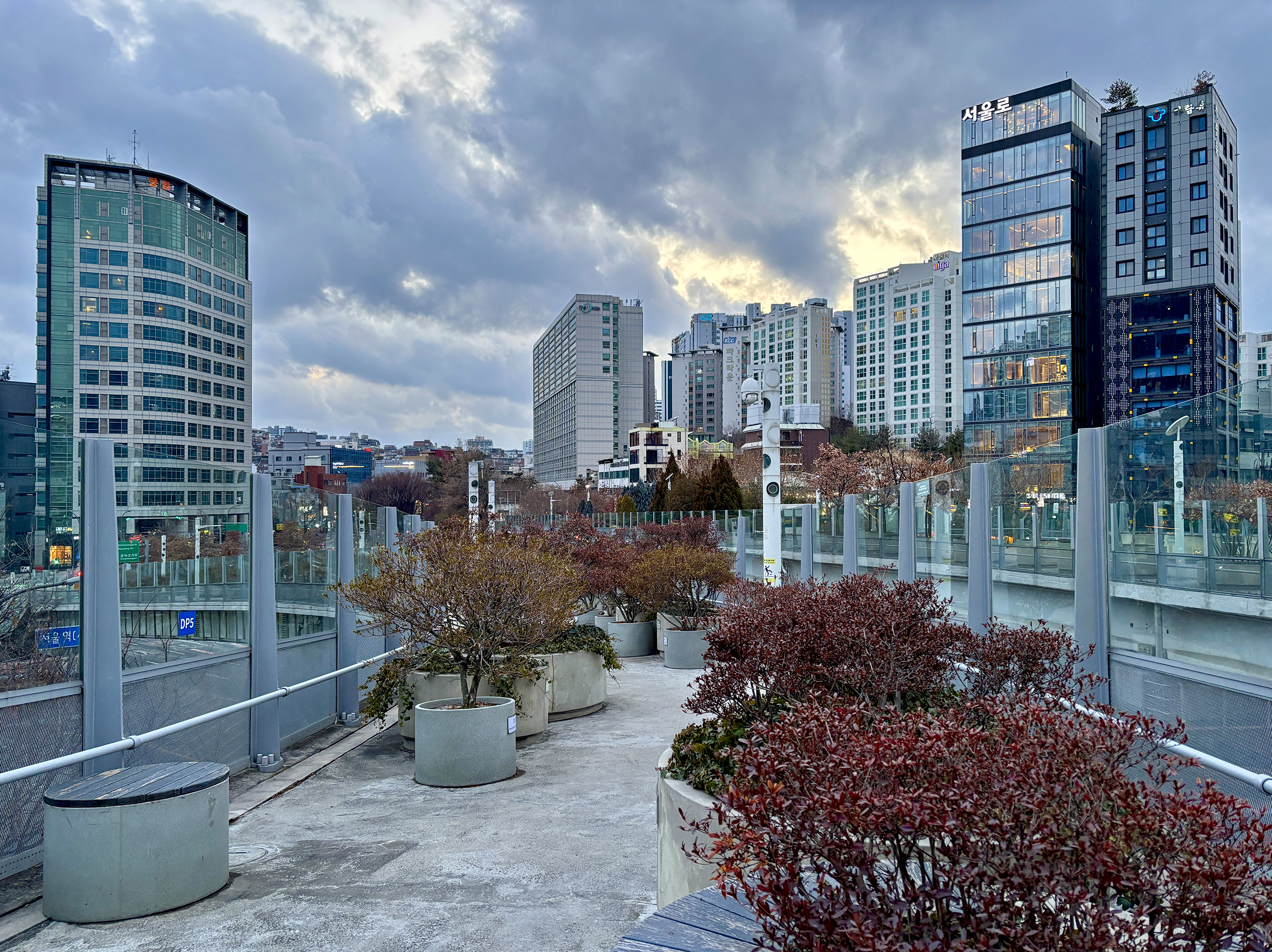
Not only has the city done a remarkable job in restoring its historic edifices, its bold experiments in urban renewal can hardly be ignored. Perhaps no better place to start than Cheonggyecheon Stream. The 11 km (~7-mile) long waterway, running right through central Seoul, began life as a sewage channel. In the mid-20th century, it was filled with concrete to accommodate an elevated highway, only to be reclaimed as a stream once more in 2005. Part of that effort incorporated pathways along both its banks, and as a result, it’s a much-loved and well utilized public space today. Then there’s Seoul Forest. Home to royal hunting grounds till the early 20th-century, the area subsequently transitioned to become the city’s first water treatment plant. While vestiges of that infrastructure remain, and form part of the landscaping today, Seoul Forest is now the city’s third largest green space. And last but not the least, right in the heart of downtown, sits Seoullo 7017. Opened in 2017, the elevated walkway and park – similar to New York’s High Line – was repurposed from an abandoned highway overpass, one that dated to 1970. A novel concept, no doubt, and admittedly, a clever name too!
Festive cheer
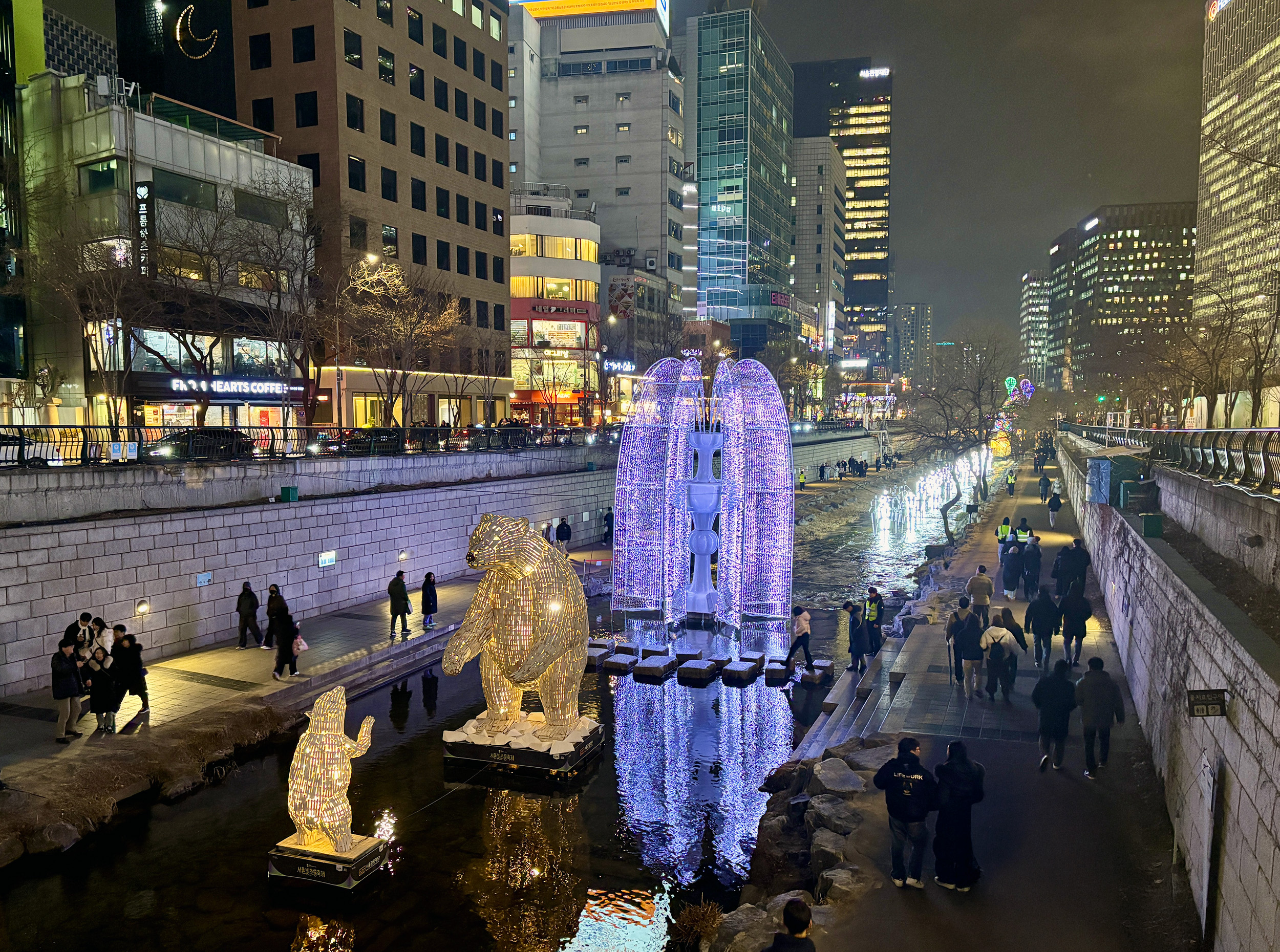
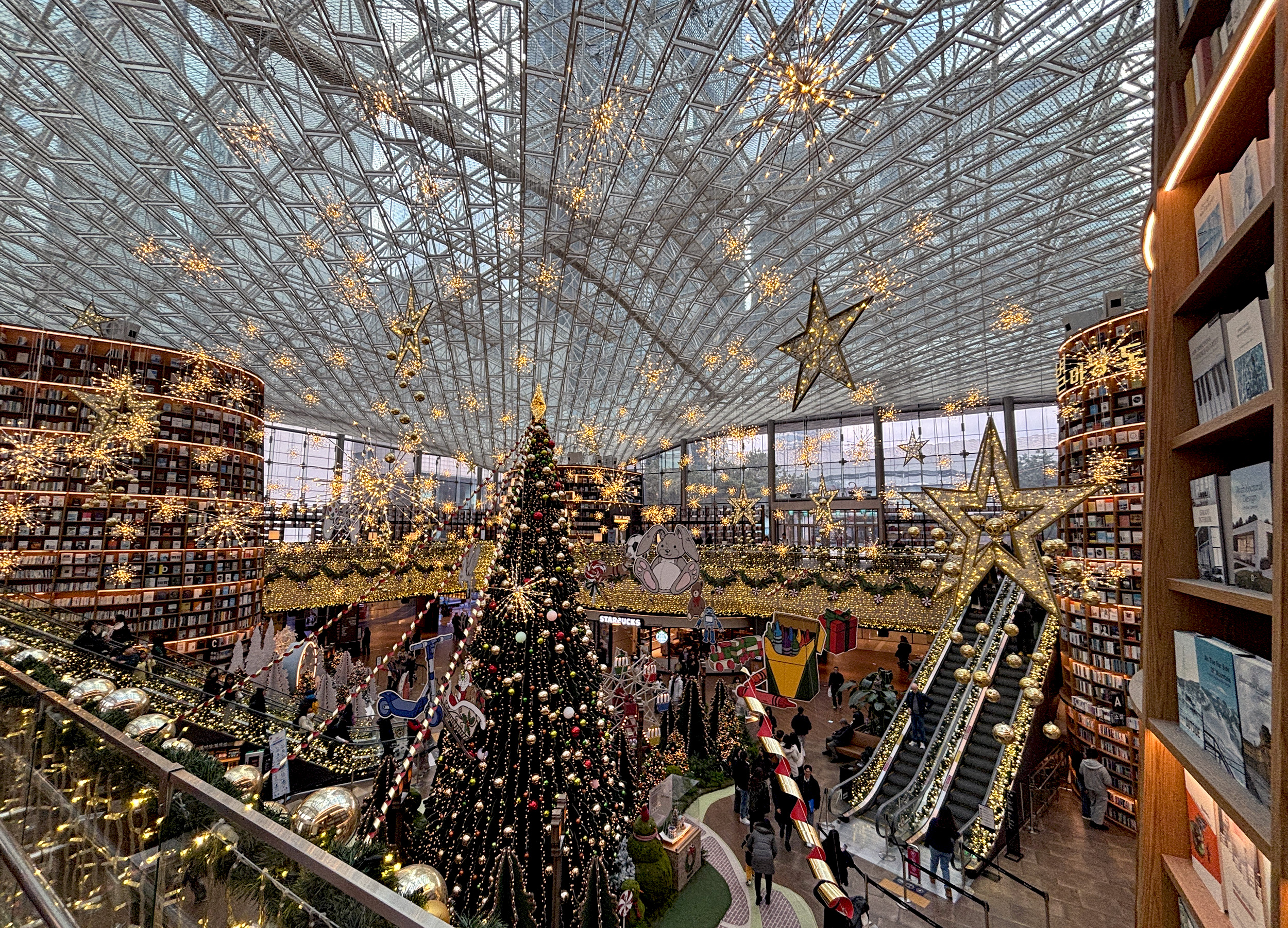
Each winter, Cheonggyecheon Stream plays host to the Seoul Lantern Festival, featuring hundreds of modern light installations, as well as traditional hanji (Korean paper) lanterns, with wide-ranging themes, covering everything from polar bears to ramyun! One of the most magical large-scale displays of light I’ve ever experienced, the festival also included captivating mixed-media works, beautifully woven into the natural and built environment along the stream. The festivities were hardly limited to the lantern fest though. From the custom light arrangements at Hongdae, to the decor at Myeongdong’s night market, to the stunning cardboard cutouts at Starfield Library, the festive cheer was more than abundant across Seoul. If I’d showed up there with no calendar for reference, I would’ve sworn it was Christmas eve.
All hail the mixed rice bowl
Having had the privilege of easy access to it while in New York, I’m no stranger to the world of Korean cuisine. But traveling to the source invariably has a hidden surprise or two waiting for you, and at least a handful of items guaranteed to never make it onto a menu in the west, regardless of the size of the diaspora. Then there’s the world of local chains – cafes particularly – all waiting to be investigated.
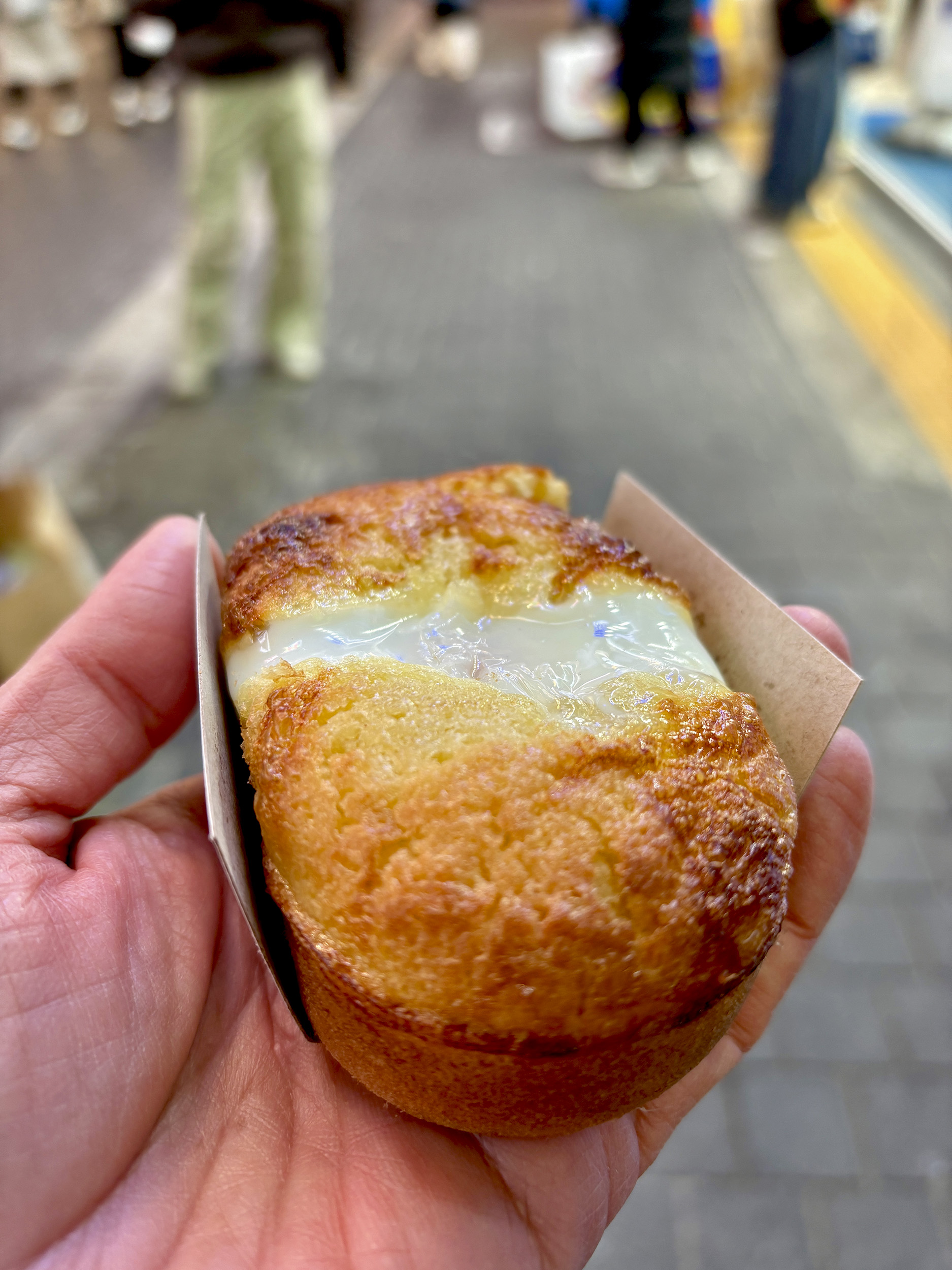
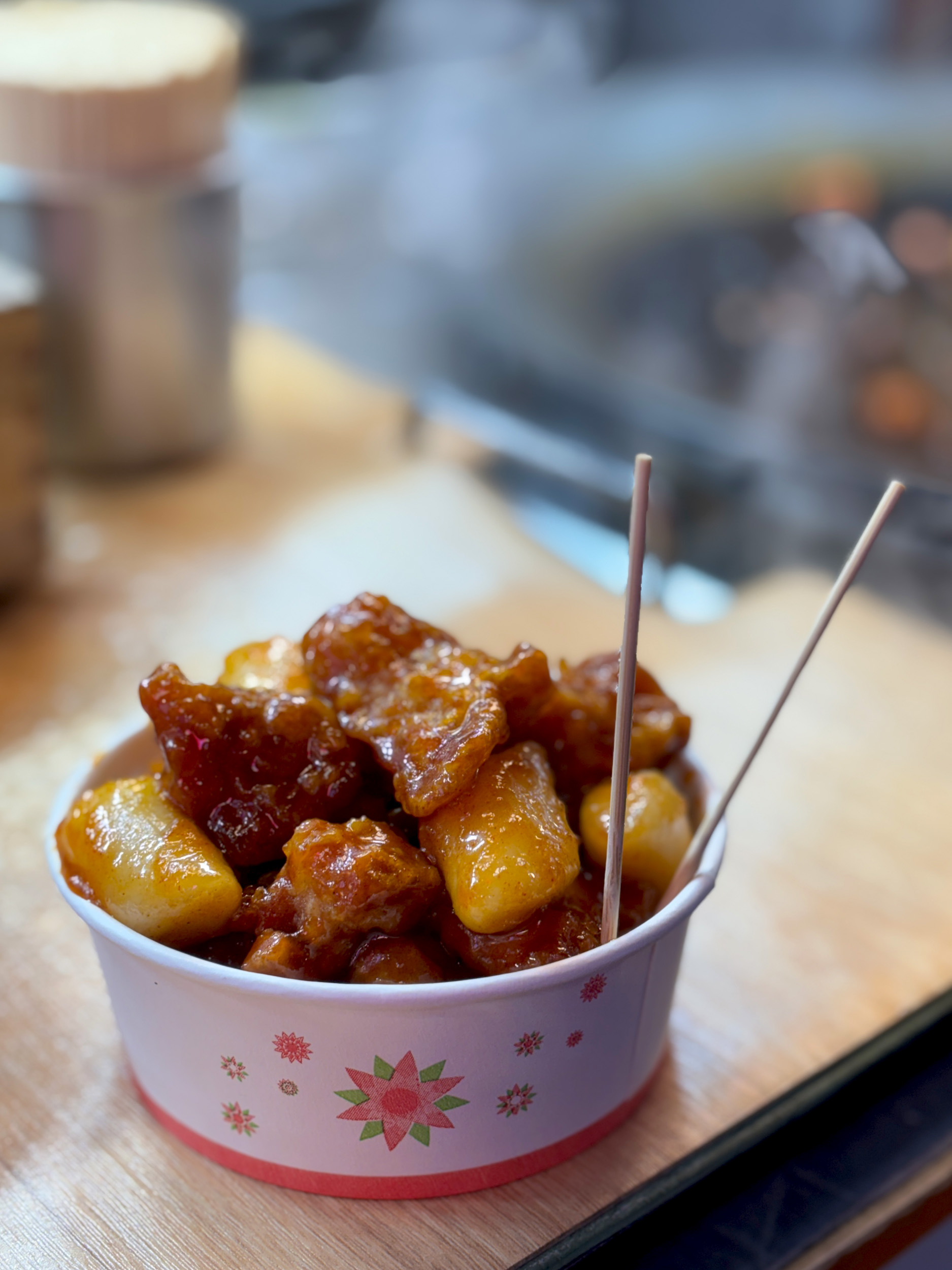
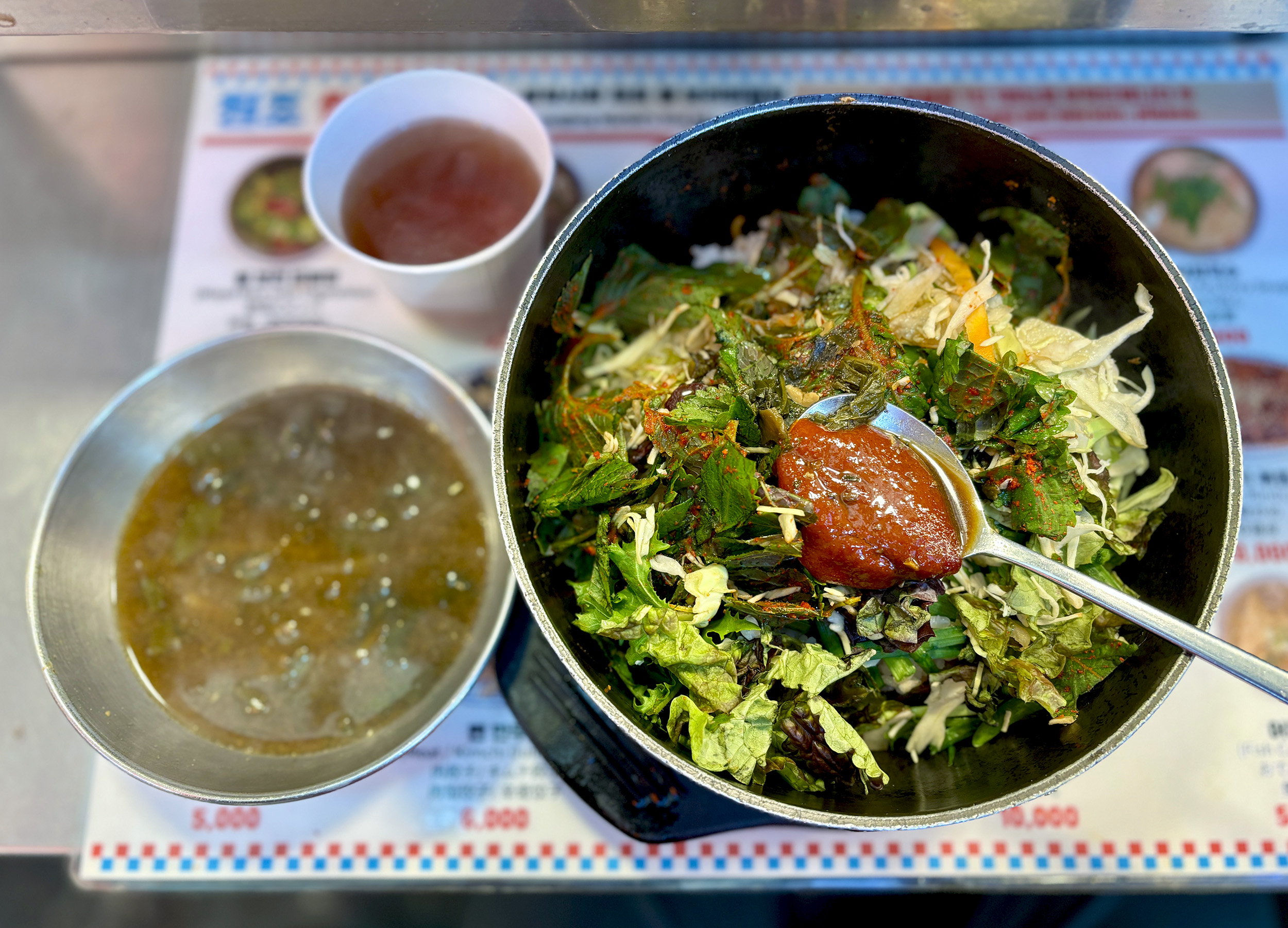
With the country seemingly in the midst of an all-things-bread craze, up there amongst my top hits were the egg toast at Myeongdong’s famed night market, and the steamed buns at a minimalist cafe in Ikseon-dong. The combination of yangnyeom chikin and tteokbokki – a marriage made in heaven – must find honorable mention here too. But there was nothing to beat that humble bowl of “mixed rice”, one that I’m all too familiar with, prepared right in front of me at a food stall at Gwangjang Market. Accompanied by a cup of tea, and a tasty broth of some description, my serving of bibimbap was one of the most satisfying meals I had while in South Korea, and comforting too, on what was a particularly frigid day.
The proverbial train ride
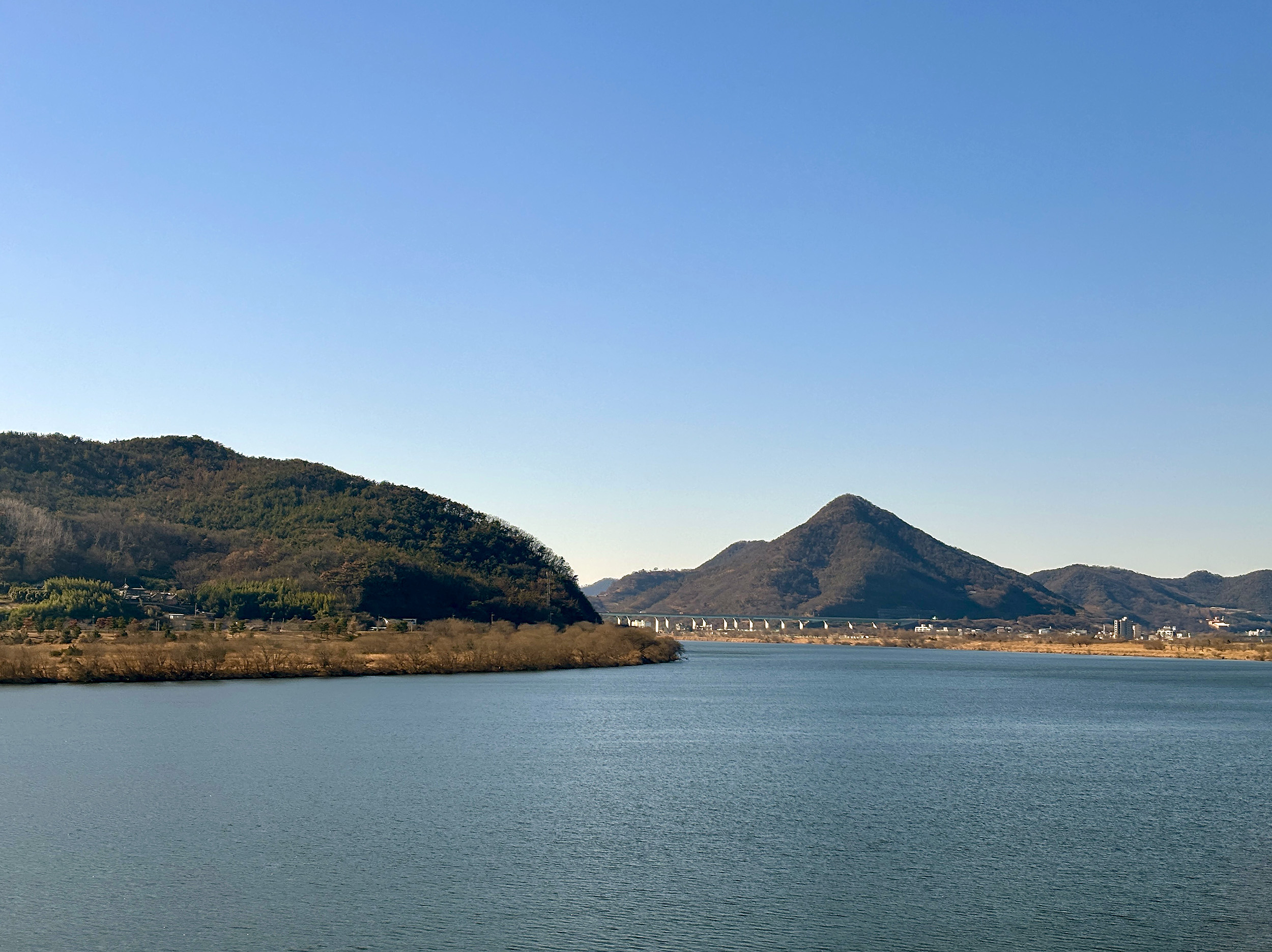
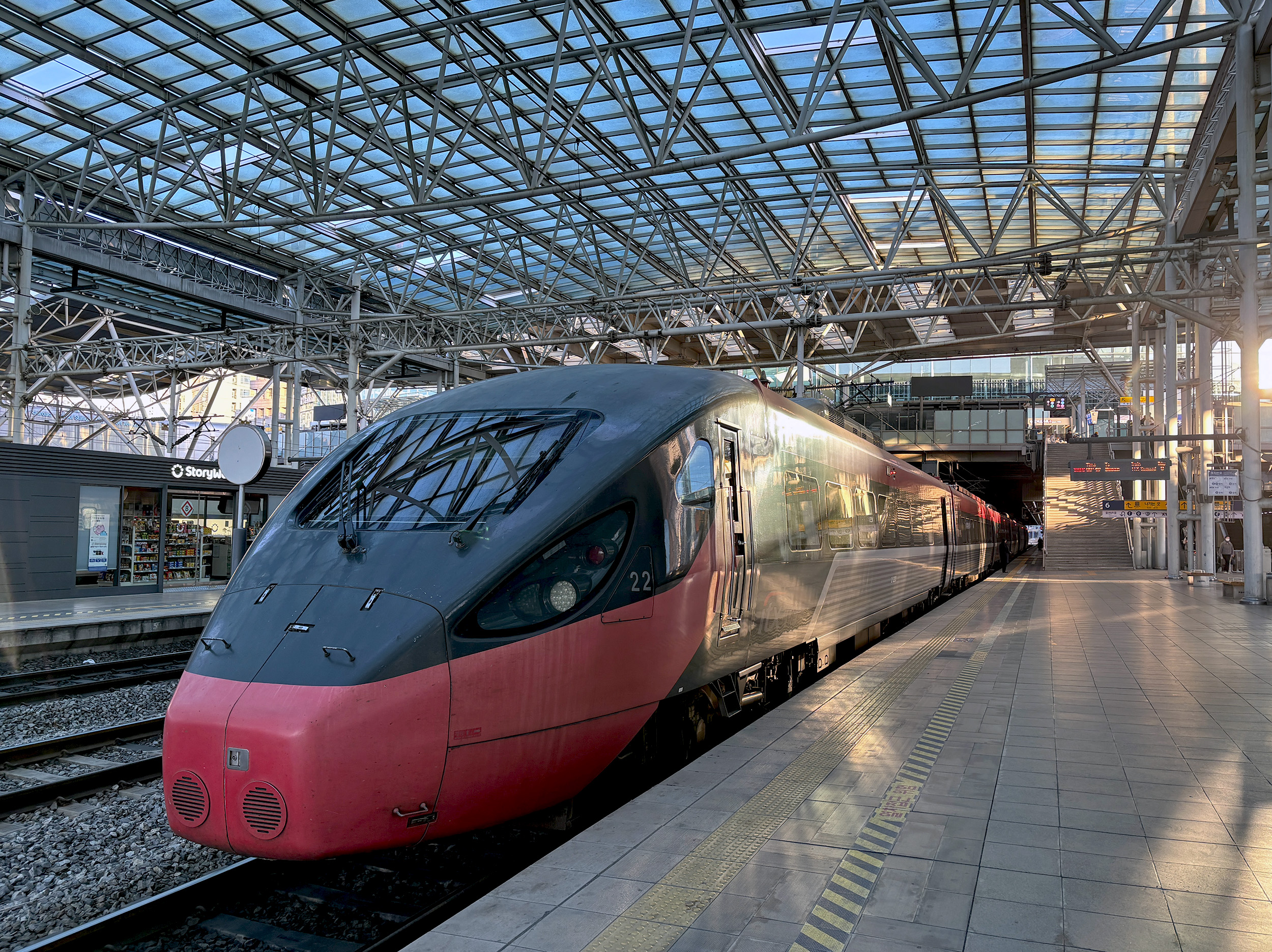
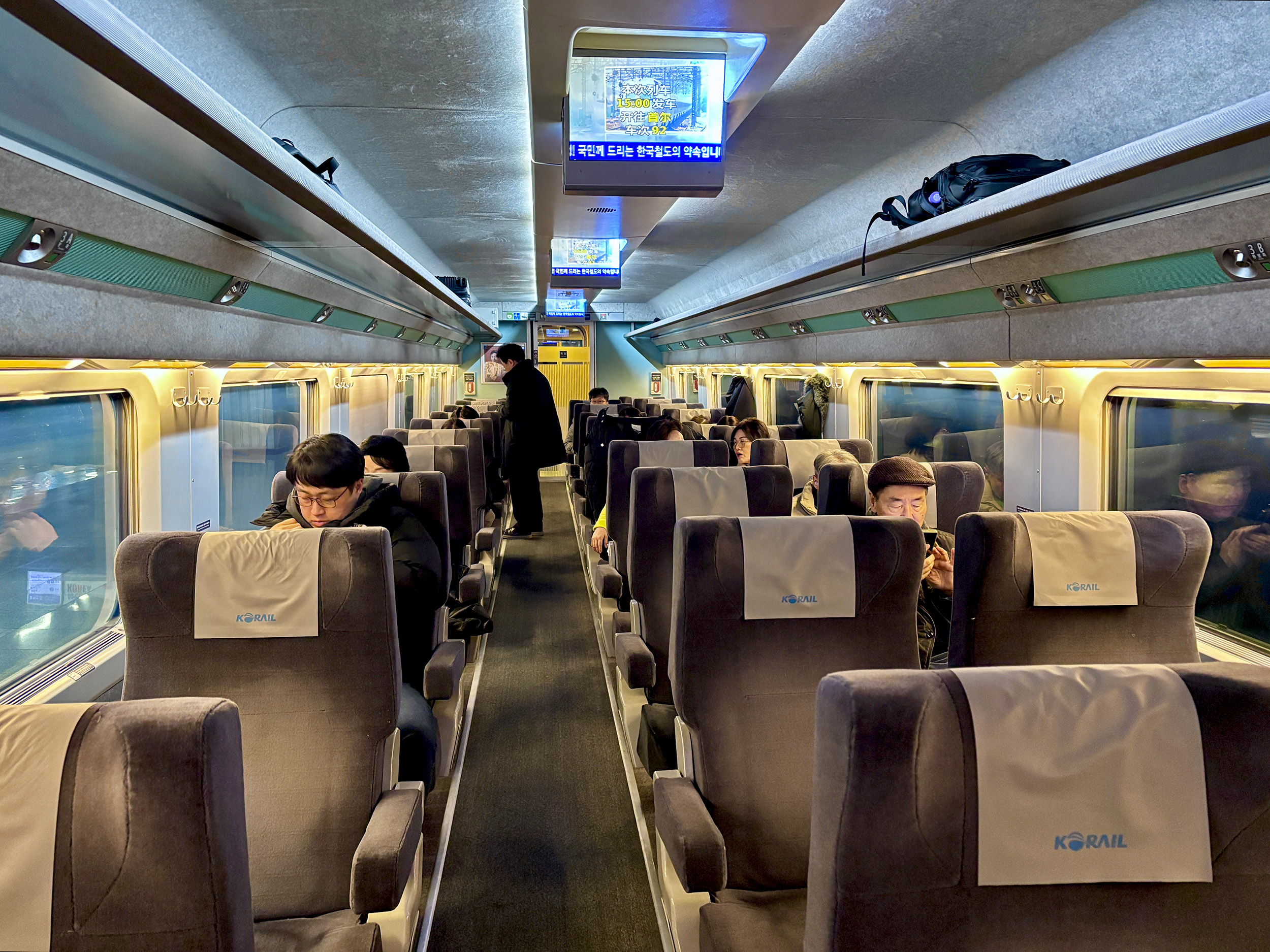
There is no one “Train to Busan”. There are in fact 98 departures each weekday, and several varieties of service amongst them. I took a relatively slow one on the outbound journey, and on the return leg to Seoul, a KTX high-speed train, the one that features in the much-hyped film. There was no cinematic twist on either of those journeys, and nothing remotely apocalyptic either. I suppose a four-minute late arrival into Seoul could count as dramatic? What I discovered though was just how mountainous the country is – over 75%. How built up it is – that should’ve come as no surprise. And how the South Korean rail system is as good as they come. Again, no surprise. Full disclosure: I’m yet to see the film.
Santorini of the East
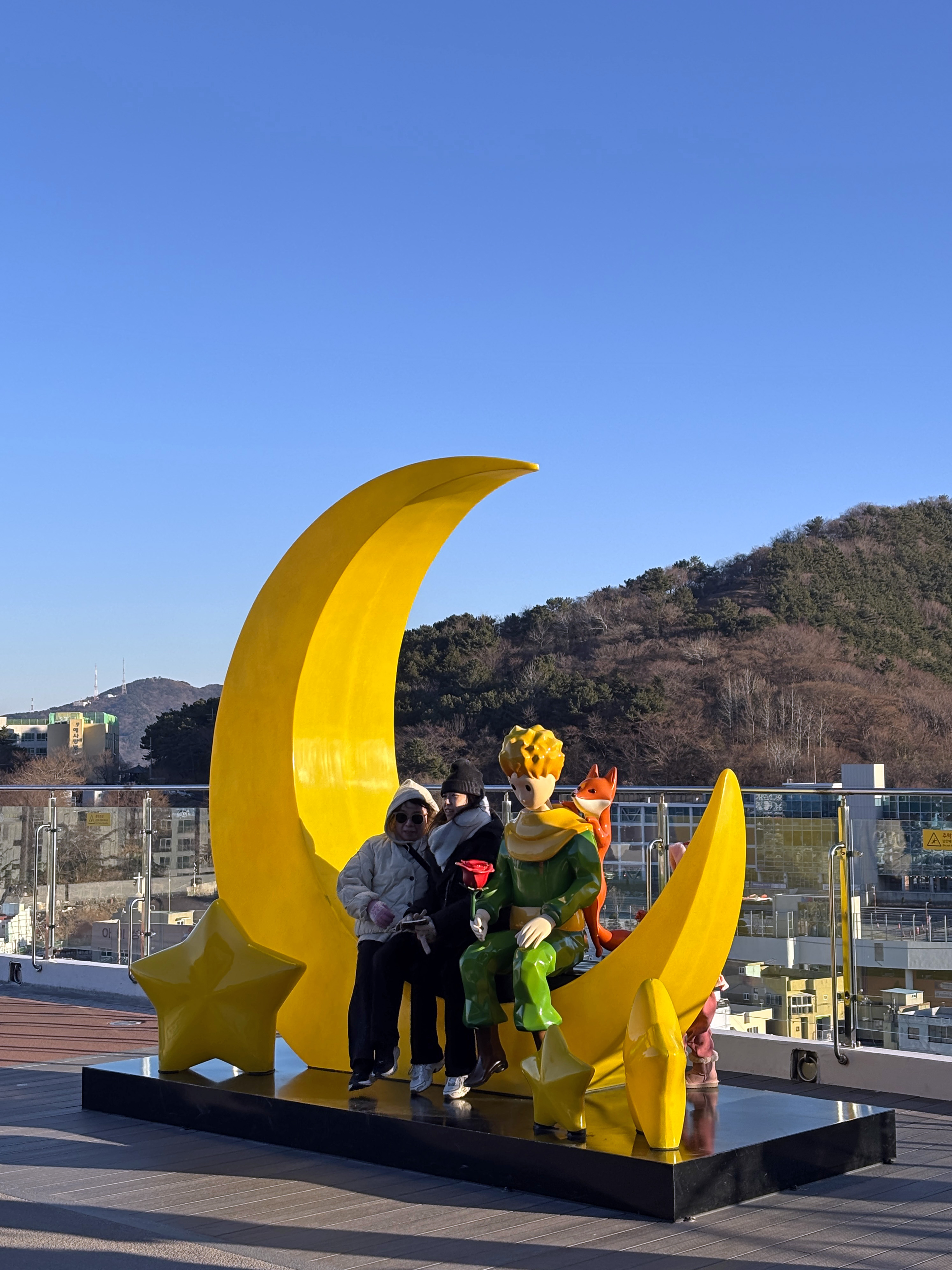
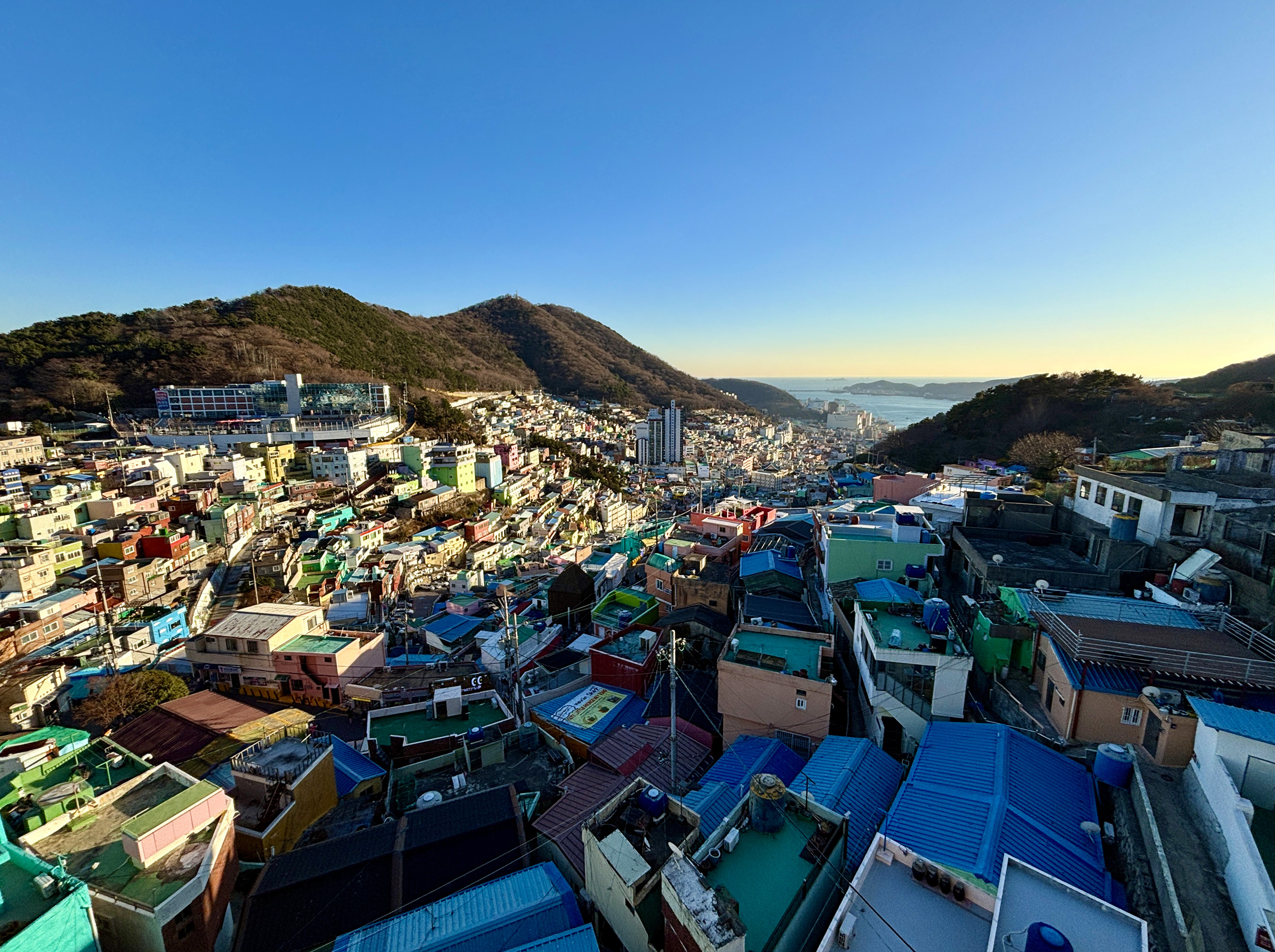
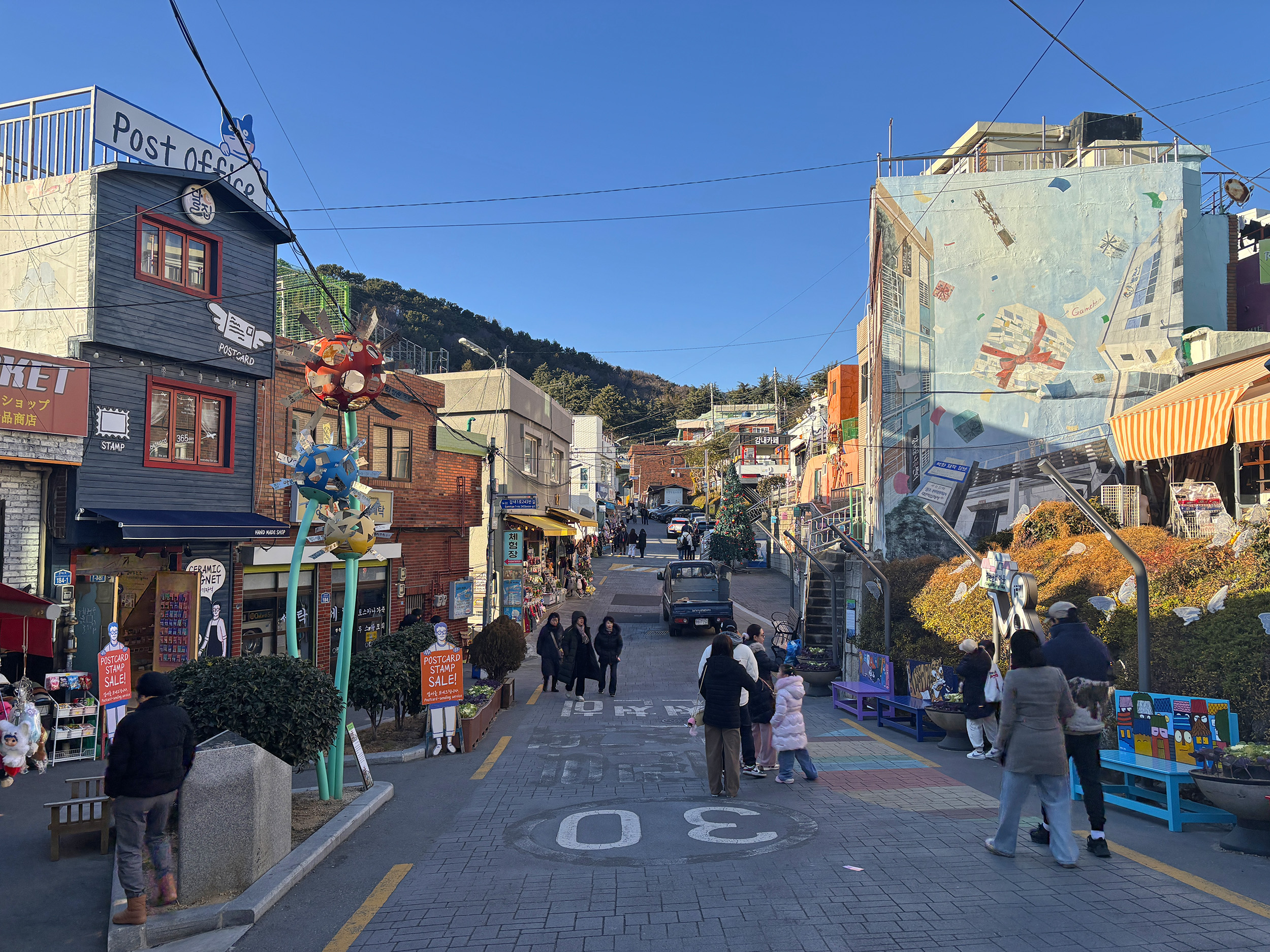
In the early 20th-century, what started out as a refugee settlement in the Saha District of Busan, is today one of the city’s biggest attractions. Also referred to as Busan’s Machu Picchu, Gamcheon Culture Village is a collection of tiered streets and tiny houses huddled along a hillside. The result of a revitalization effort, and large-scale public art project in ’09, the village features cat-themed plazas, Little Prince murals, retro Gacha vending machines, enthralling art installations, and countless brightly painted homes. With glorious vistas of the Korea Strait to the south, and a topography dominated by mountains, it’s easy to see why Gamcheon has earned a comparison to the storied Greek island. Time your visit closer to sundown, and you’re in for a real treat.
A coastline to envy
“Busan is good” is the city’s official slogan. A huge understatement, I would argue. In the 24-odd hours I was there, I barely scratched the surface, but I loved whatever I saw. From the explosion of colors in Gamcheon, to the bustling seafood market at Jagalchi, to the vibrant commercial hub of Seomyeon, Busan struck me as playful, artsy, and very inviting.
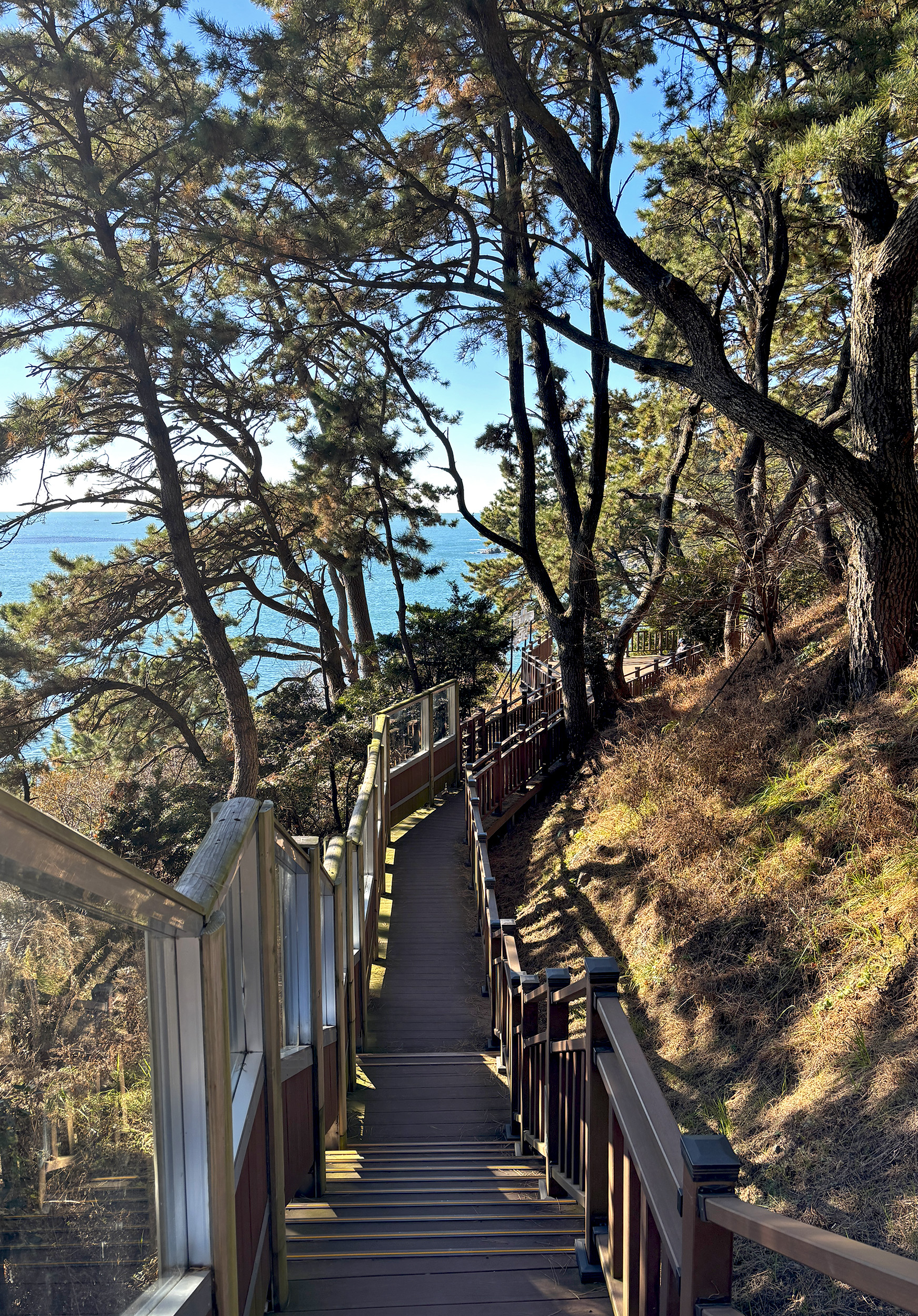
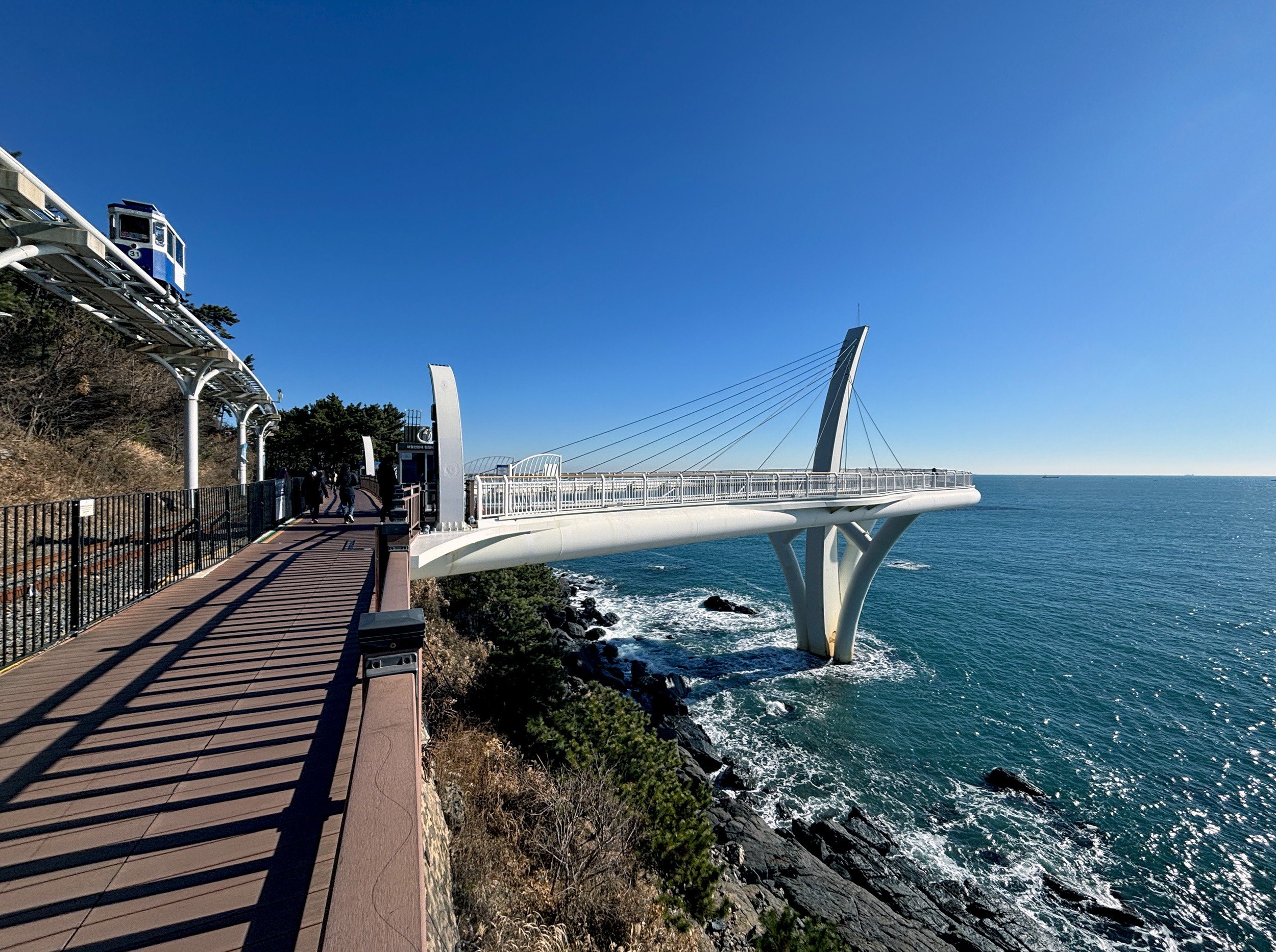
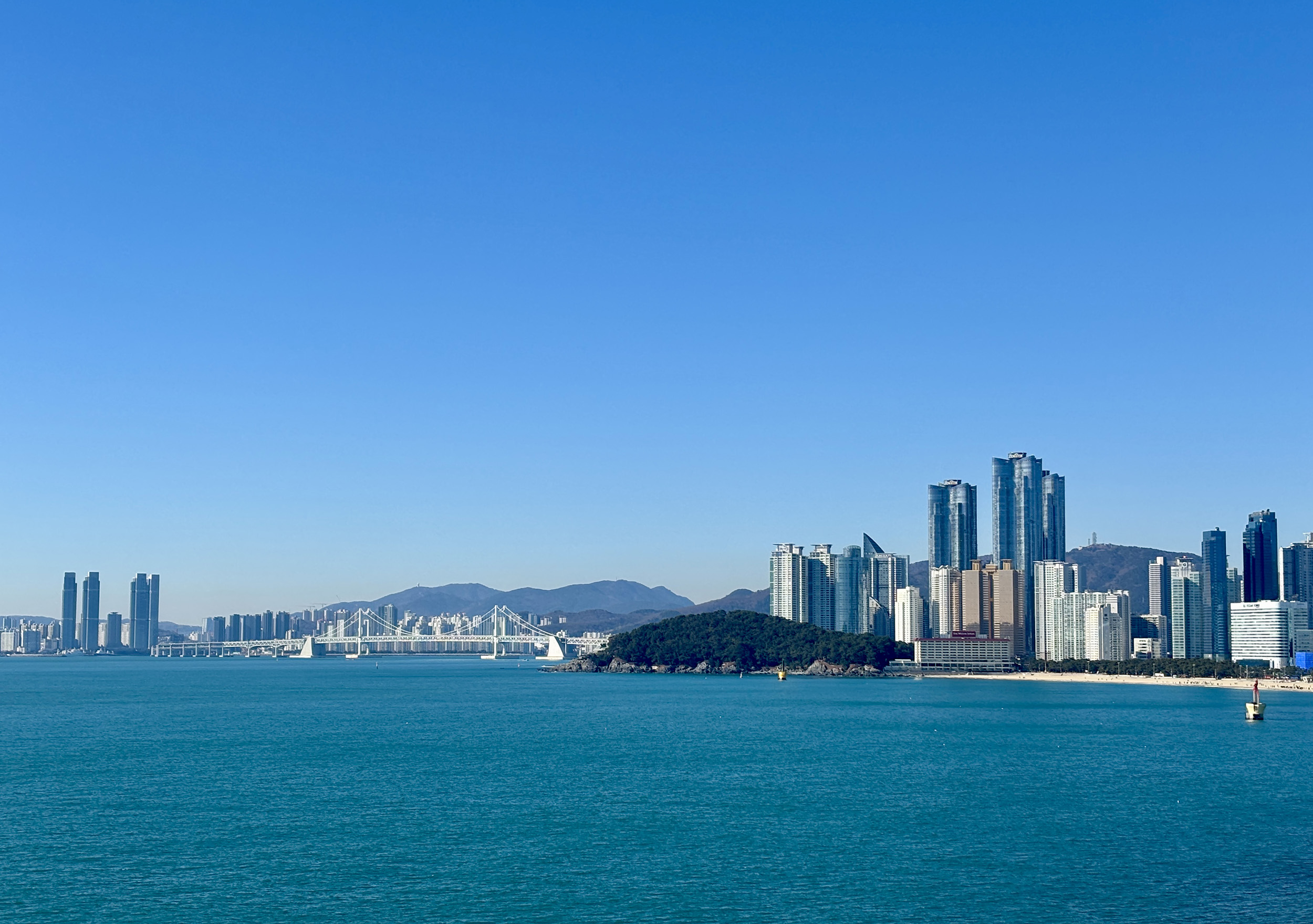
The country’s second largest city, and main port, also has a coastline worthy of envy. With a half dozen public beaches to its credit, Busan is often considered the “summer capital” of South Korea. Being there in the dead of winter though, I had to settle for something more practical. Known for its namesake beach, and having some of the tallest buildings in South Korea, the district of Haeundae is also home to a large waterfront park. Over 5 km (~3-miles) in length, Haeundae Blueline Park includes a “beach train“, an innovative “sky capsule” ride, a glass-bottom platform overhanging the ocean, and picture postcard coastal scenery throughout. On a particularly clear day, you could spot Tsushima Island in Japan from across the strait. At every other time, there are fabulous views to be had of the beautiful urban setting that is Busan.
In nightcaps we trust
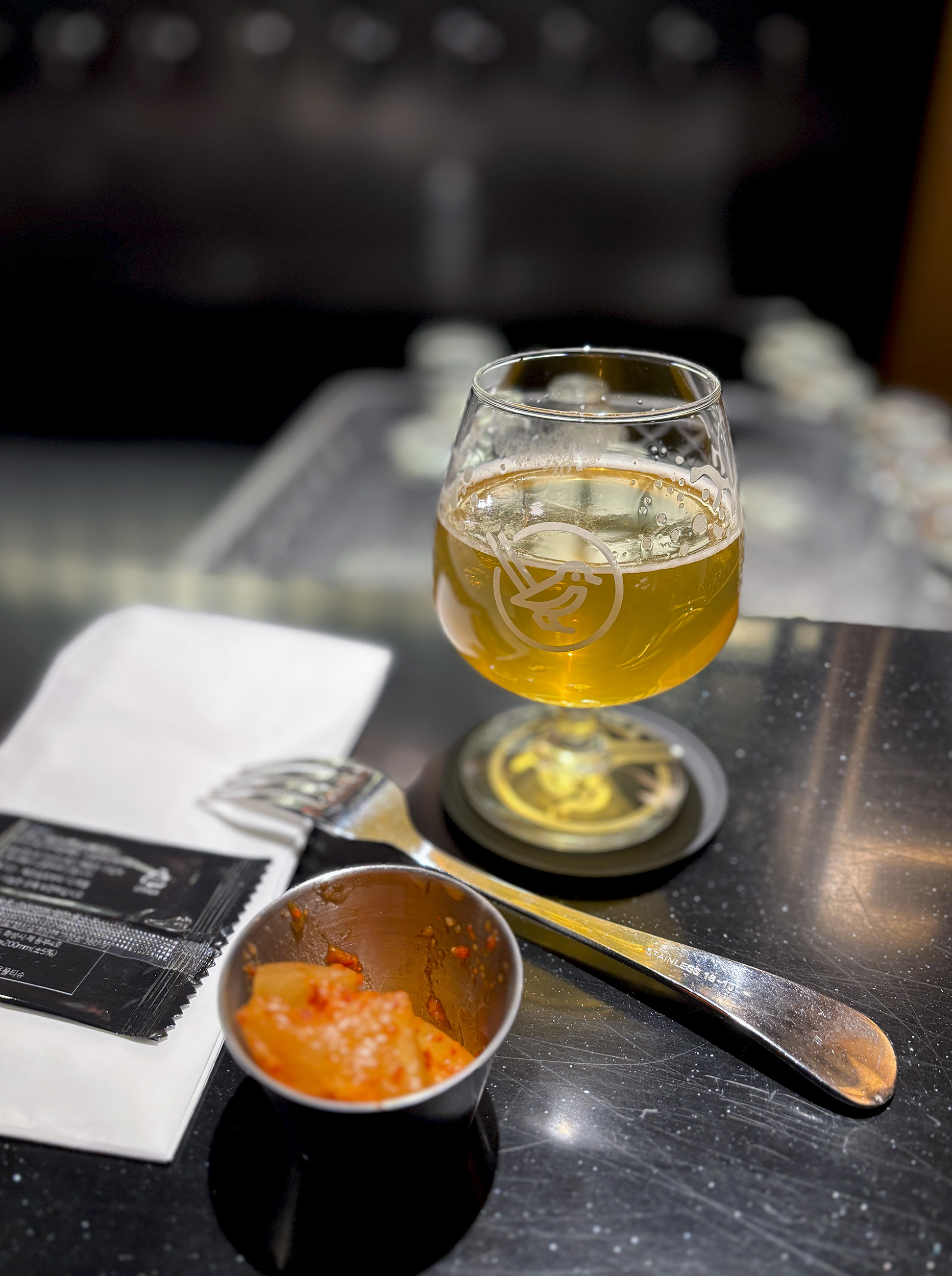
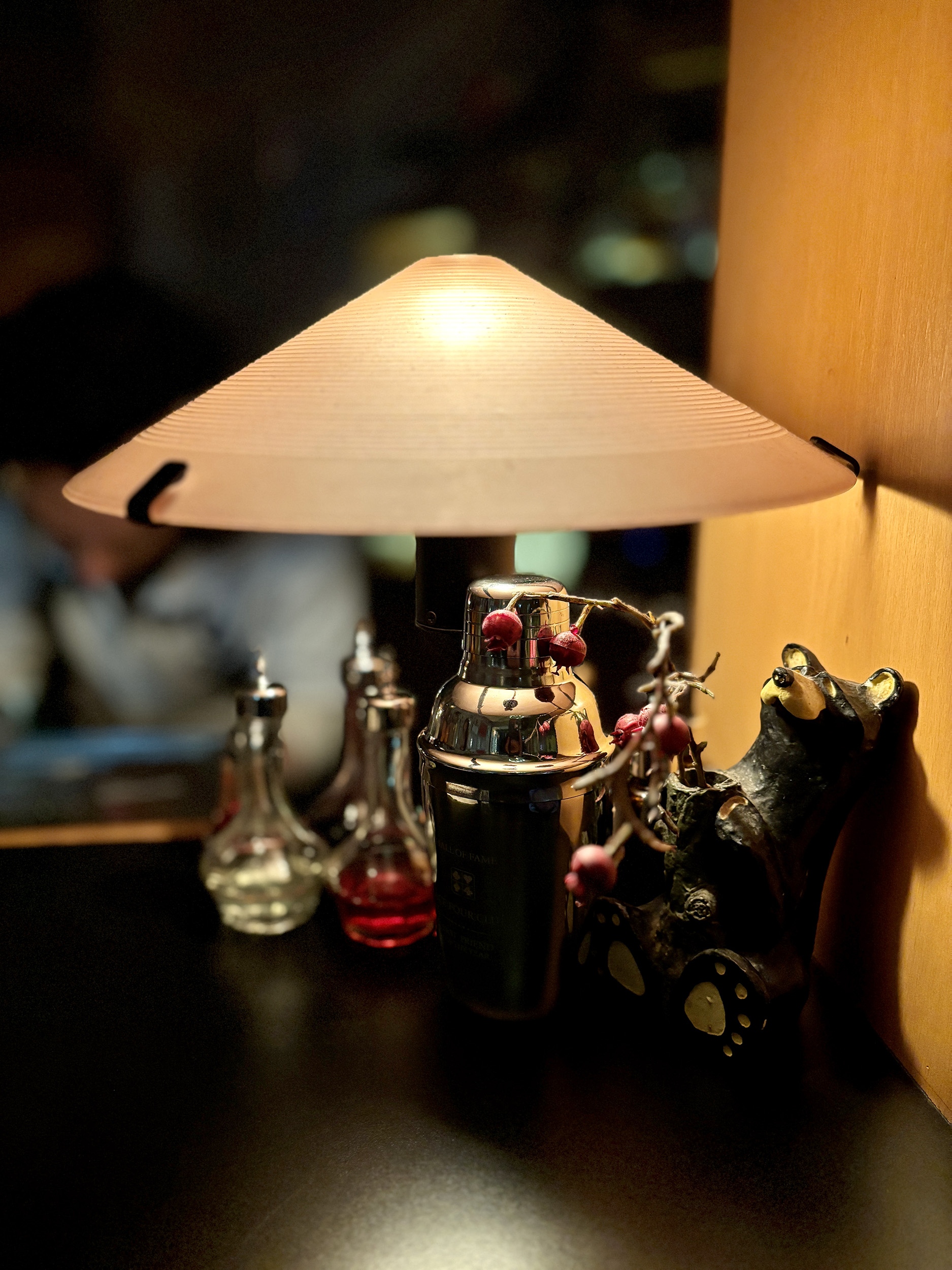
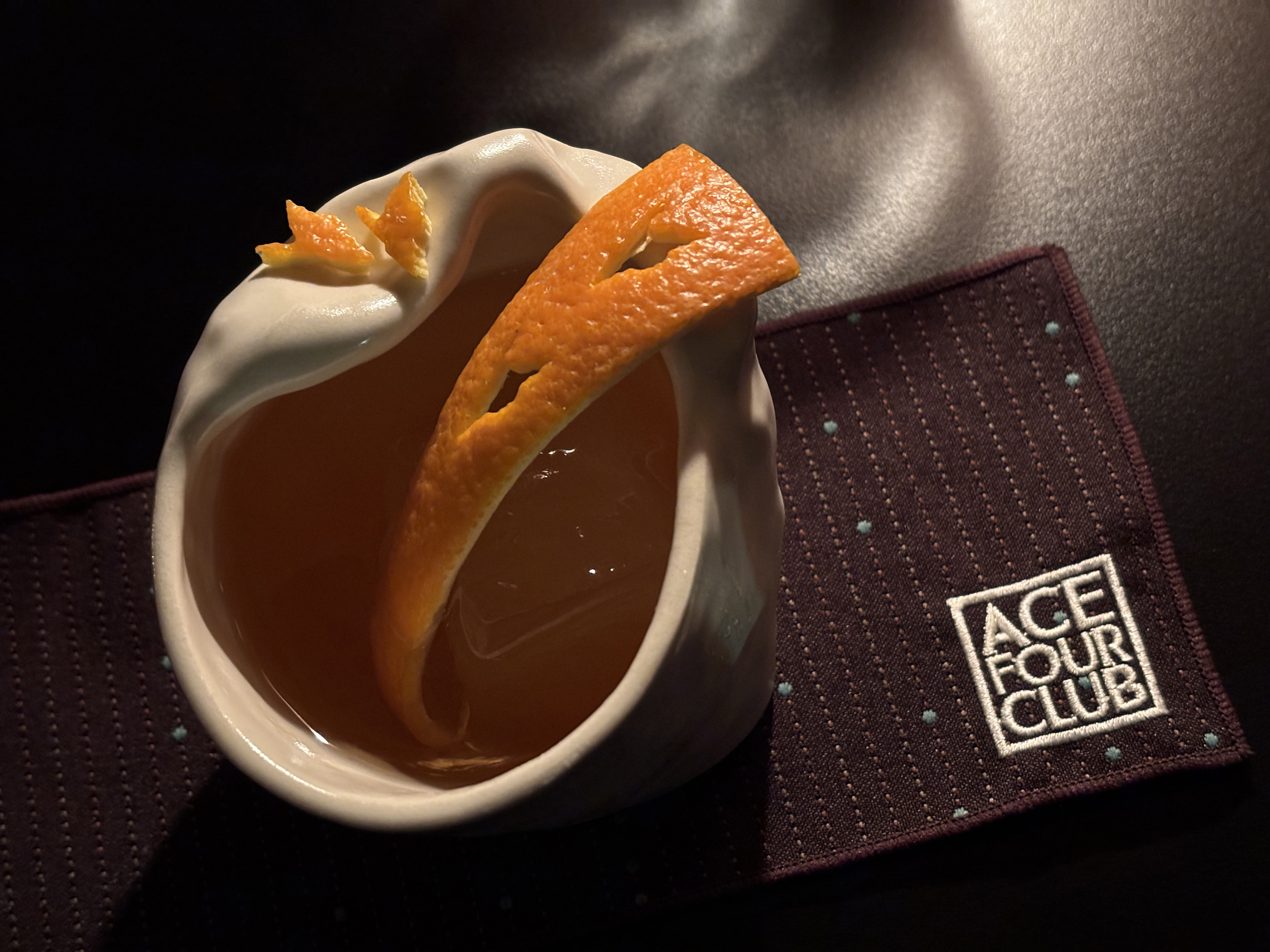
My last night in the country had me bar hopping through the Euljiro neighborhood of Seoul. I had hoped to be a bystander to the shenanigans of its infamous “beer alley“, but it wasn’t as boisterous as the guidebooks would have you believe. So I reached for a trusted source – the NY Times “36-hours” series. Magpie Brewing was my first stop, and two brews and a bar snack later, I found myself sharing precious counter space with a handful of strangers at the Ace Four Club. It was not oversubscribed, as most places written up by the NYT tend to be, and largely devoid of loud english voices too. The barkeeps were exceptionally friendly, even offering shots at one point, and executing a sumptuous Oaxaca Fashioned for me – a wonderfully serendipitous segue into my next trip 🙂
A full set of photos from the Train to Busan (and back), and my time in Seoul and Busan can be viewed on my Flickr.
 brat's ramblings