
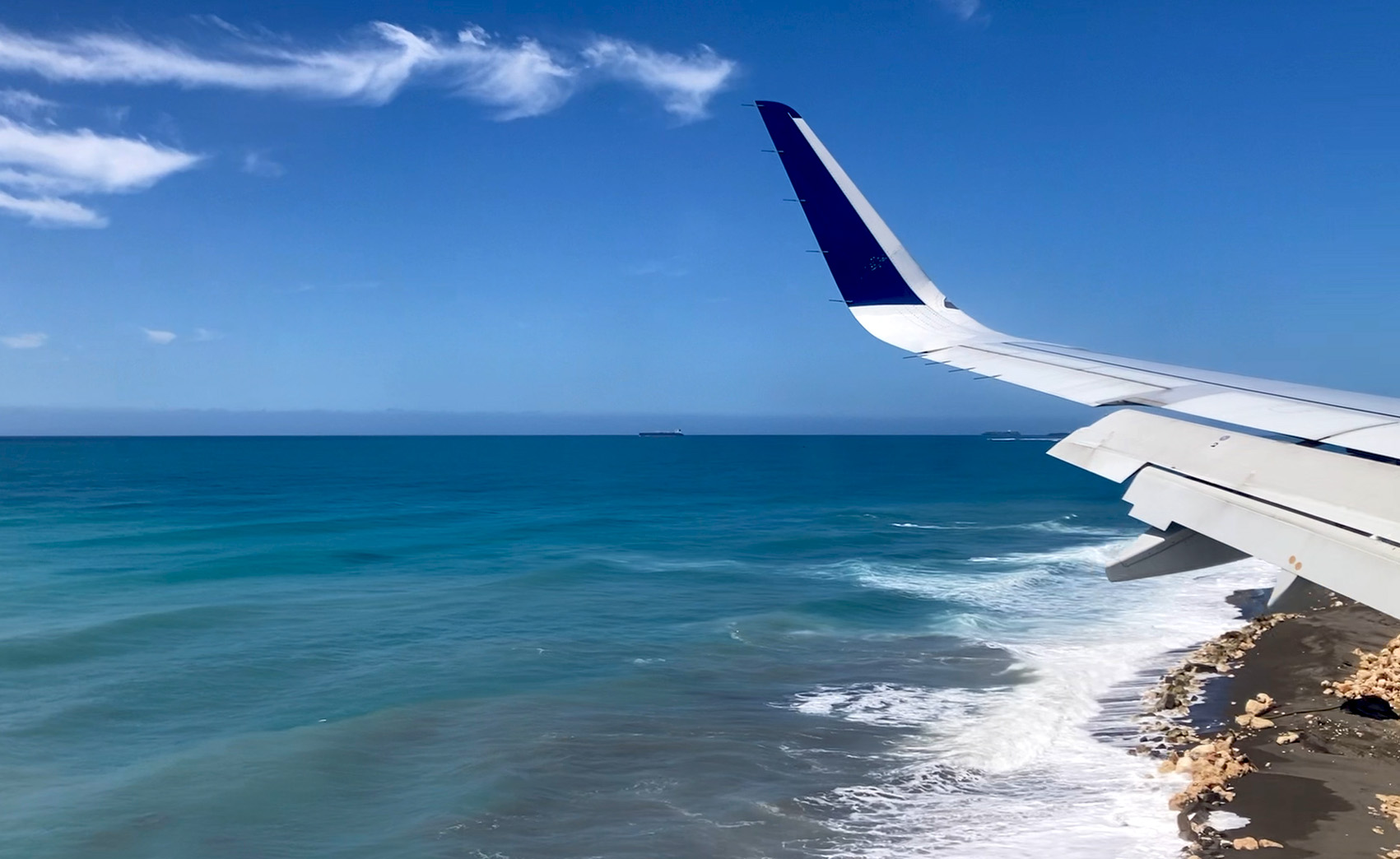
That sliver of land I’ve just spotted is in fact Cuba. Cabo Cruz on its southwestern tip, as the flight map confirms. With only 200-odd kms to go, we’ve begun our initial descent, and my choice of window seat has already paid off. Jamaica’s majestic Blue Mountains make up a third of the country’s landform and practically dominate the country’s eastern half. So far only the summits have been visible – some over 7000-ft high – but as we drop below the clouds, Kingston’s sprawl reveals itself. On what is undoubtedly a spectacular approach, we fly over its bustling harbor, then the airport itself, making a generous loop further east before eventually touching down at Norman Manley International.
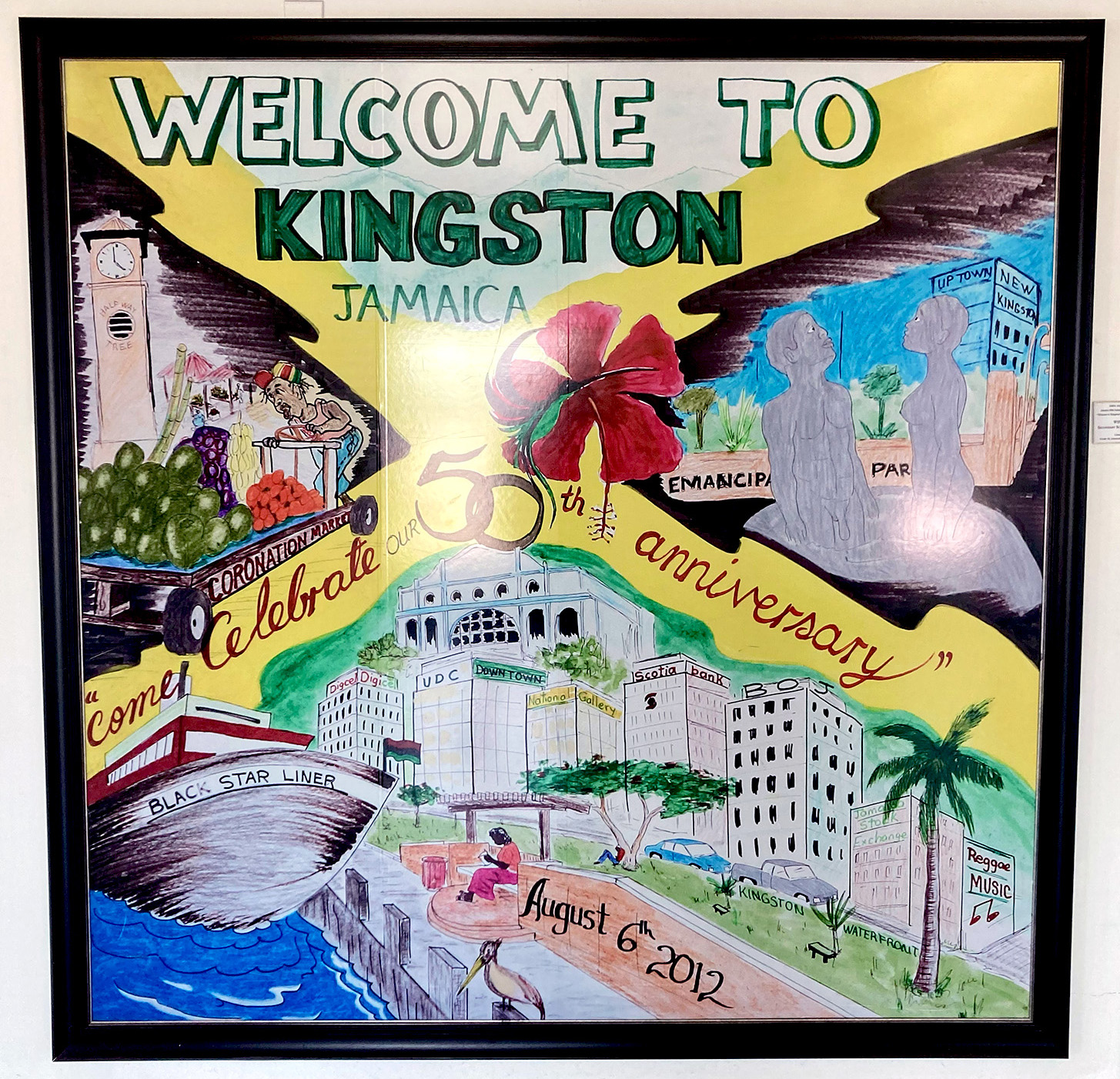
The early AM start has so far failed to diminish my enthusiasm, and I have several places to be before the sun calls it quits. Not far behind on that scale of zest is the gent handling my rental car checkout, by far the most thorough handover I’ve ever experienced. Onwards to central Kingston then. Barring the causeway that leads to the airport, the city’s roads appear patchy at best, but the road manners here are hard to fault – I’m impressed.
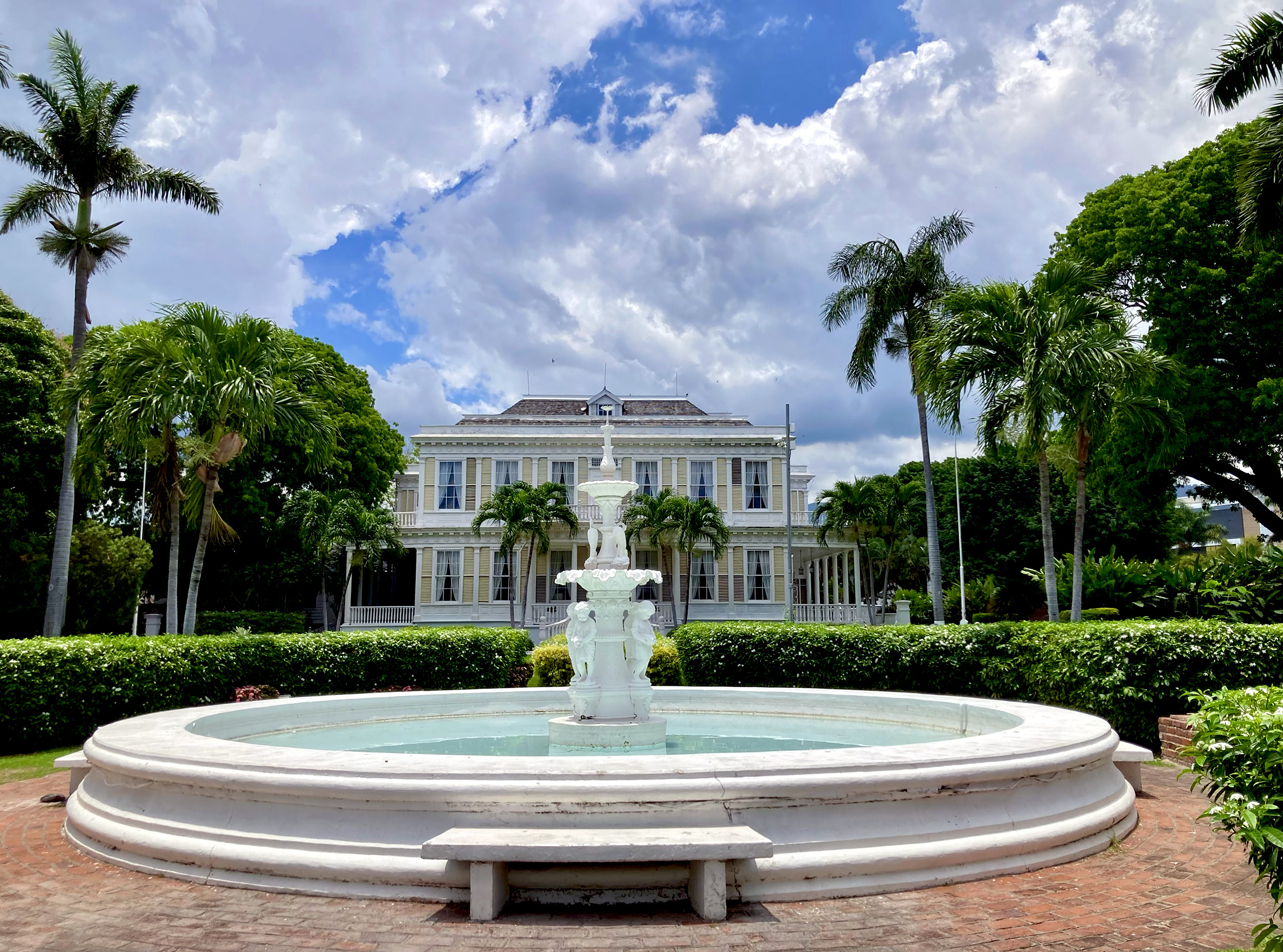
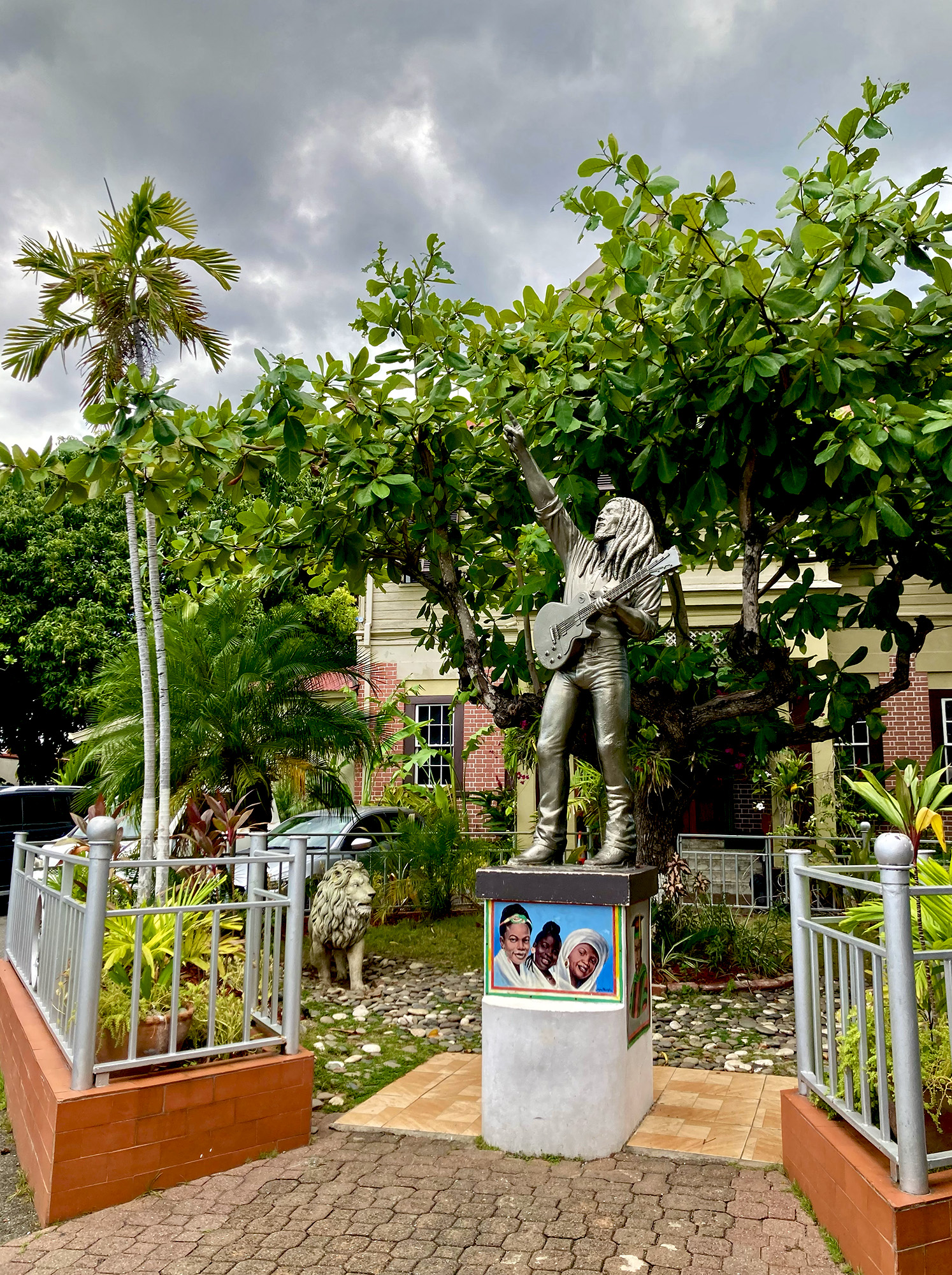
Devon House is my first stop. A late 19th-century mansion, it was the former residence of George Stiebel, considered to be Jamaica’s first millionaire of African descent. The beautifully restored Georgian home serves as a museum today, but I skip the tour and join a queue for fresh baked patties instead, at the ever popular bakery located within the estate. I do sign up for a tour at 56 Hope Road though – Bob Marley’s former place of residence – which also served as the recording studio for The Wailers. A statue of the legend presides over the forecourt, and apart from that and the building exterior, photography is prohibited. Just as well. There’s so much to absorb and so little time to do so, the camera is best kept away. To go or not isn’t even up for debate. Just do yourself the favor, if you ever find yourself in Kingston.
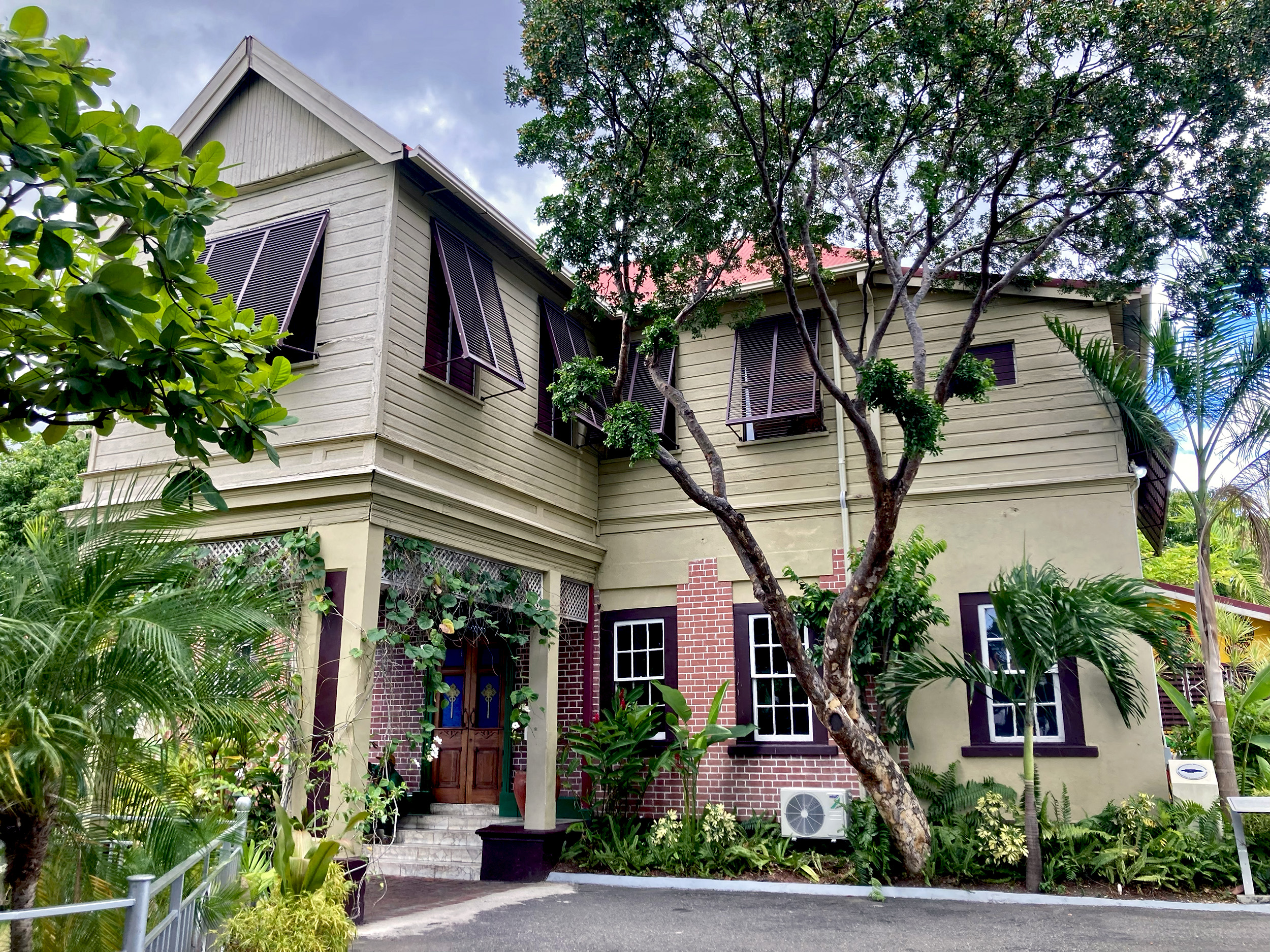
In ’66, a few years after it gained independence, Jamaica hosted the Commonwealth Games. Toward that endeavor, it built a sprawling multi-sport complex located within the aptly-named Independence Park. Occupying pride of place in front of the central venue, the Jamaica National Stadium, are a row of statues honoring the country’s track athletes, including the mighty Usain St. Leo Bolt. The holy grail of athleticism, if you will, it’s well worthy of the detour to pay homage to these giants of the sport.
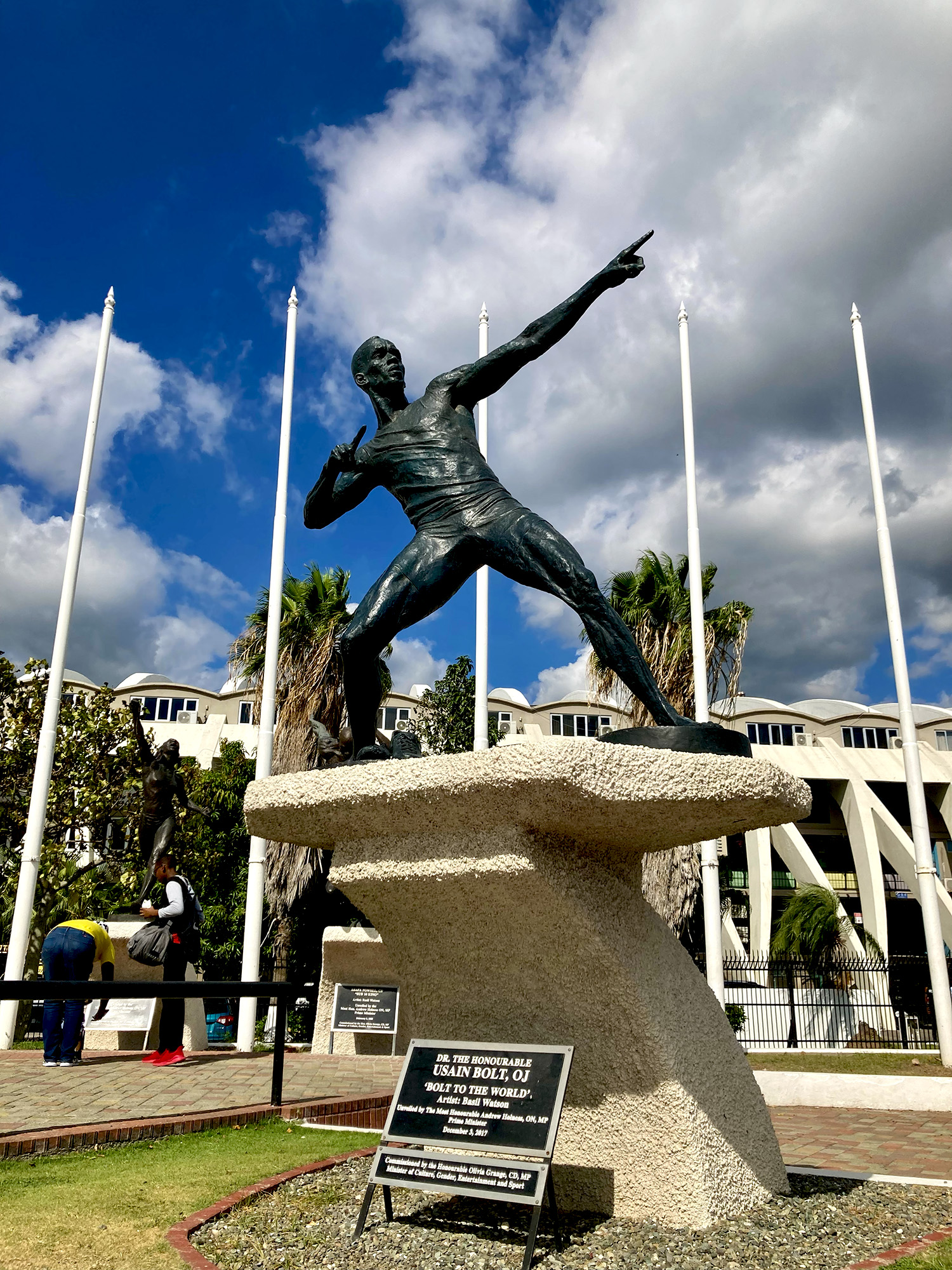
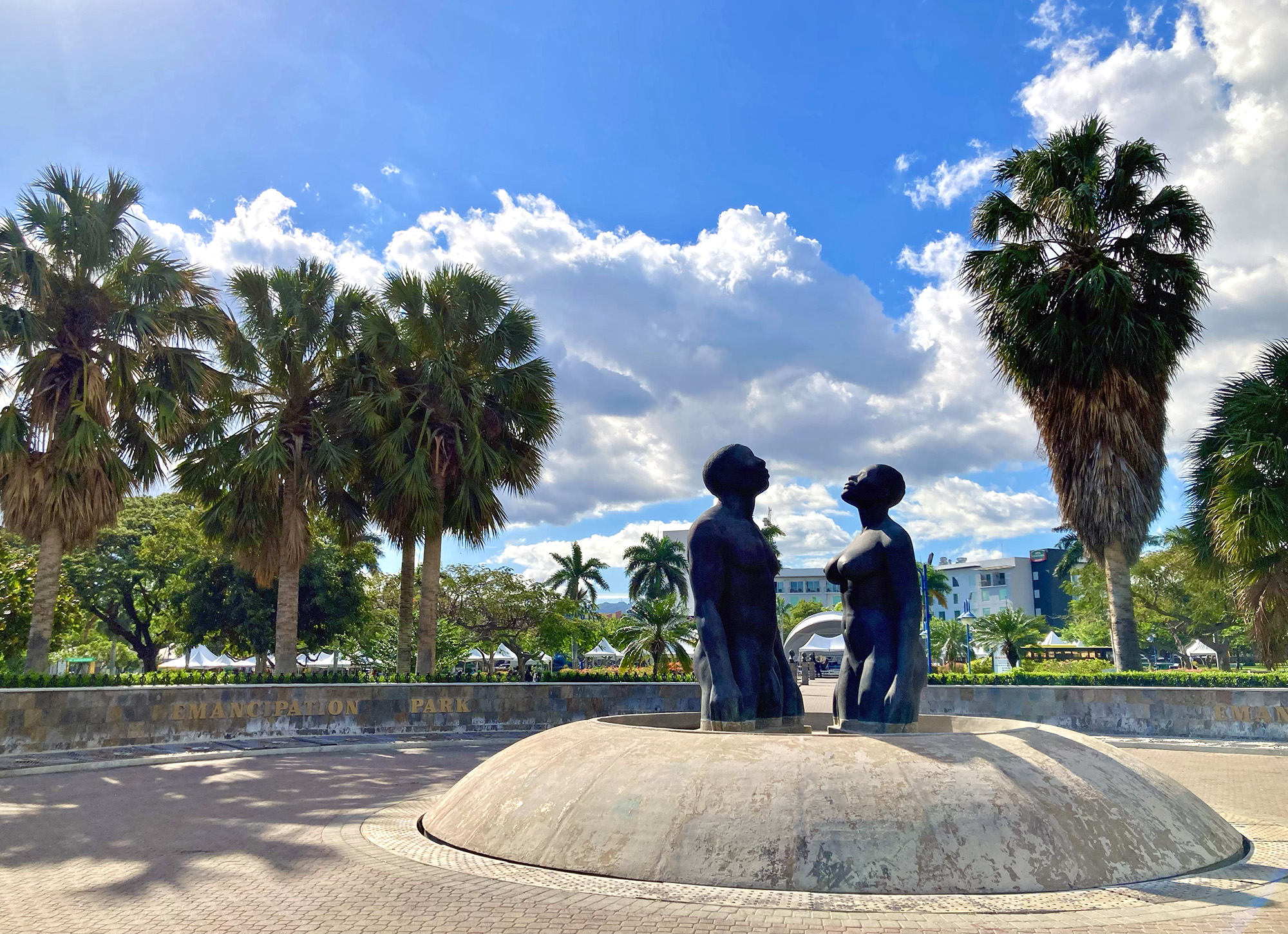
Not far from it, and more park-like in appearance, lies Emancipation Park. It’s easy to get lost in the well-manicured lawns and shaded pathways of this relatively new green space, but its real purpose – if the name isn’t a giveaway already – is to commemorate the end of slavery in the British and French Caribbean. From Marcus Garvey to the Maroons, the central pathway here is lined by busts dedicated to the men and women who fought tirelessly to free their lot from the horrors of slavery. The path culminates at an imposing bronze sculpture that symbolizes their skyward rise towards freedom. It’s fittingly called Redemption Song, after a Bob Marley hit by the same name.
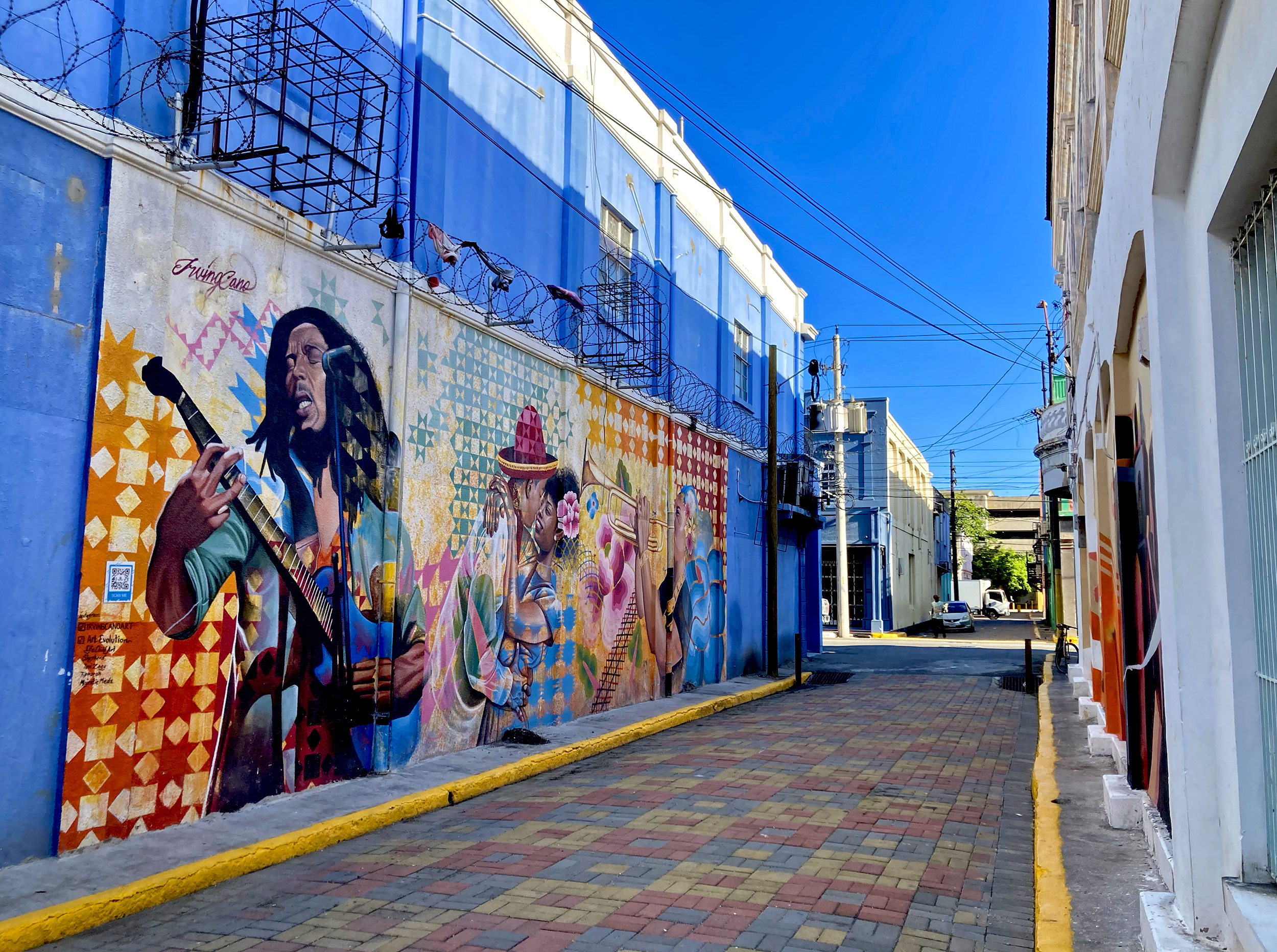
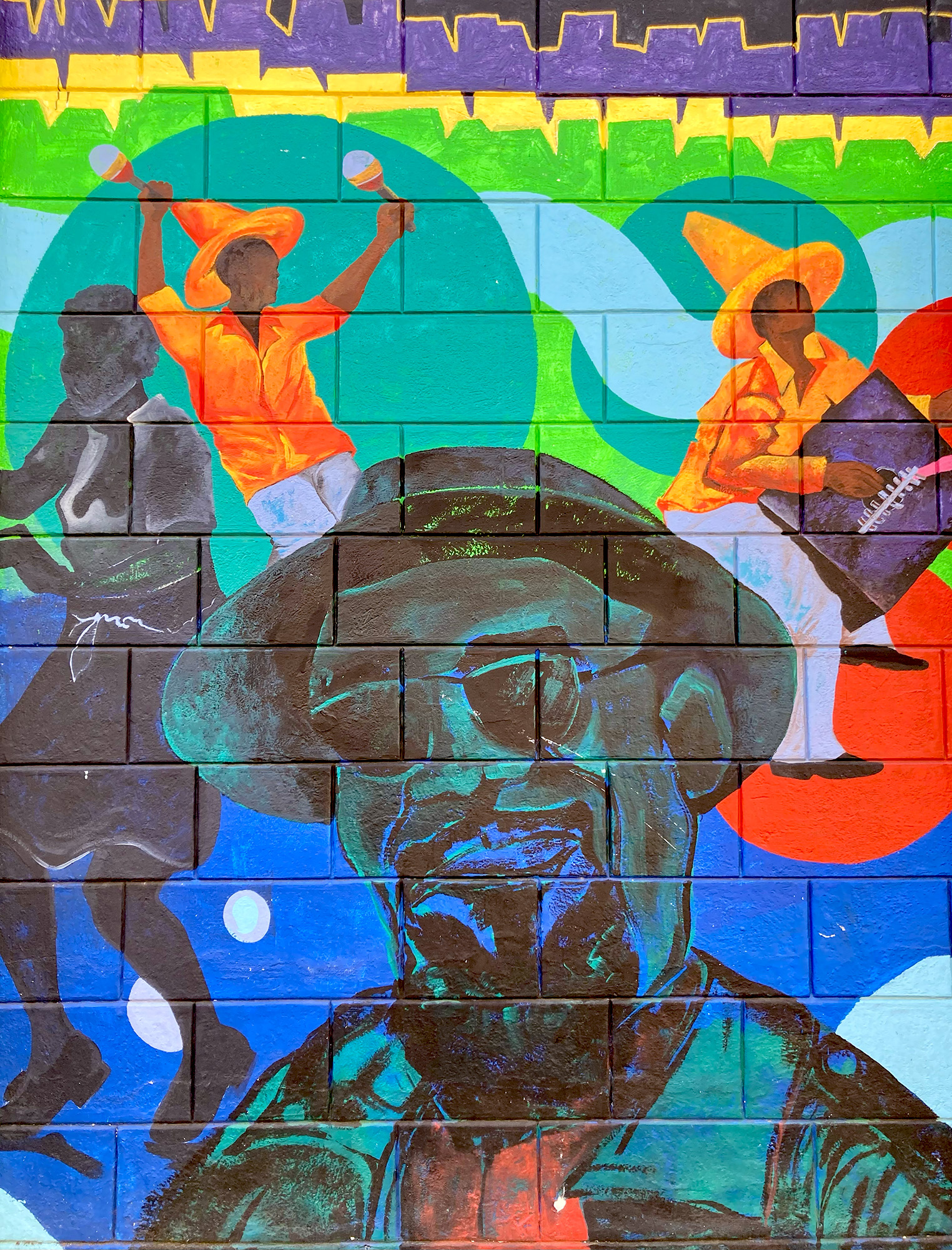
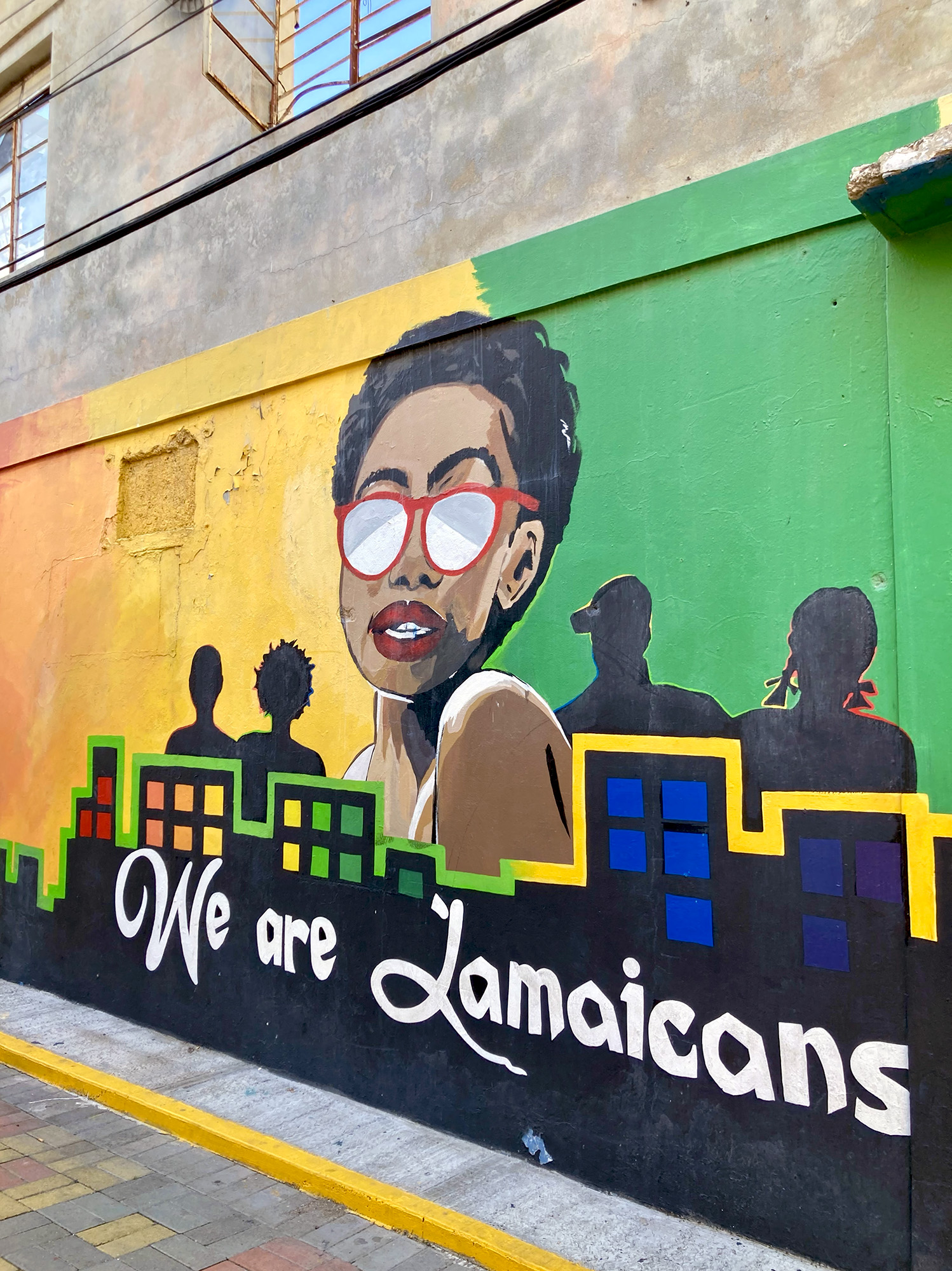
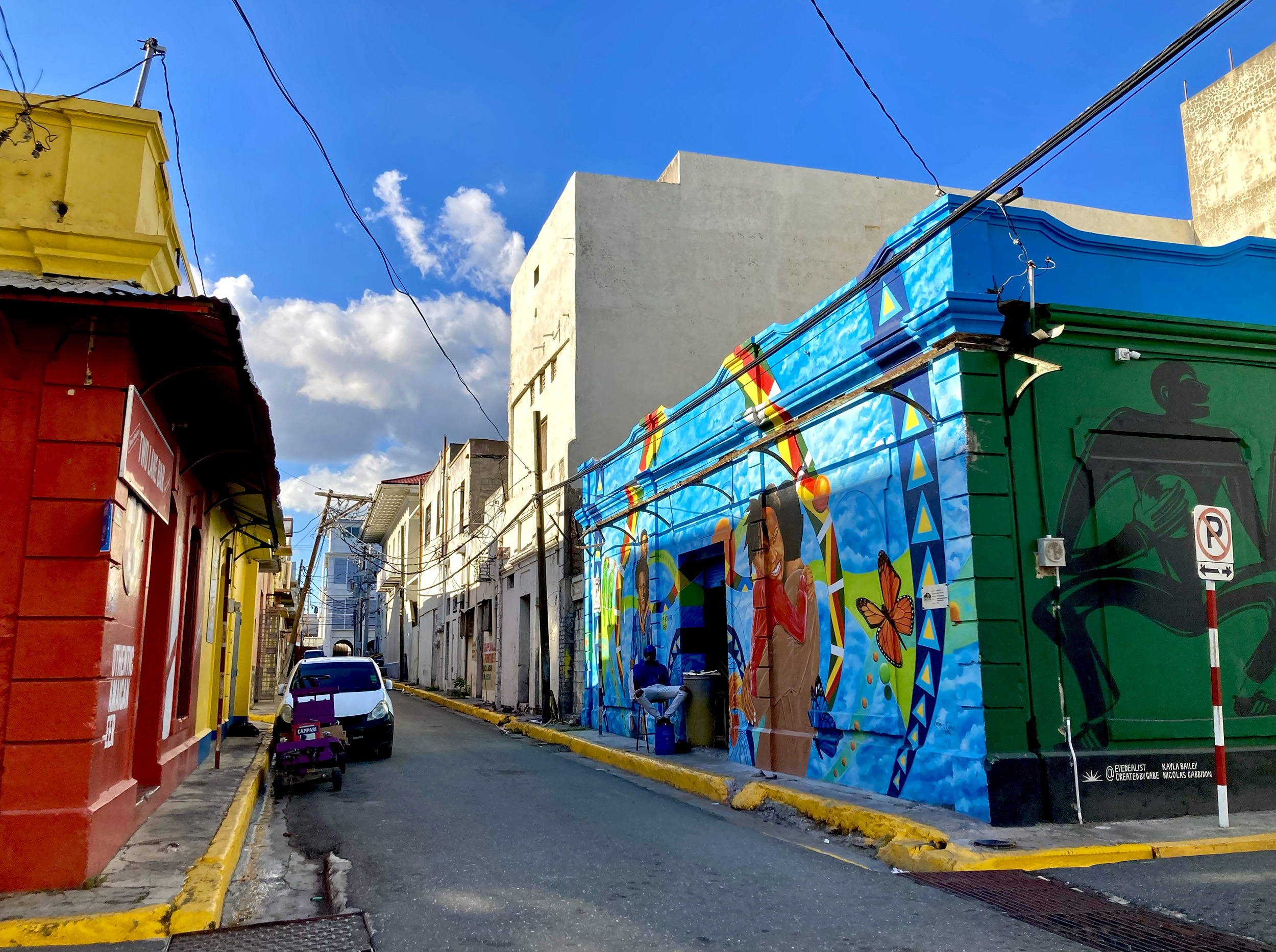
Relative to some of the neighborhoods in central Kingston, the city’s historic center appears rather neglected and fairly desolate, despite its location close to the water, and its solid repository of colonial-era buildings. There have been efforts in recent years to revive parts of it though, and this has led to a vibrant eight-block stretch centered along Water Lane, full of street art and wall murals. The art here is bold, colorful, to say the least, and runs the gamut as far as themes go. It’s late afternoon by the time I show up, and with the sun well into its westward trajectory, the rich palette here is beginning to pop almost as much as the Caribbean sky.

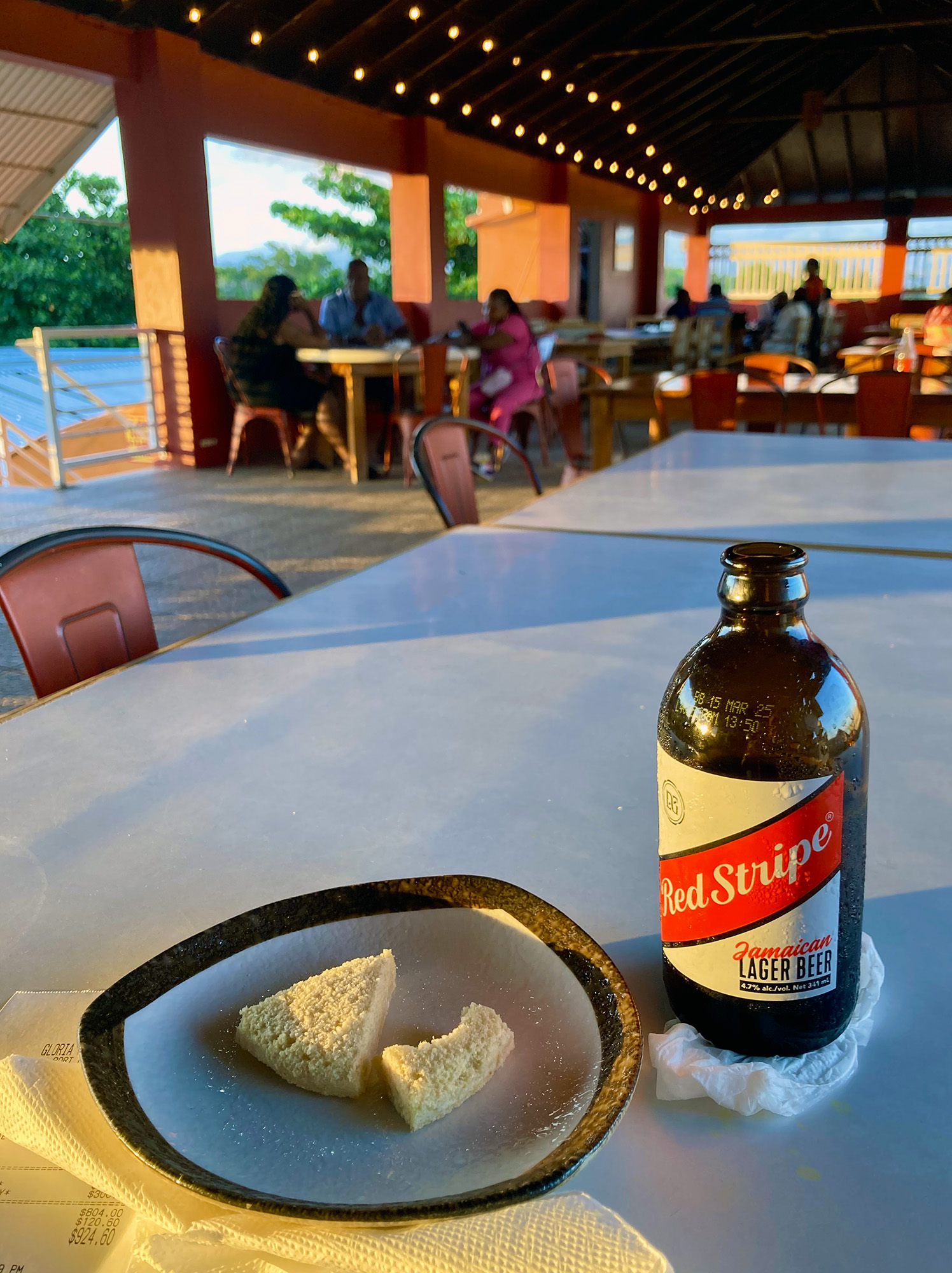
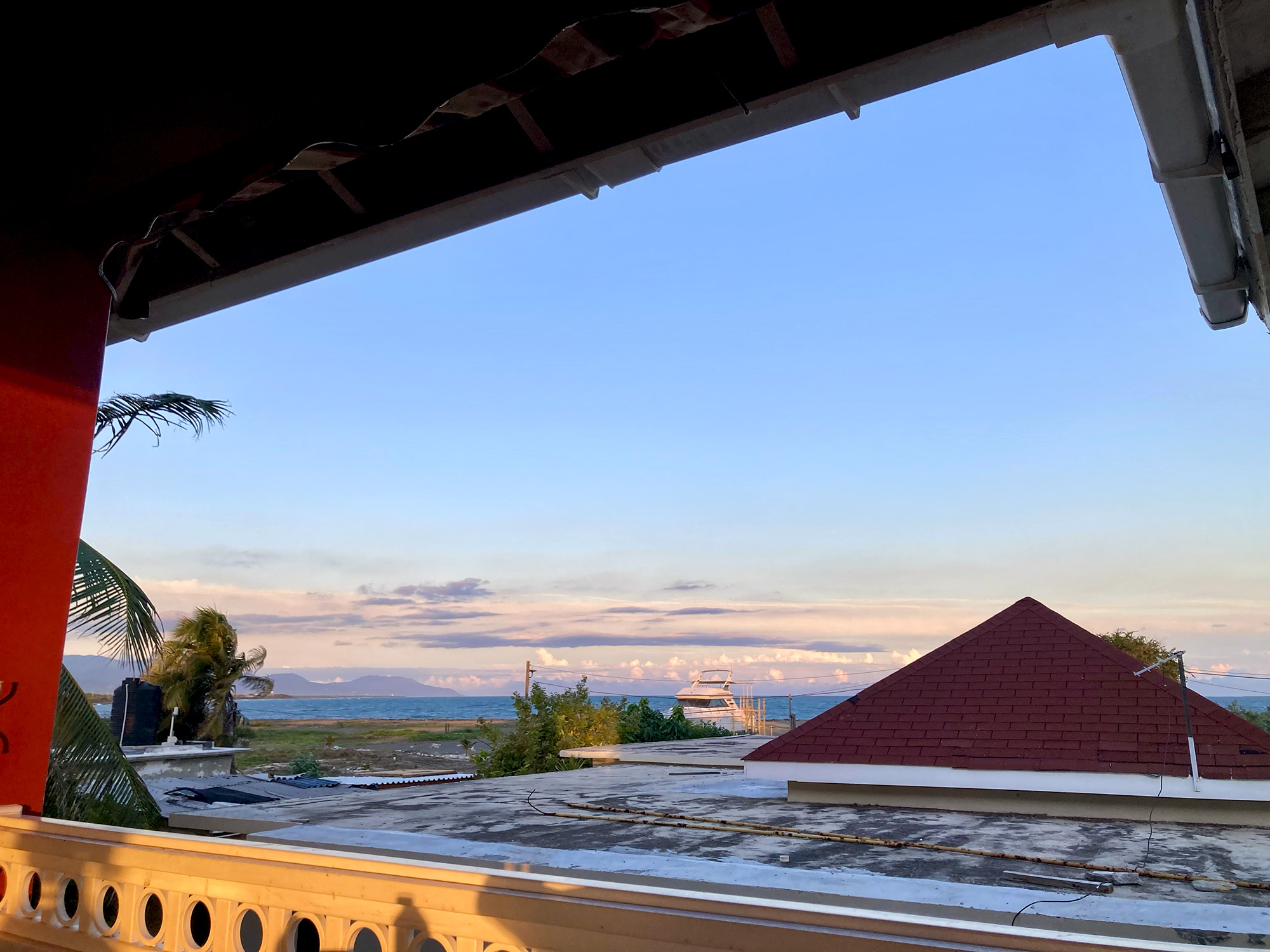
Before Kingston was established as the capital of Jamaica, it was Port Royal that held sway. Till the devastating earthquake of 1692 that is. Located at the very end of the isthmus that connects it to the mainland, much of Port Royal simply disappeared into the surrounding waters, and barring a 17th-century fortress, almost no trace remains of it today. It’s still a good place to watch the sunset from, and more importantly, within earshot of Norman Manley International, where I’m due to pick up my traveling companions for the next 3 days. While I await a text that they’ve landed, I camp out at Gloria’s, a local seafood destination, cracking open the first of many Red Stripes on the trip, with some Bammy alongside for sustenance. Reggae plays in the background, the fading light is sublime, and as the sun recedes, cooler climes return. It’s good to be in Jamaica!
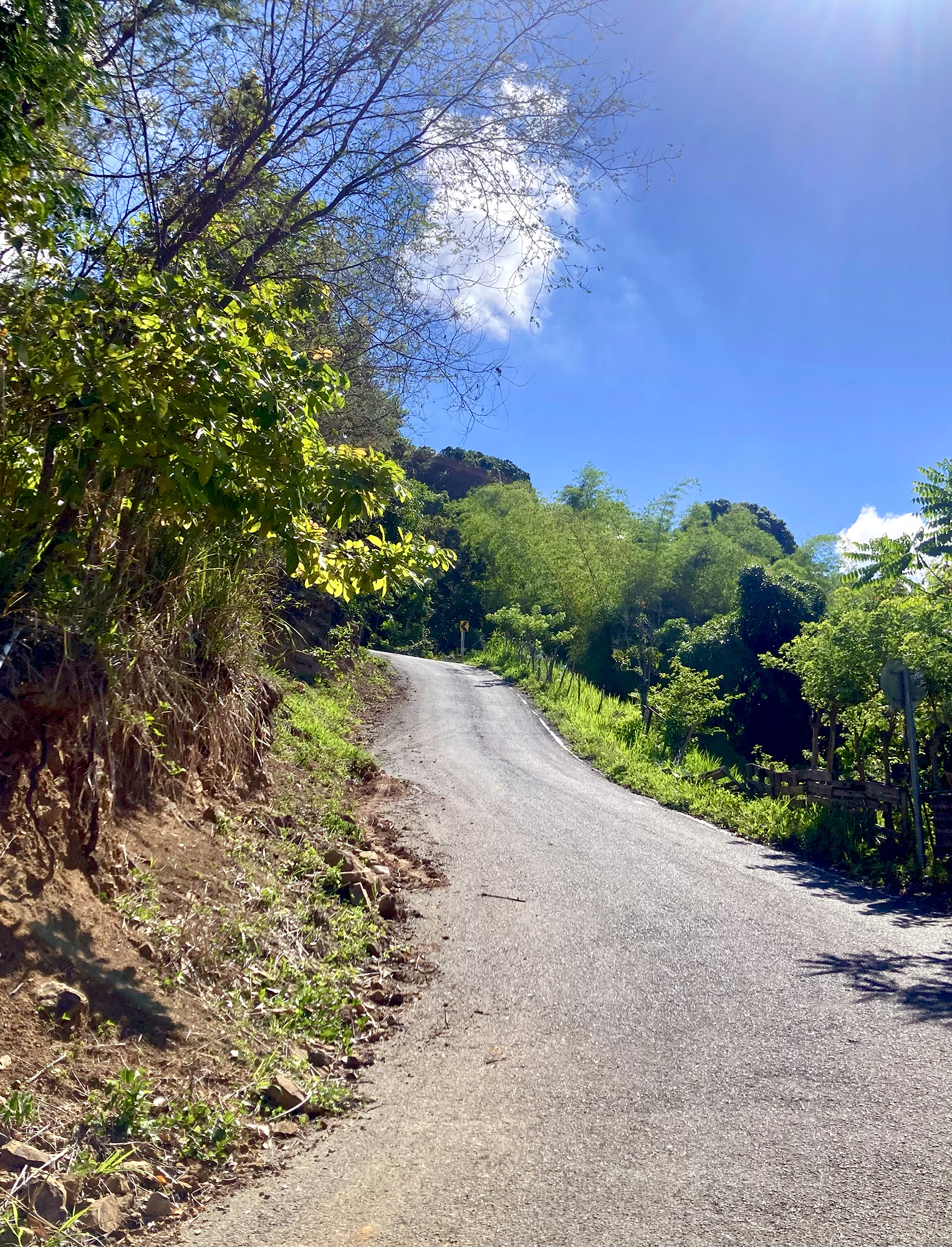
We leave Kingston right after breakfast, as planned, with our first stop in the Blue Mountains less than two hours away. Or so we were led to believe. We’ve now been on a ridiculously steep and twisty mountain road for quite some time, having passed no other vehicle, and on one seemingly innocuous slope, our rental car finally gives up. A case of Google proposes, gravity disposes. We retreat downhill, tracing our route back to the point at which we made that fateful turn. A sympathetic local informs us that the road we were on was built as an alternate route following a particularly bad landslide in the area. The locals themselves avoid that route, he explains.
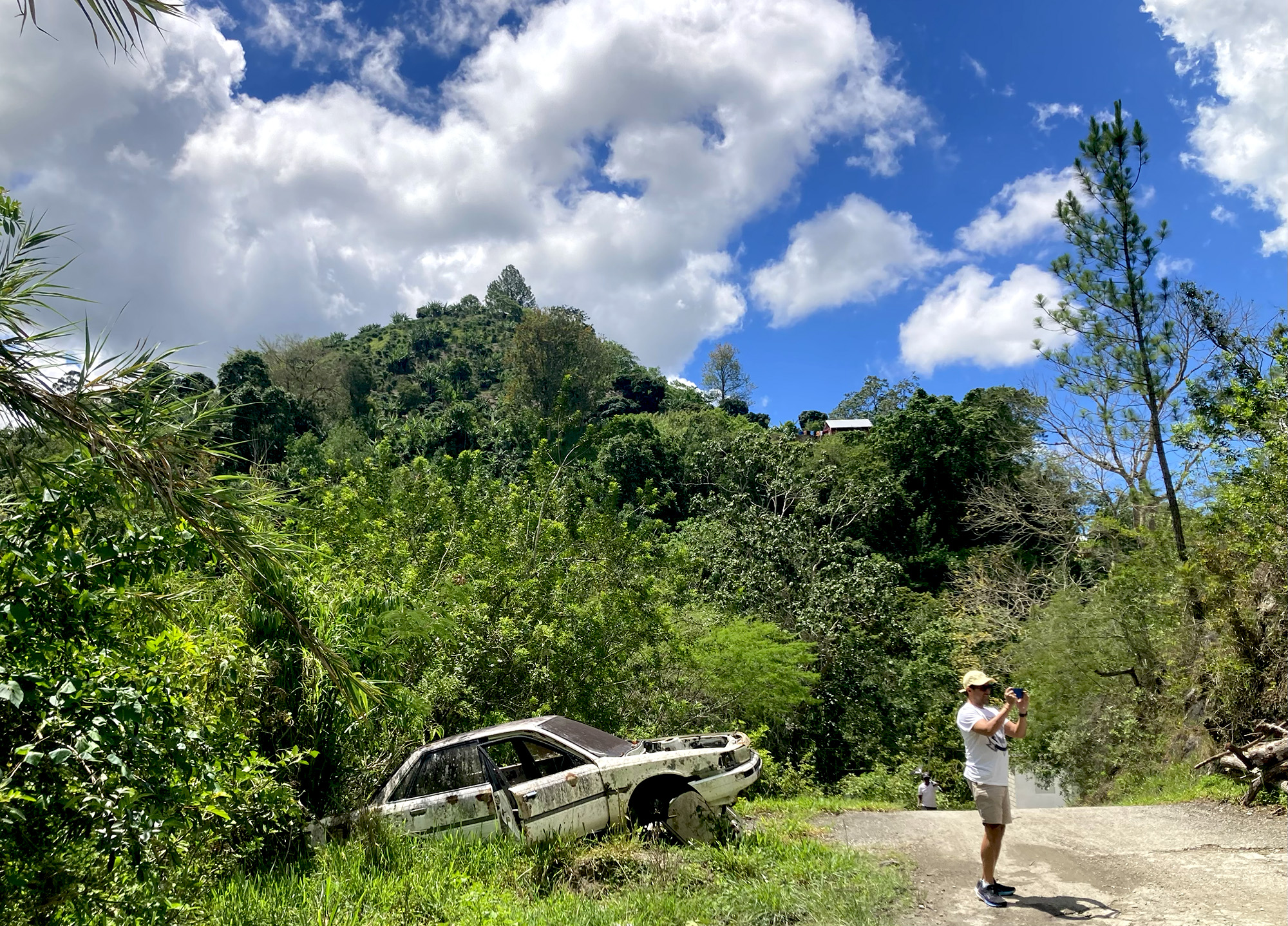
But that isn’t the last wrong turn we’ve taken for the morning. The next route Google puts us on is less steep, to be sure, but barely has a surface to speak of. Carcasses of abandoned vehicles – long having succumbed to mother nature – dot the route, and we get stuck in what could only be described as a crevasse, not once but twice. Despite the unpleasantness and anxiety of it all, it’s a lesson in perseverance for us, and an opportunity to recognize the human spirit – ours to some extent, but really that of the locals, who’ve gone above and beyond to help us; greeting us with the customary, awright (are you ok?), and ushering us along with words that couldn’t be wiser, “take your time on the road”.
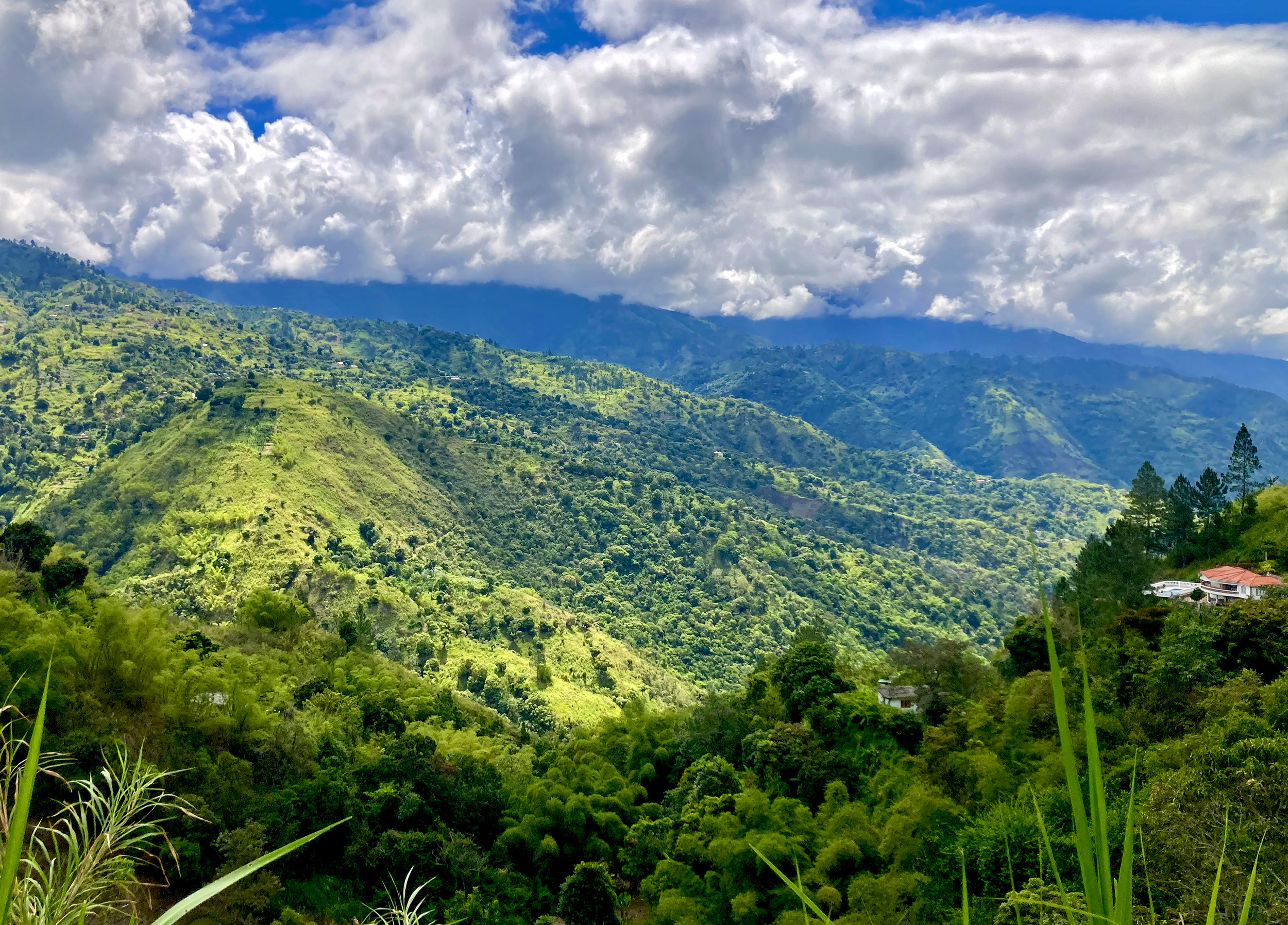
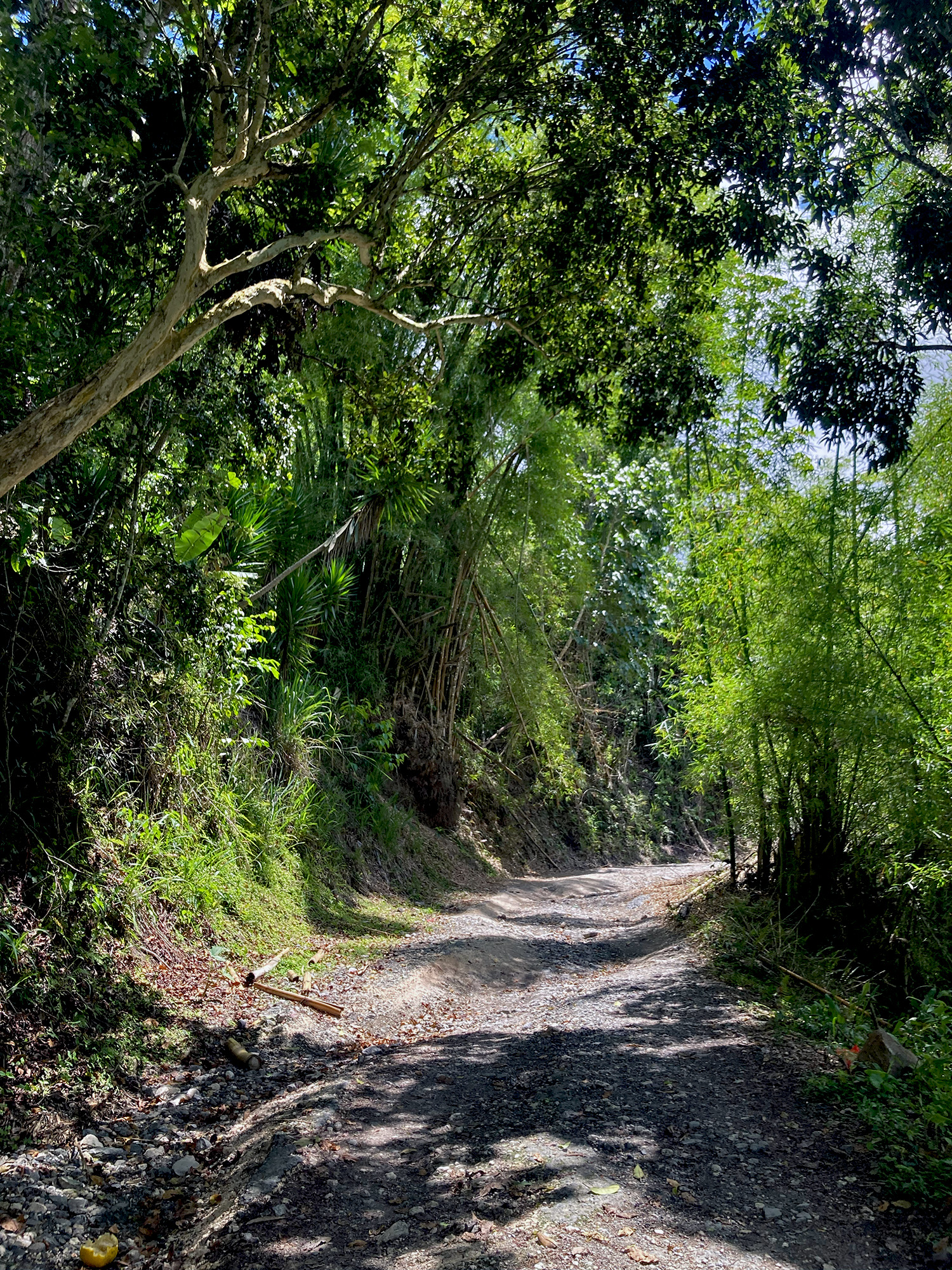
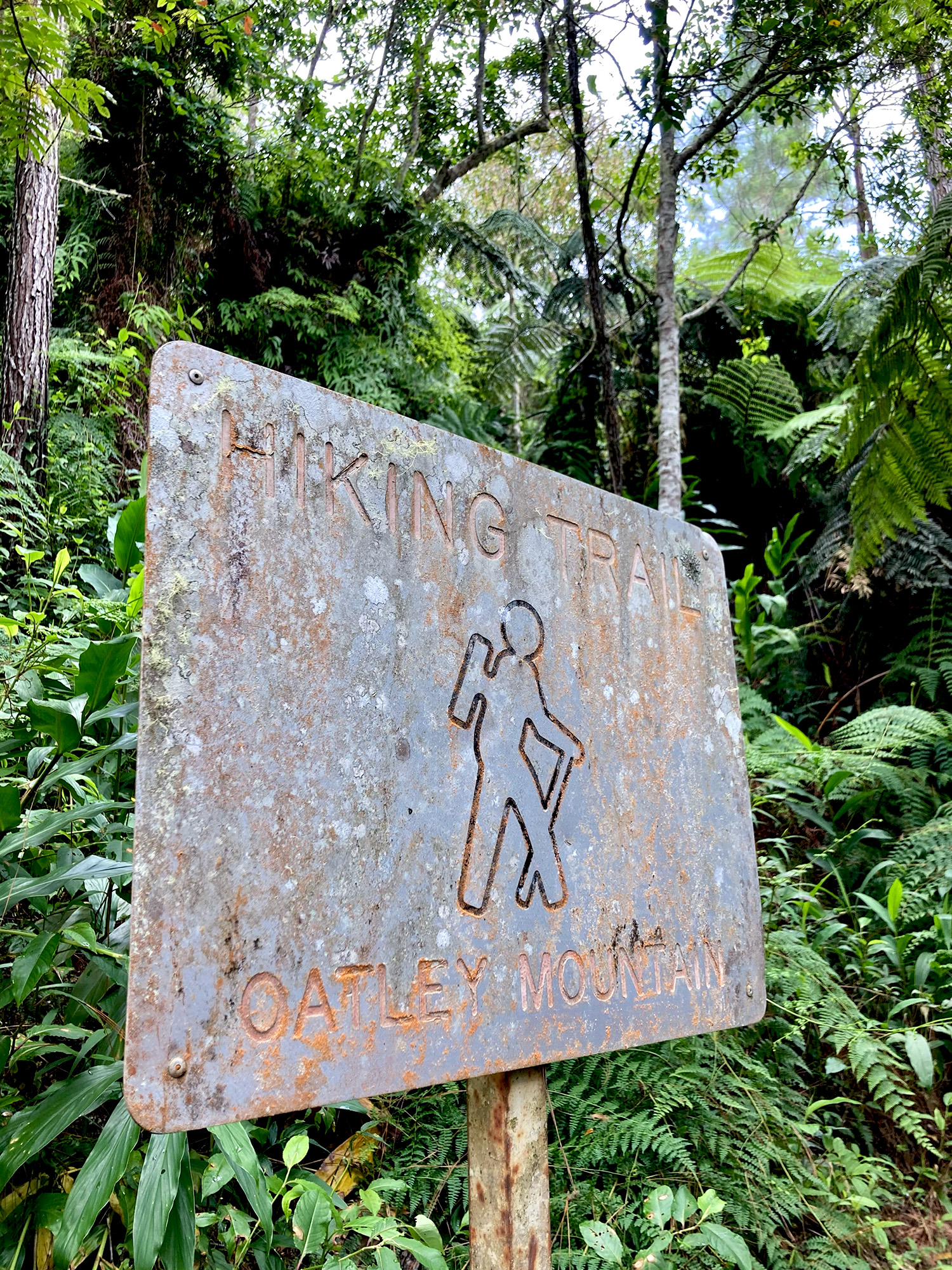
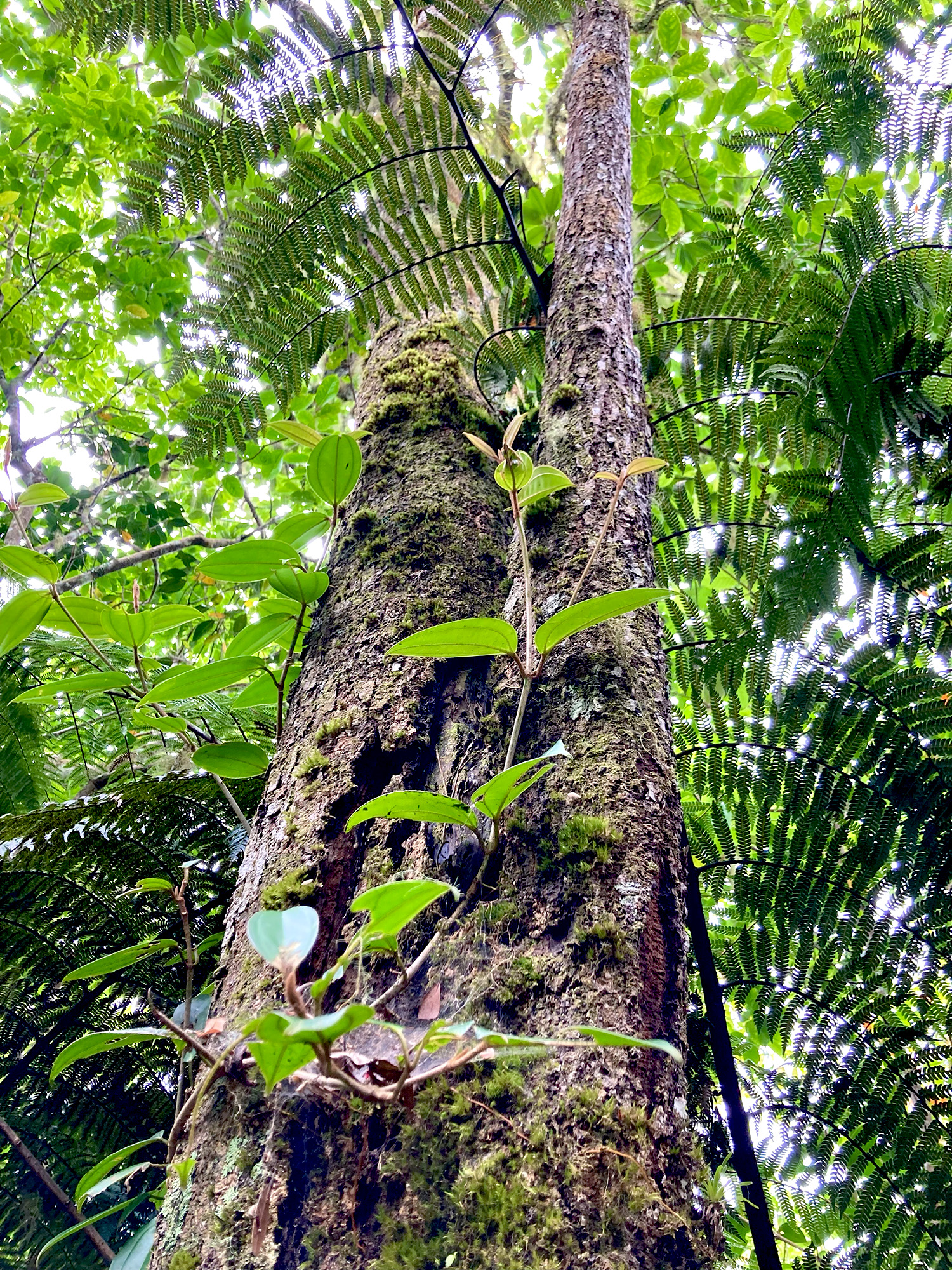
There are a handful of nature trails to choose from at Holywell National Park, but given the time we’ve already lost, we pick the shortest of them, the Oatley Mountain loop. Just under a mile in length, the trail is challenging enough, gaining respectable elevation in a relatively short time, but it also puts us front and center amidst the rich flora the Blue Mountains are renowned for. It’s just the balm we need.
On our drive from Holywell National Park to Old Tavern Coffee Estate, our next stop, we pass by beautiful colonial-era bungalows perched on the mountain side, with steep, flower-bedecked driveways, and names like “Fern Leigh” and “Prince Edwards Bush” still discernible through faded signs posted on their wonderfully rickety gates. It’s all reminiscent of being in a hill station in India during the monsoons. Only here it’s a lot cleaner, and largely untouched.

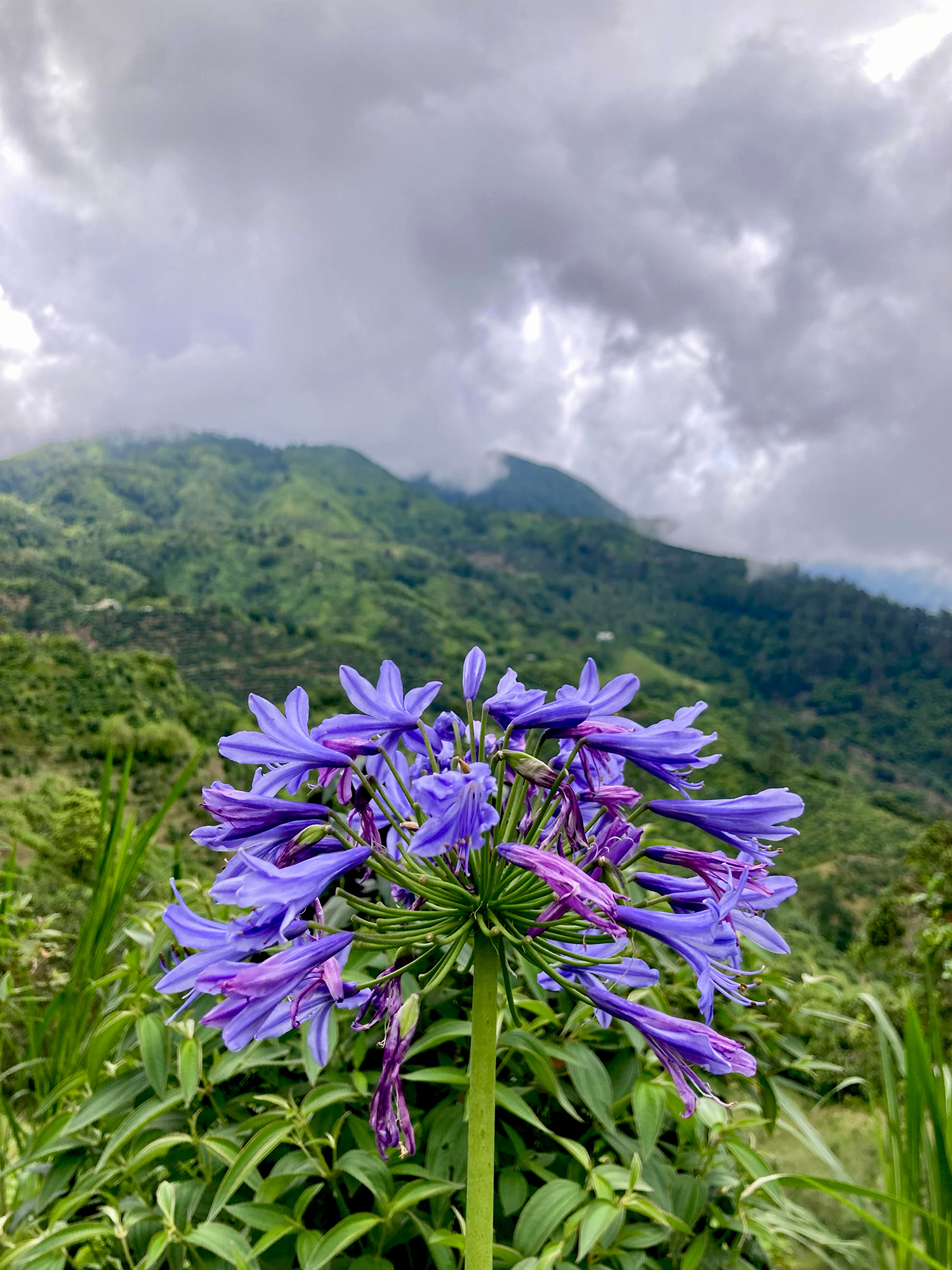
With their elevation, cooler temperatures and plenty of mist, conditions for growing coffee are ideal within the Blue Mountains, so much so that coffee associated with the country is referred to as Jamaican Blue Mountain Coffee. And those beans are highly sought after too, with over 80% of the product exported to Japan. It’s no surprise then that the plantation tour which shows up prominently on a web search is Craighton Estate, owned by Japanese conglomerate, Ueshima Coffee. The tour we’ve picked though promises to be a much more intimate experience.
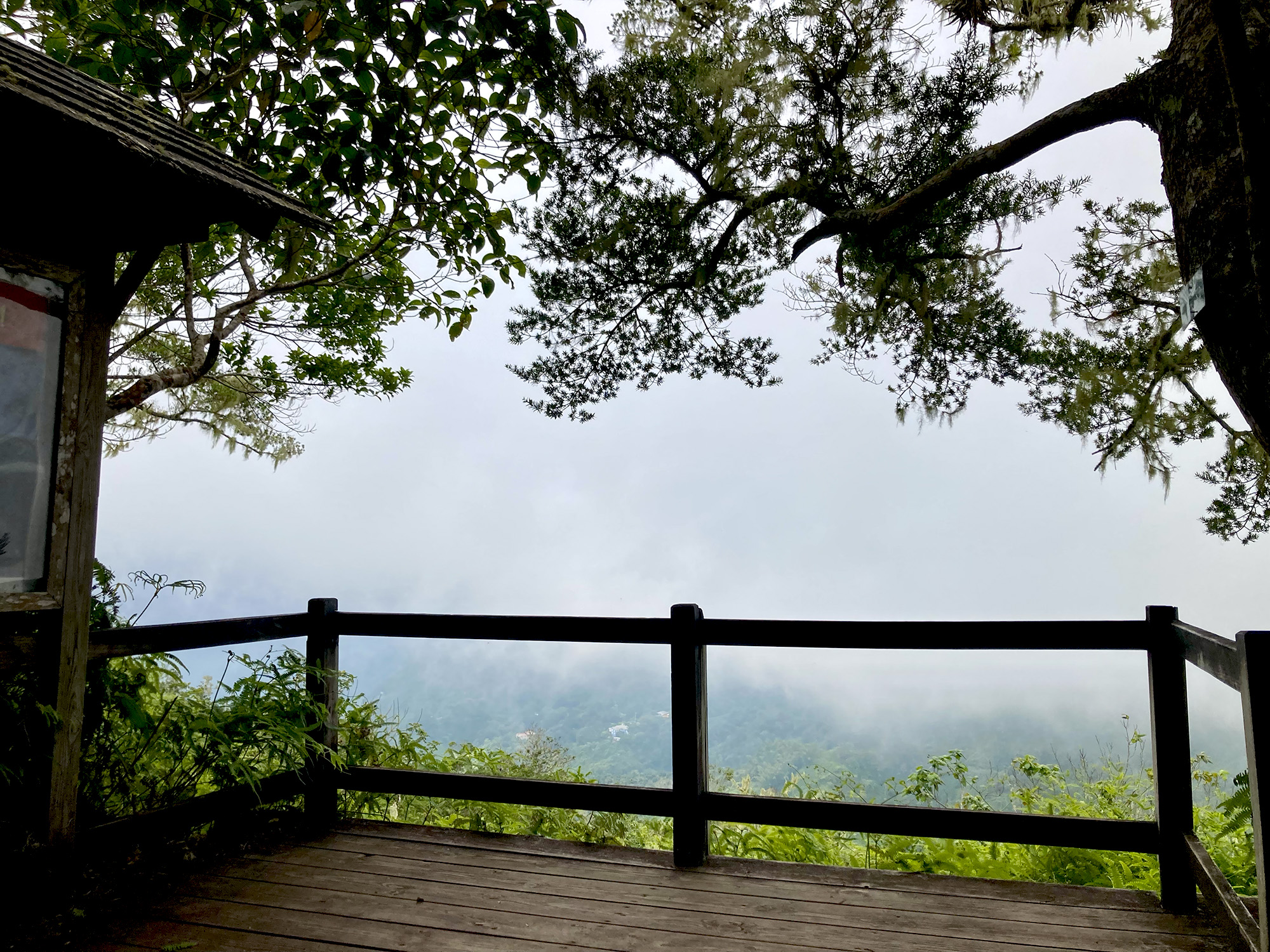
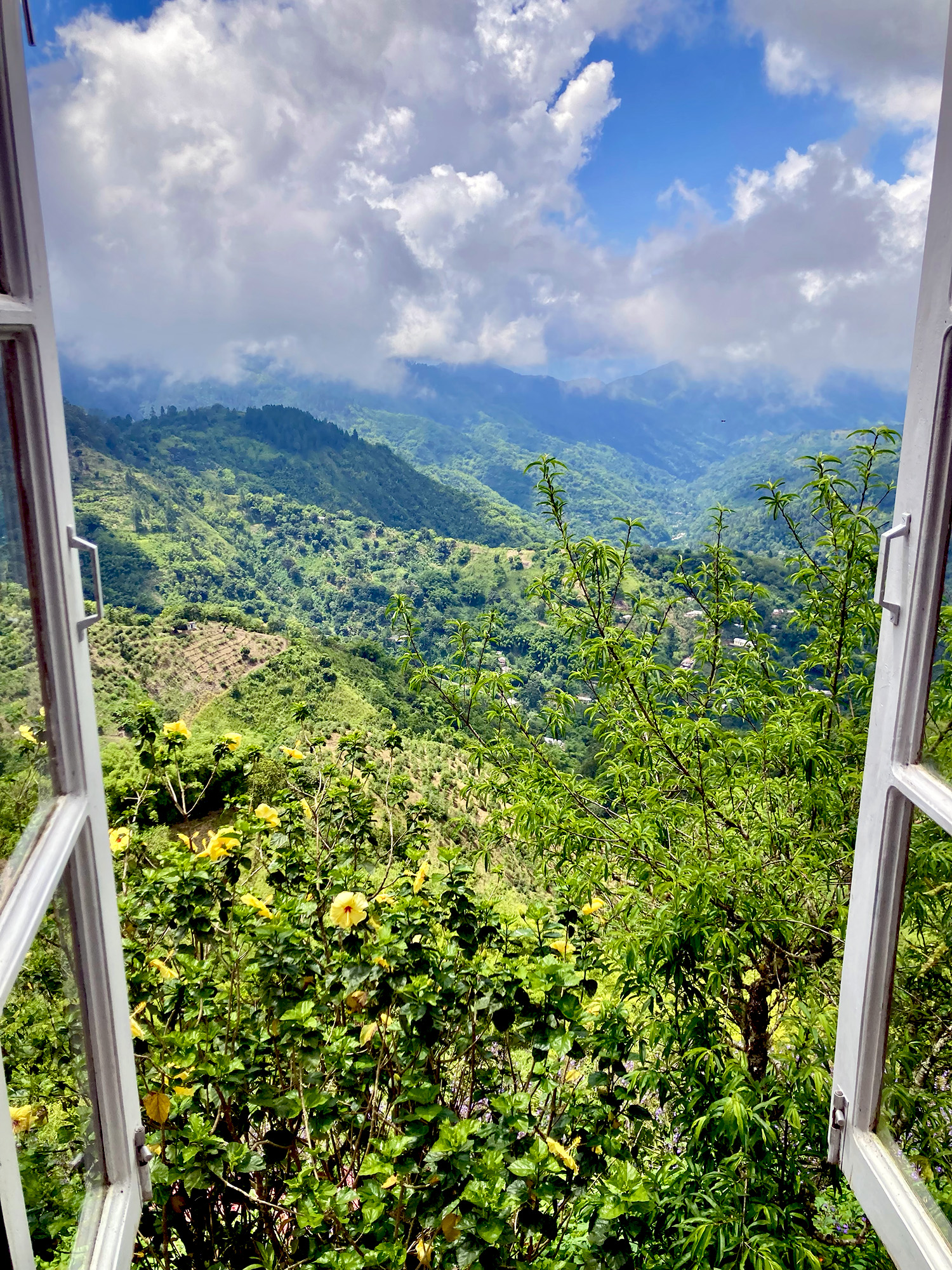
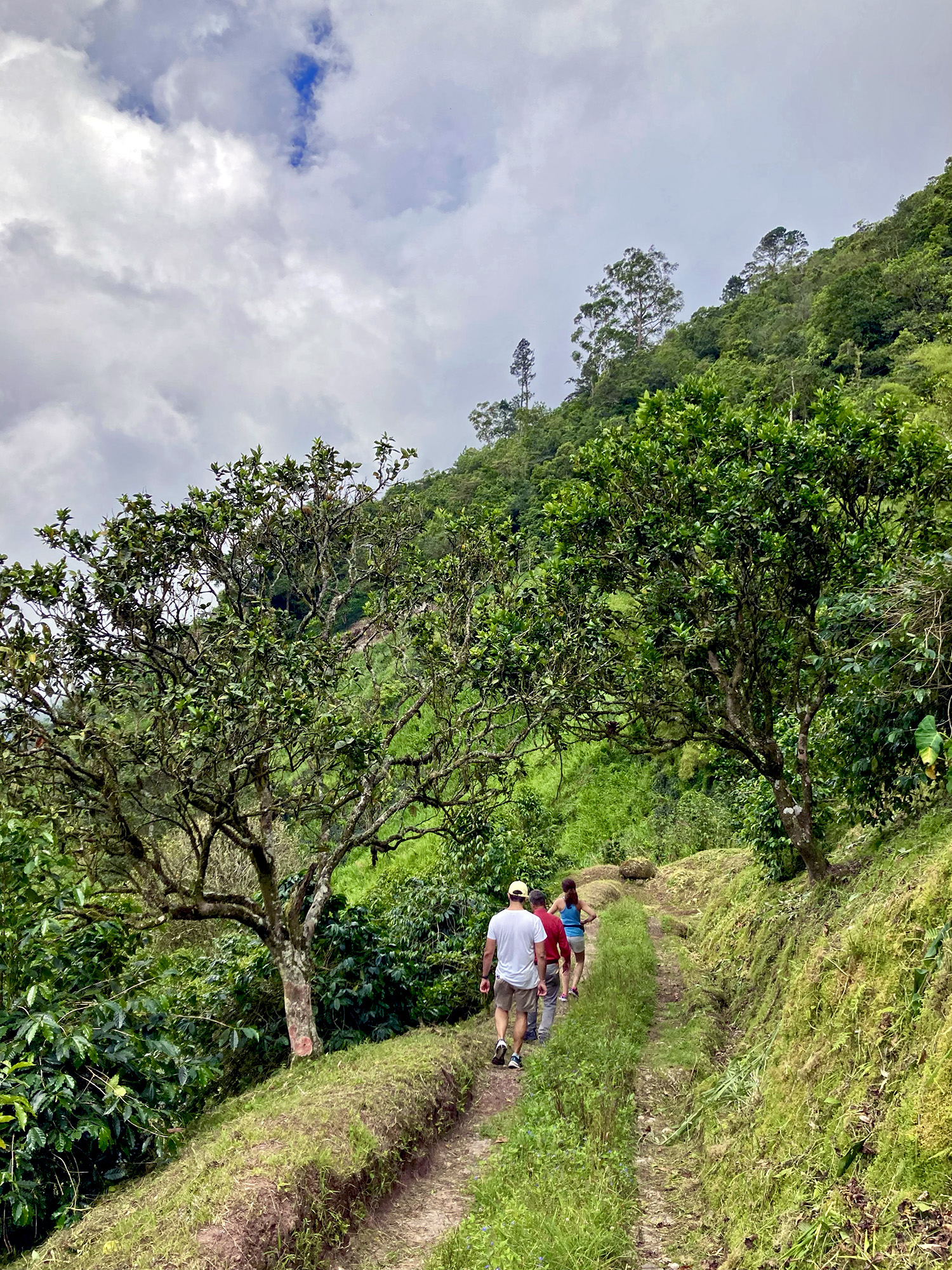
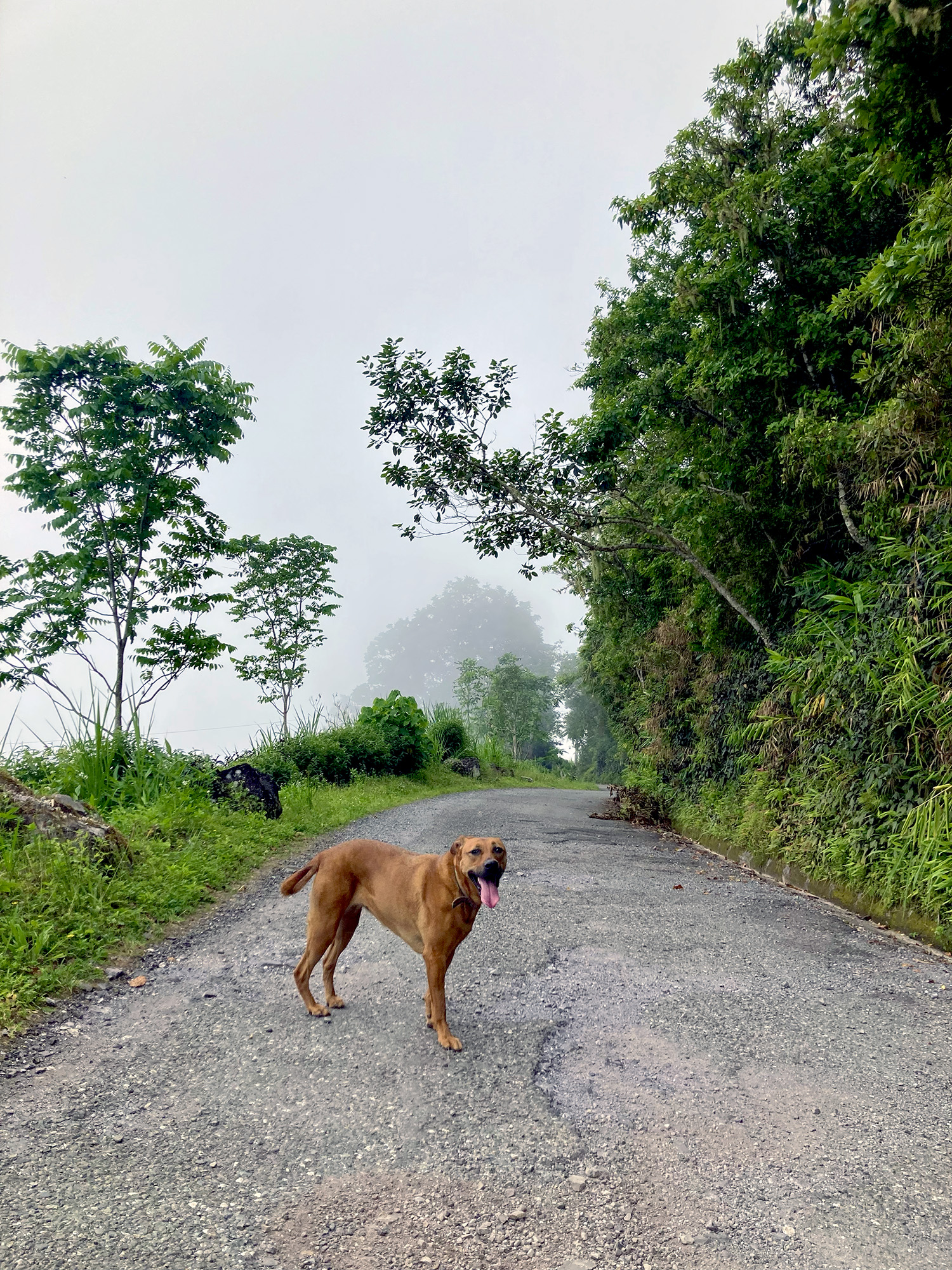
David, a second generation planter at Old Tavern Coffee Estate, welcomes us into his home, introduces us to his family of two highly energetic young lads and two adorable canines, Mango and Houdini, and proceeds to make us a most memorable cup of joe. We delve deep into the world of coffee, from what it takes to run a single origin estate (Old Tavern was the first in the country) to the challenges of carving out a domestic market in a historically tea drinking nation. When there’s a pause in conversation, we have the most glorious views to look out to from his sunroom. The fog rolls in and we make our way down to his plantation, where amongst other things, we get to actually pick and then sample the Coffea arabica fruit. It’s surprisingly sweet!

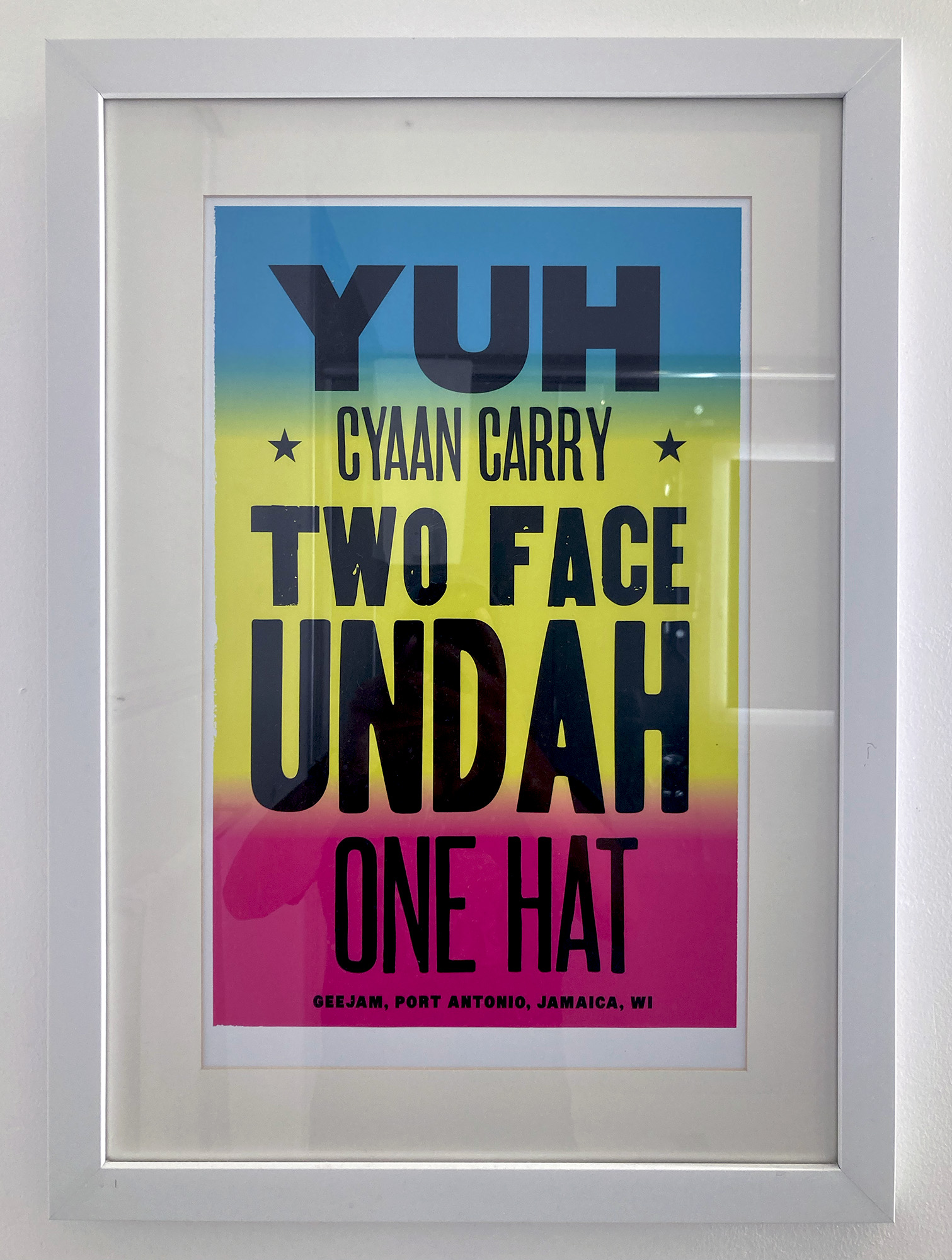
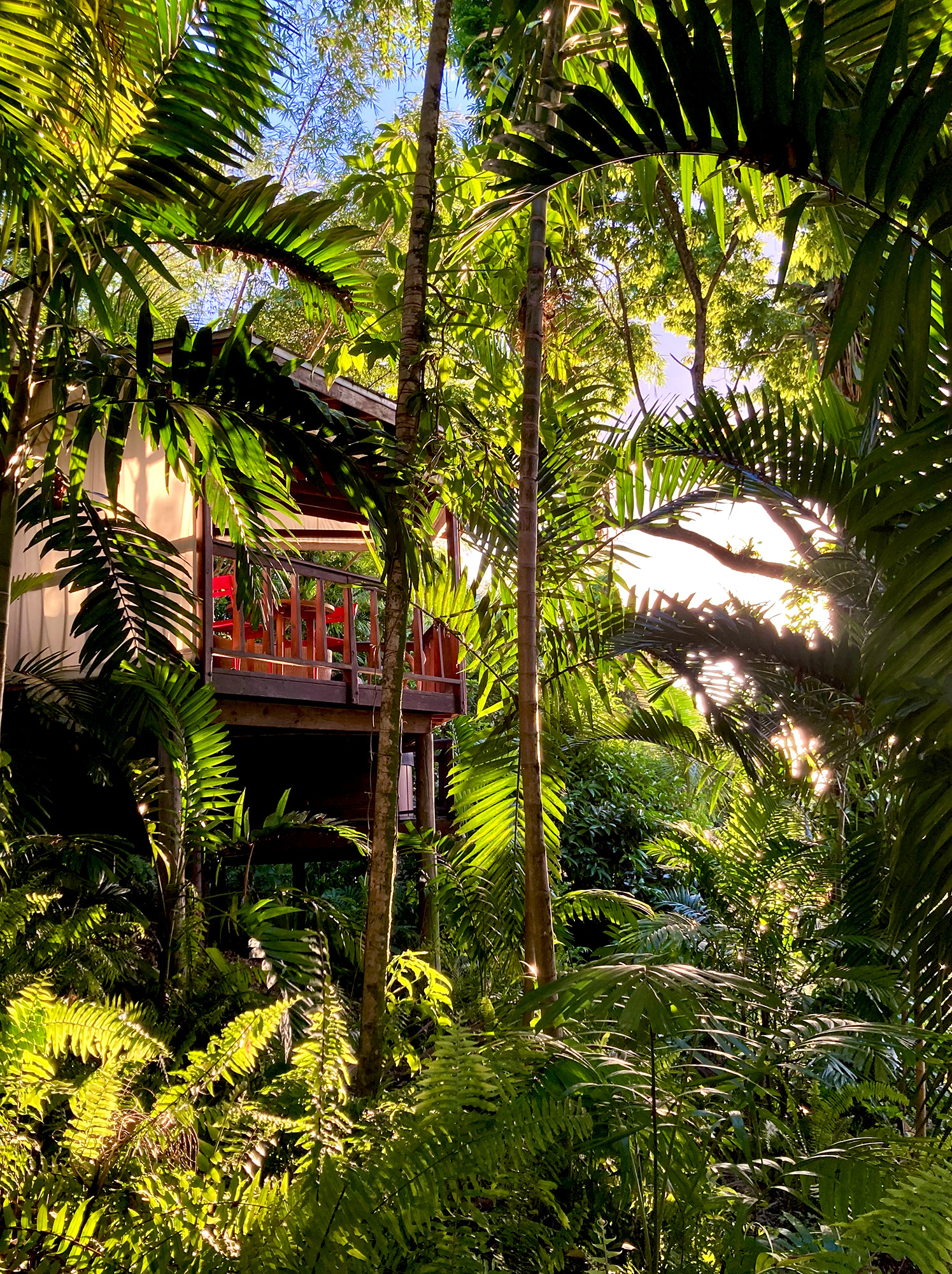
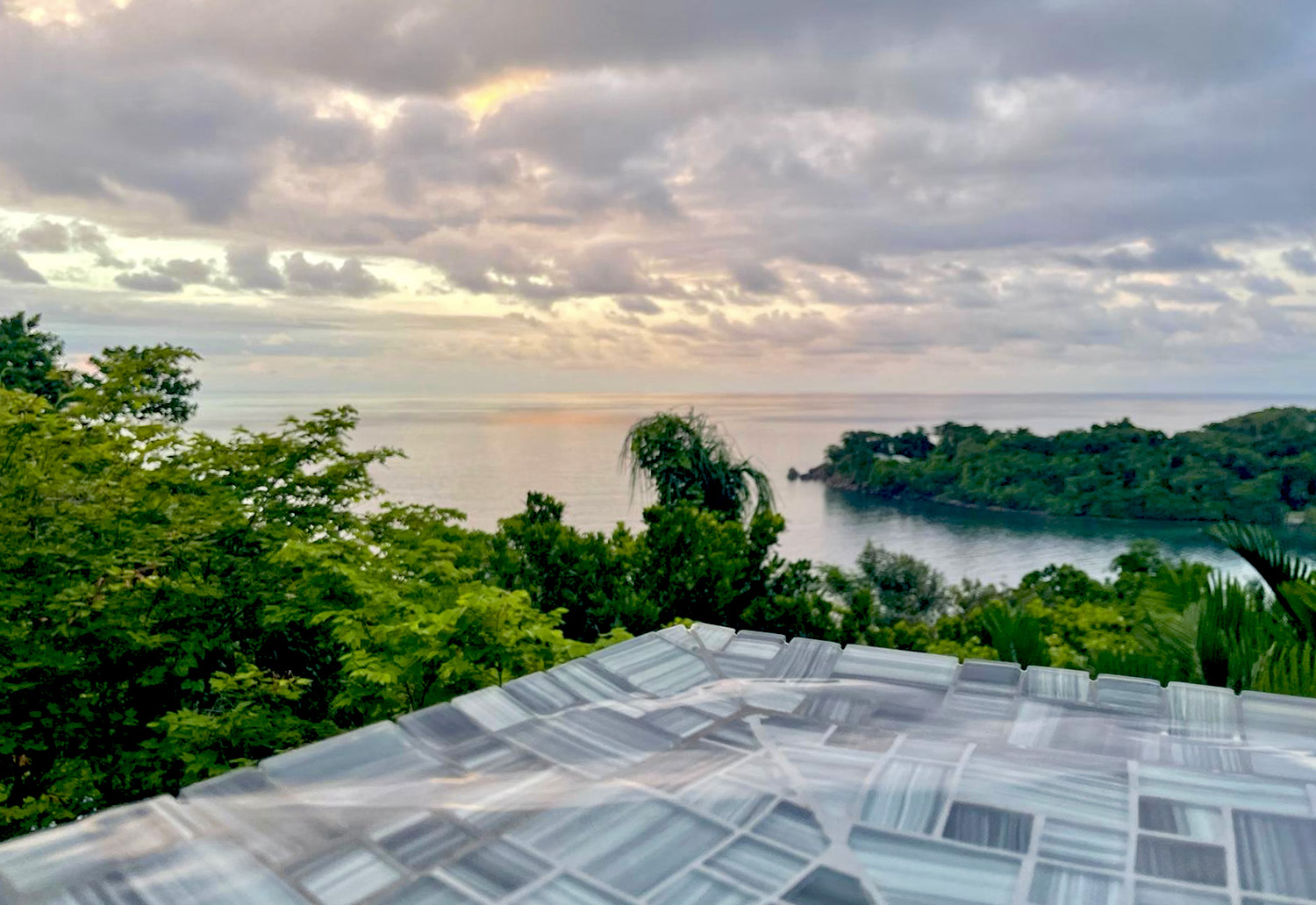
We’re booked to stay two nights at the Geejam Hotel, located just outside of Port Antonio, on the northeastern coast of Jamaica. Barring one final Google cock up, we make it there just in time for sunset, but more importantly, that all essential sundowner. Perched on a hill and set amidst a tropical rainforest, teasing us with views of the Caribbean at every turn, the Geejam turns out to be even better than its publicity material would lead you to believe. And resultantly, all plans of leaving the property for dinner in town are immediately abandoned.
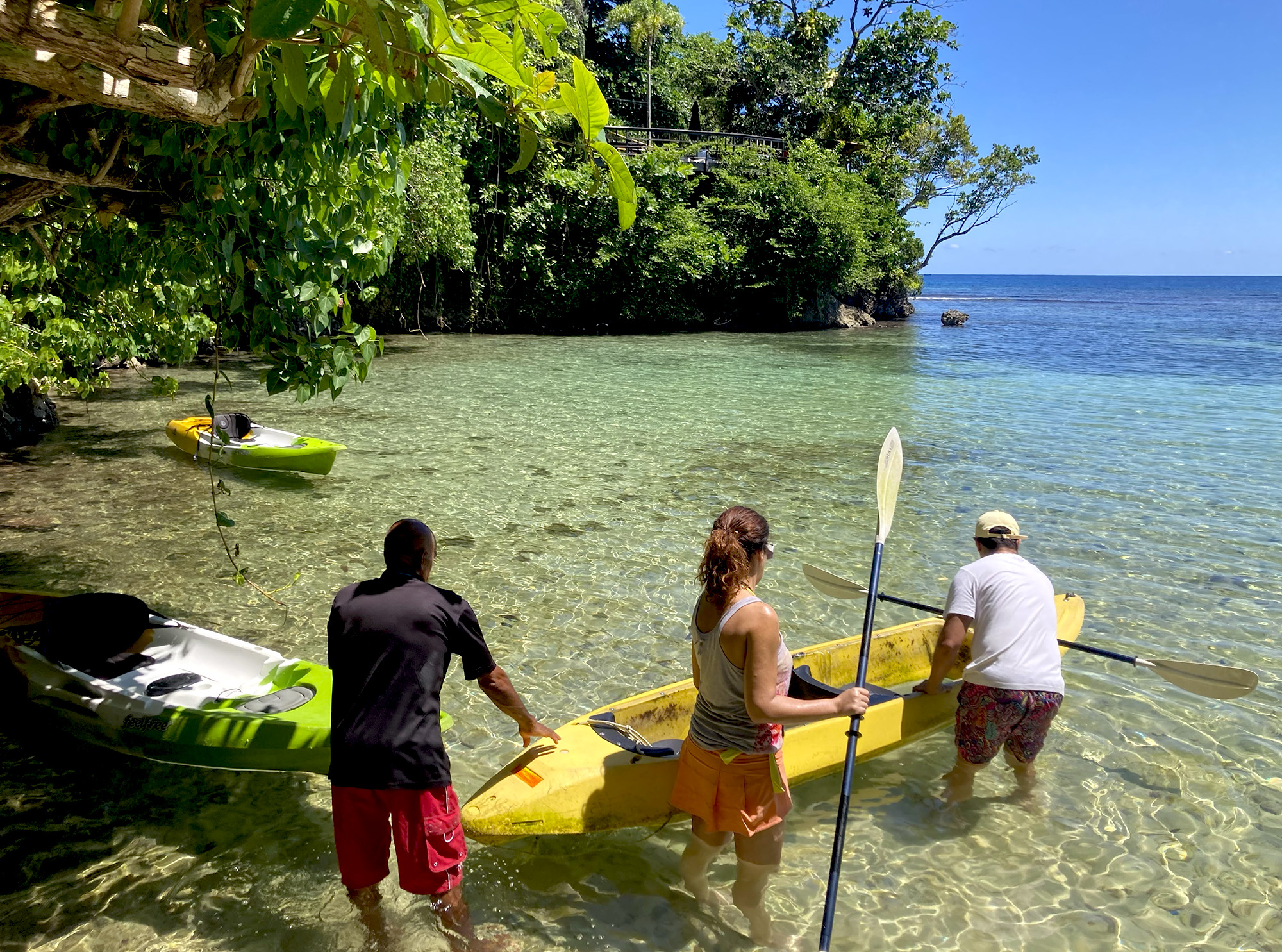
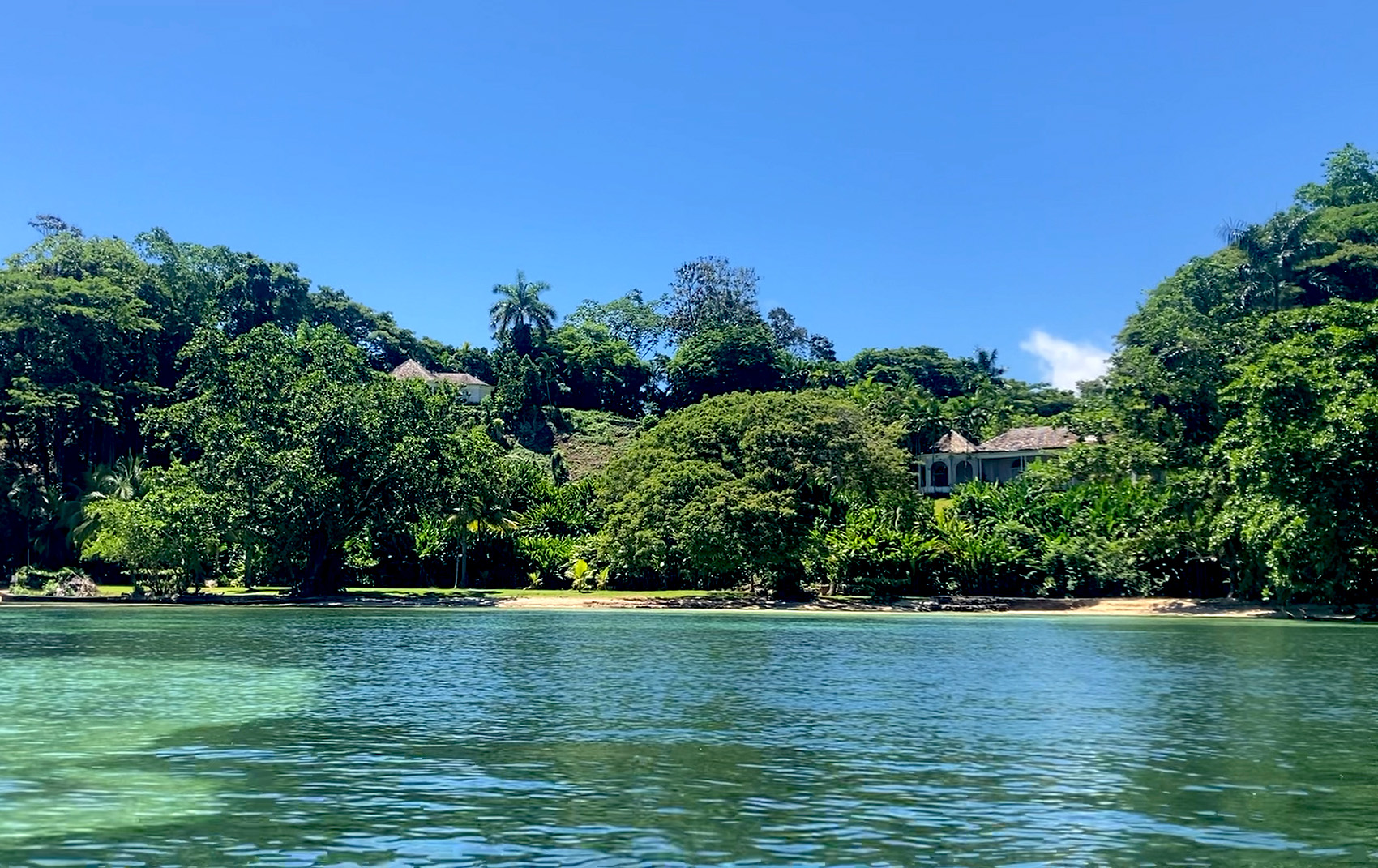
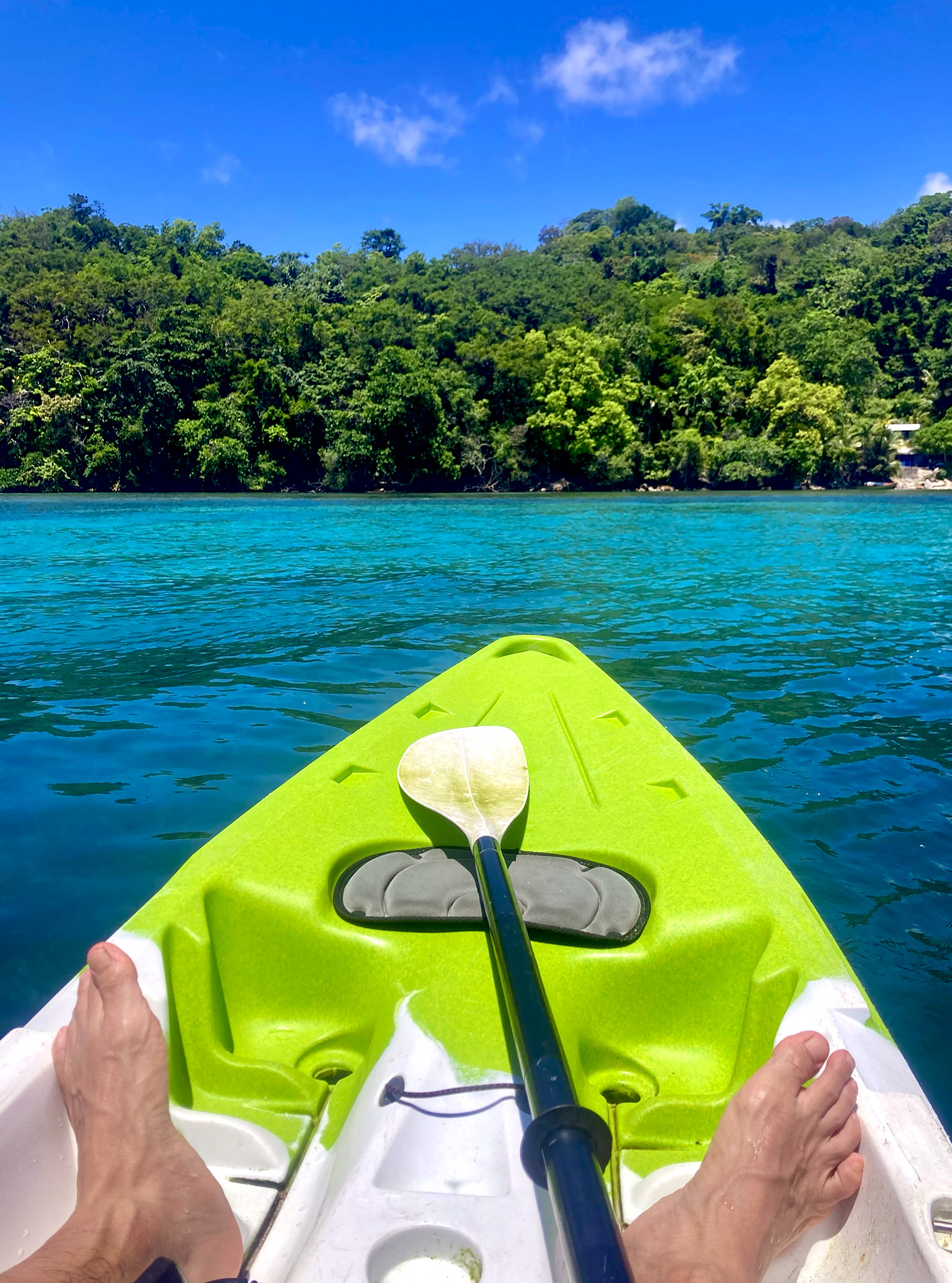
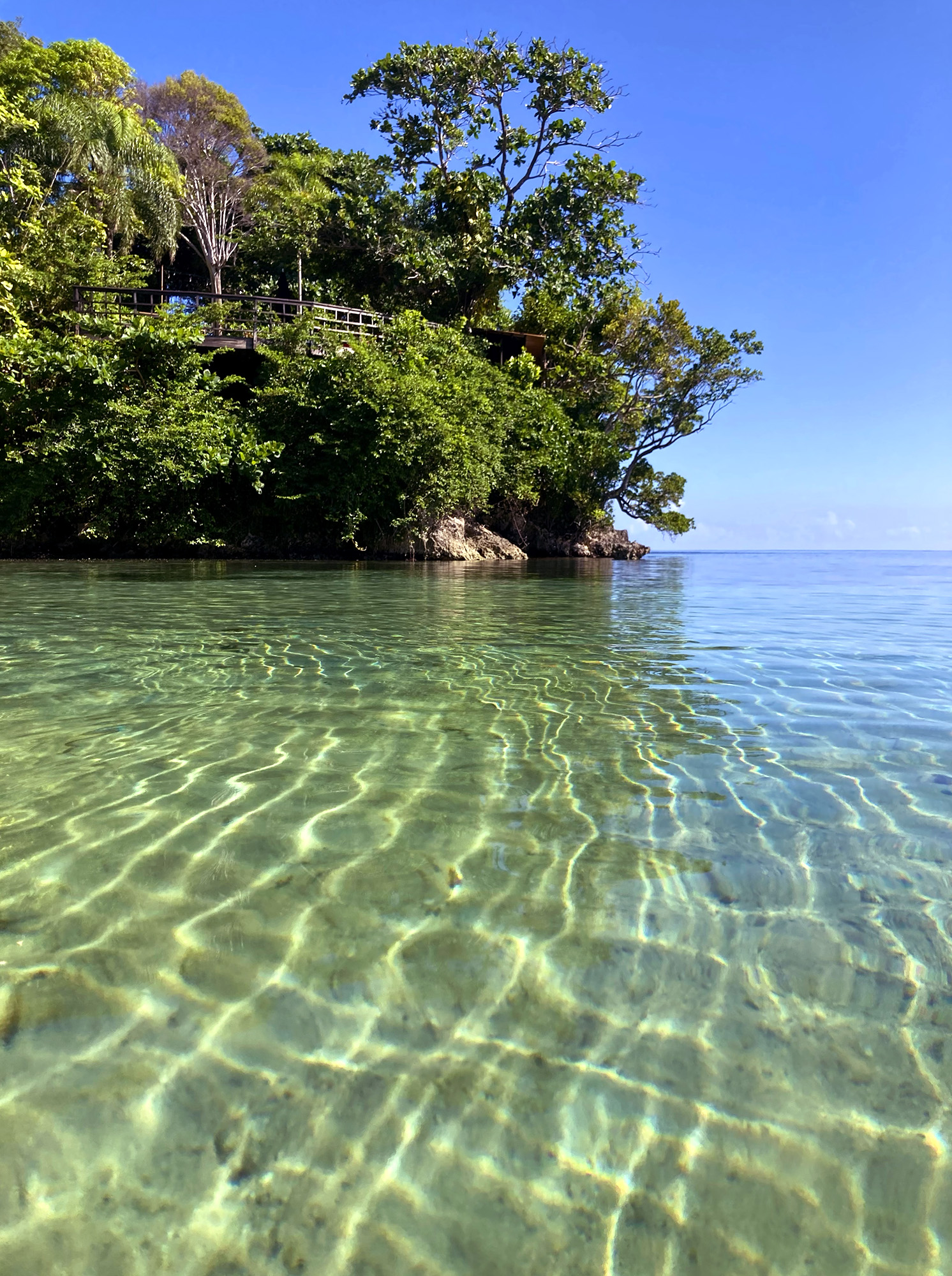
After breakfast, we make our way down the two hundred or so steps that lead to Geejam’s private beach club, where a final landing brings us into the warm embrace of the Caribbean. Arthur is the lifeguard at the Geejam, and under his tutelage we kayak into the incredibly calm waters of Geejam bay, which we have entirely to ourselves this morning. First, the sights. Arthur points in the direction of Fishermen’s Cove, a much coveted strip of sand in these parts; and closer to us, the stunning property that was used as a filming locale for the Bond flick, No Time to Die. Then come the drumbeats. Using the sides of his kayak to good effect, Arthur lures a sea turtle to the surface of the water.
Our collective excitement at spotting one, then two, then three is more than palpable, so he encourages us to jump in. I take the plunge, literally, but come up empty. The water appears translucent for a reason, he explains. The bay is fed by mineral-rich mountain springs, which also account for the cooler surface temperature of the water. He urges me to hold my breadth and free dive. A leap of faith for me, yet again, but it pays off soon enough. It’s crystal clear below that sulphur-heavy top layer, and in the distance I’m finally able to spot a turtle underwater. A few more dives follow, and I’m practically face to face with a stunner. I’d love to stay and stare, of course, but eventually the lack of oxygen brings me back up to reality.
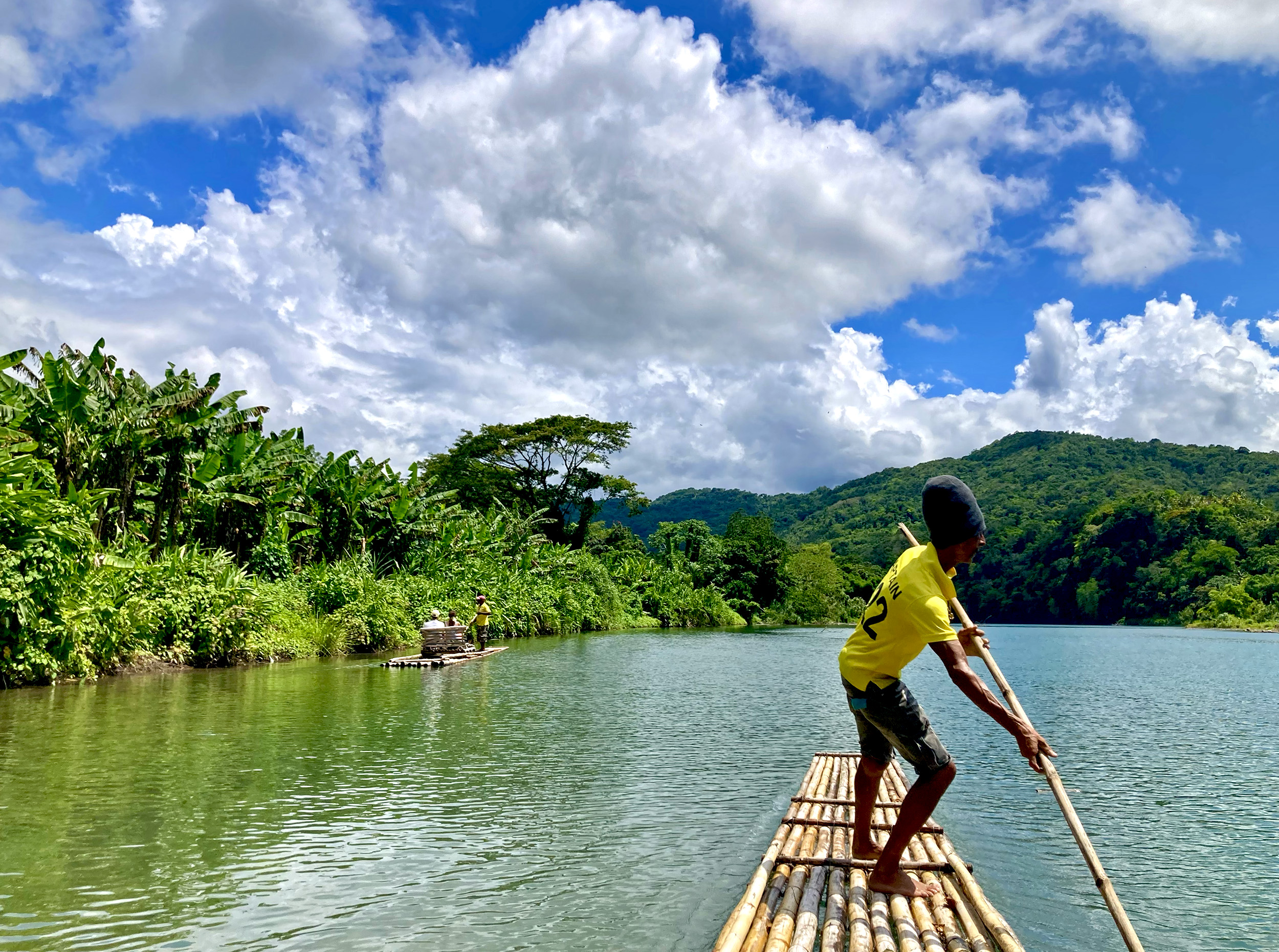
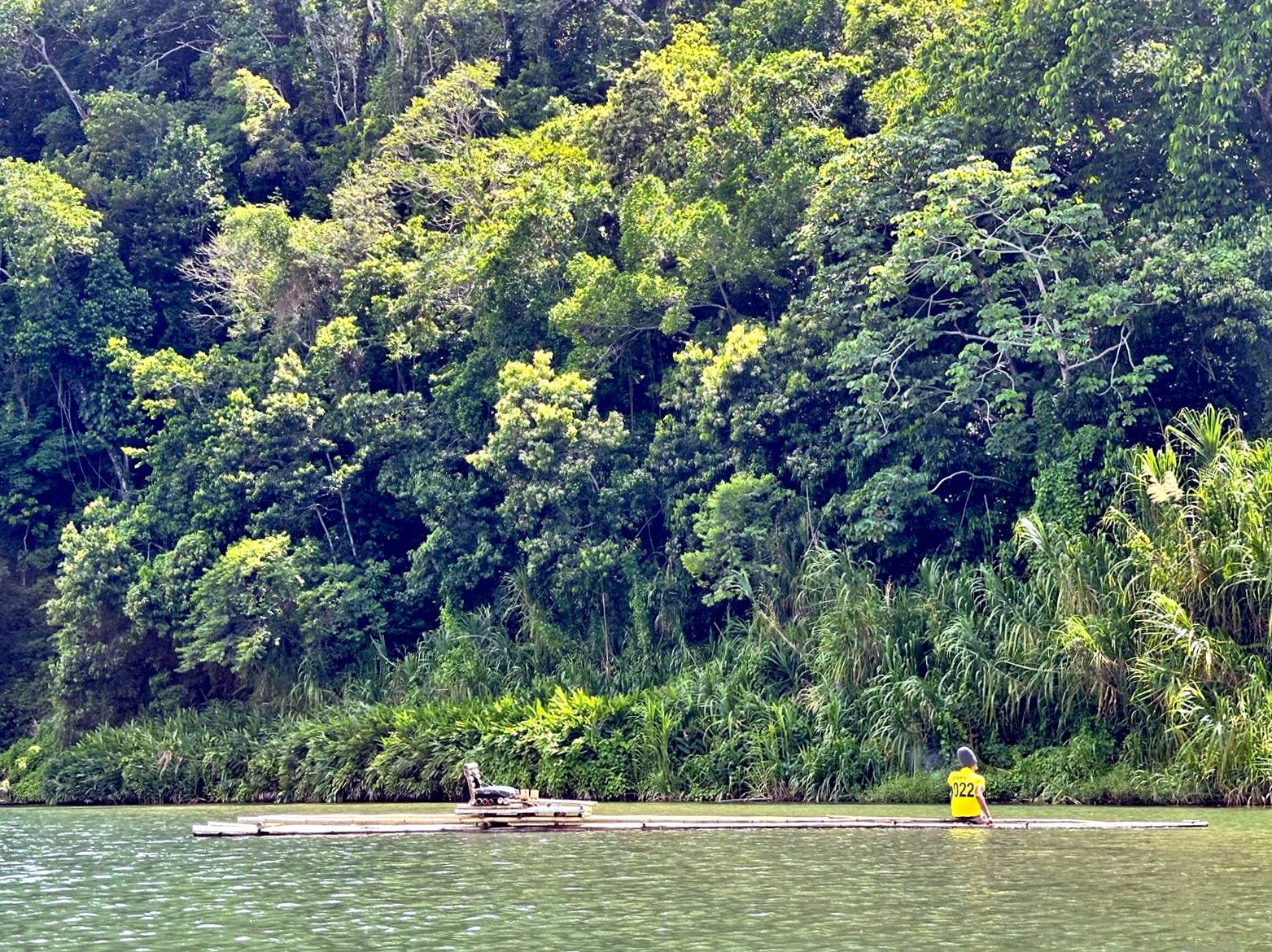
Our main outing for the day involves a trip along the Rio Grande on bamboo rafts. We pull up at Rafters Rest, about 10-miles west of Port Antonio, and seek out Roy and Rohan amongst the many “captains” milling around. Within minutes, we set sail upstream, passing a half dozen or so returning rafters. From that point on, the river is practically ours to savor, and Roy breaks into Harry Belafonte.
The Rio Grande is one of the longest rivers in Jamaica, originating somewhere in the Blue Mountains, charting a course through the ever-verdant parish of Portland, before emptying into the sea. Bamboo rafts were once used to transport produce, especially bananas, from the interiors to the coast for export. Today, they ferry visitors into the very lap of nature, where it’s possible to take a dip, drink straight from the source, try your hand at rowing – an activity that’s a lot more difficult than Roy and Rohan make it appear – and then lazily, and somewhat reluctantly, return back to civilization.

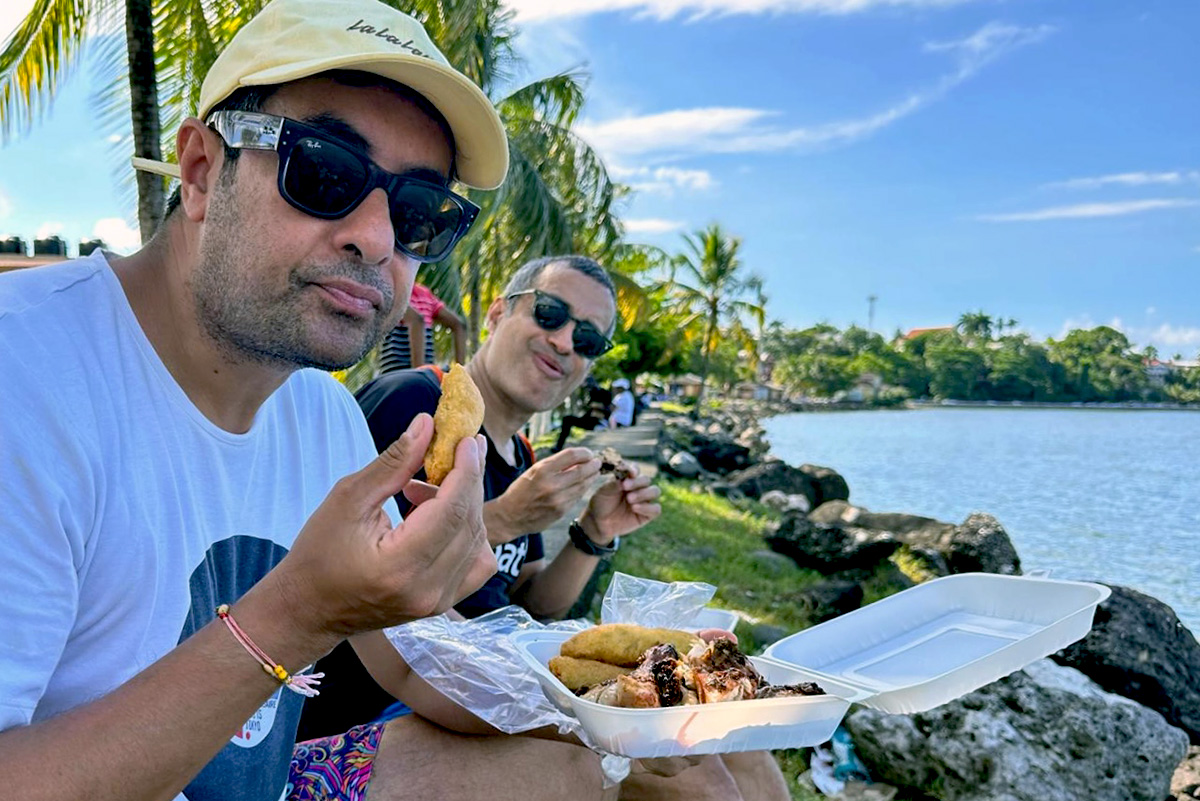
We’ve asked a handful of locals the same question and each time it’s been the same answer. Piggy’s Jerk Centre is a bit of an institution in these parts, and if the rumor mill is to be believed, Mr. Craig and the rest of the Bond crew took a shine to it too. So we show up expecting a line but there is none. It’s well past lunch hour in Port Antonio, so understandably they’ve sold out of a few items, but their mainstay, Jerk Chicken, is very much up for grabs. We find a spot along the Port Antonio waterfront and chow down some quality jerk and festival, that hole-in-the-wall establishment certainly living up to the hype.
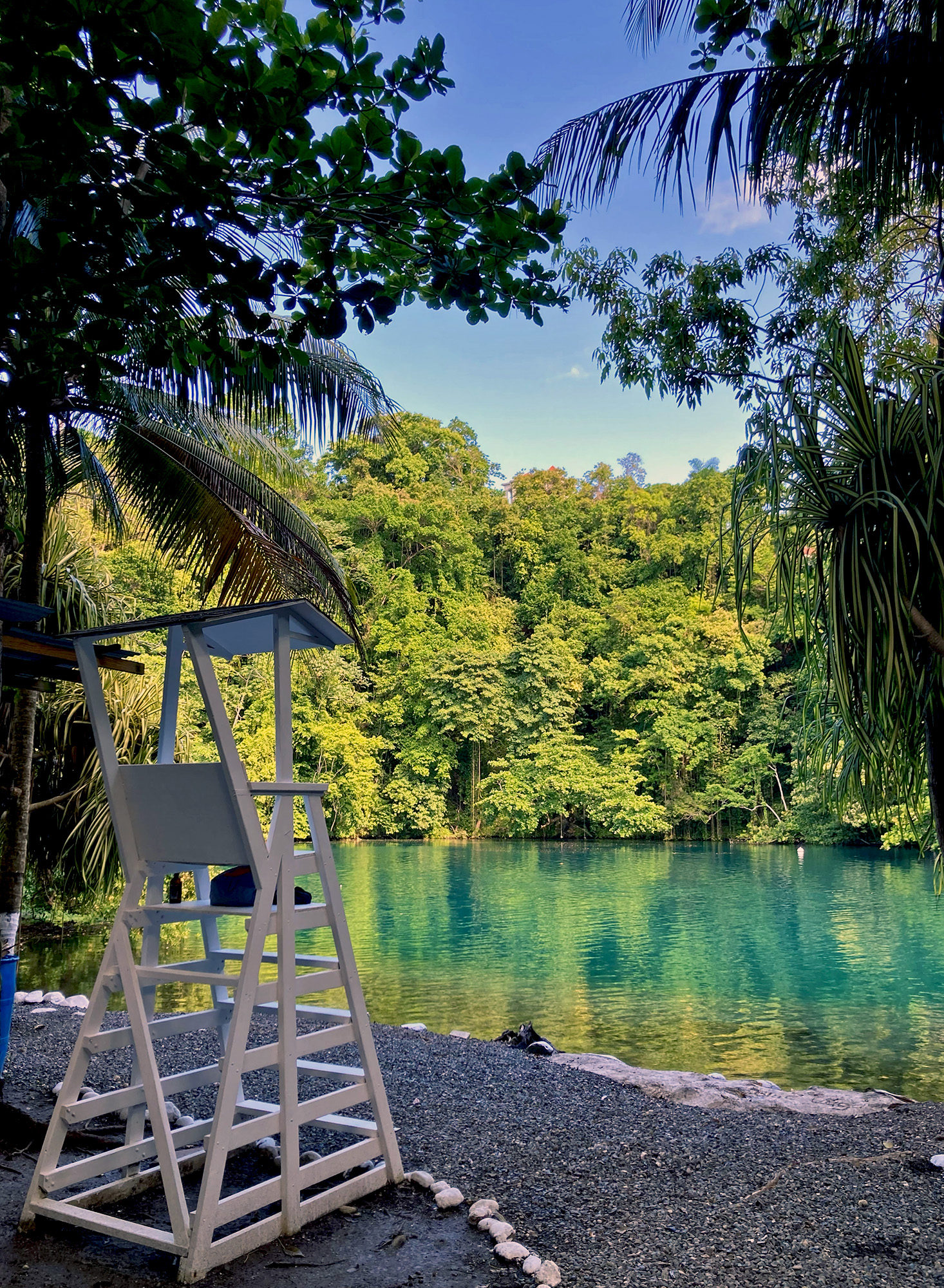
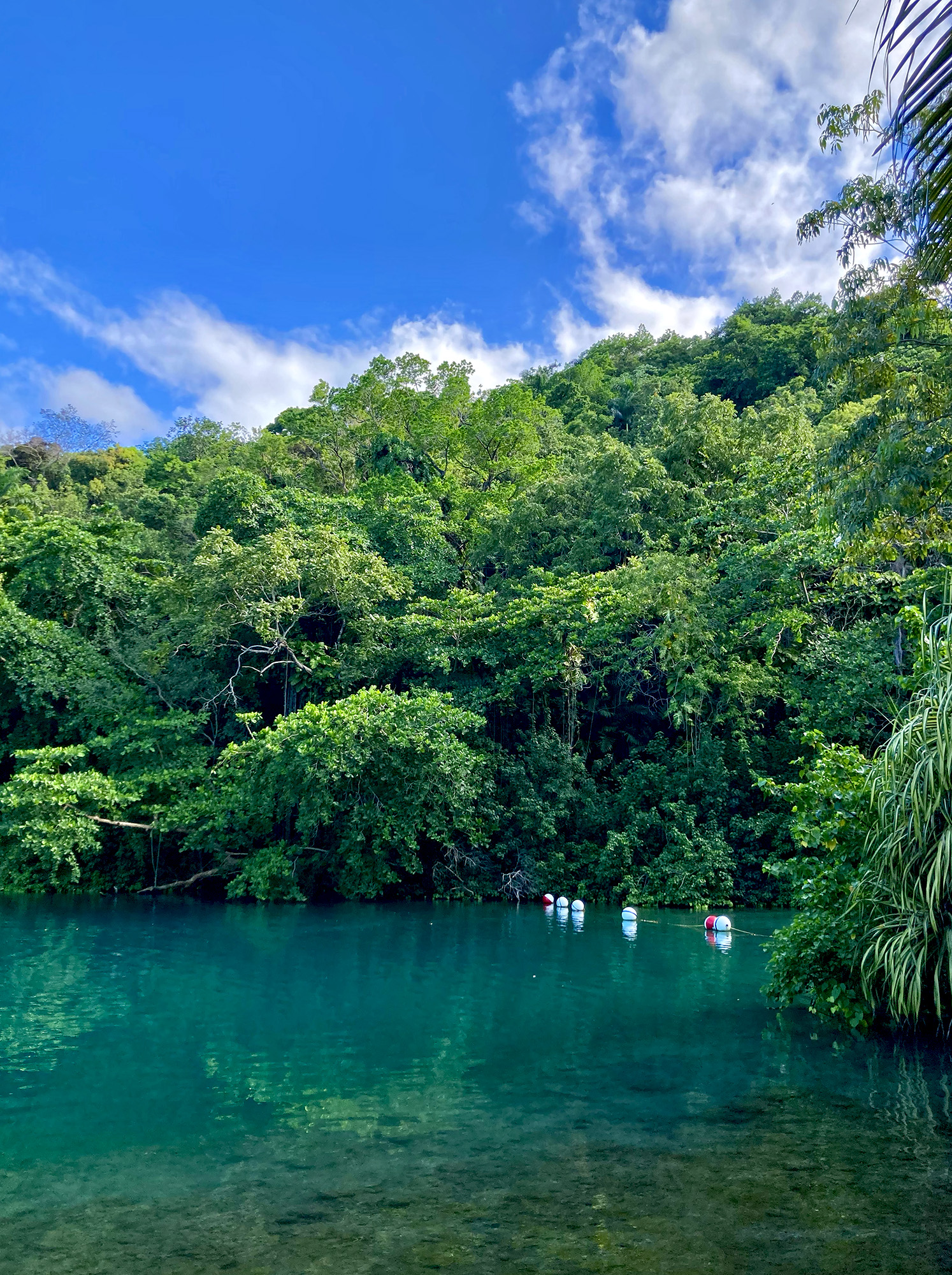
The Blue Lagoon, or “Blue Hole” as it’s referred to locally, is located a few miles east of Port Antonio, and we stop there for a brief visit post lunch. Fun fact: the namesake film that launched Brooke Shields career was filmed mostly on an island in Fiji, with very few scenes shot in Jamaica. But Hollywood trivia aside, the Blue Lagoon is a spectacle, from practically any angle. Set in a narrow cove that’s cradled by forested cliffs, the water at the lagoon is 180-feet deep at its deepest point, giving it its color and name. Located at the shallowest end of the cove is a earmarked swimming area, for those who fancy a dip. It’s only a few feet deep so appears tempting at first, till you see that flimsy rope float separating you and that precipitous drop. We quickly pass.
An evening swim is still in order though so we head straight to the Geejam beach club, where it all started this morning. Some Red Stripes to kick off proceedings, followed by a relaxing dip, and then the customary nap, which is rudely awoken by mosquitoes. Time for a change of scenery. Back on the main property now, a rum punch is ordered poolside, and a clumsy game of pool is played not long after, on what is easily one of the most beautiful settings for a pool table. All of which eventually segue’s into a long dinner at the Bushbar. So much for us trying a few local spots in Port Antonio.
Steve stops by our table to chat. Along with his partner, Jon, the duo was instrumental in creating the Geejam brand, and its associated properties, including Geejam Studios. Both are veterans of the music industry, and their studio is one of the leading residential recording facilities in the Americas, with a client roster boasting the who’s who of the music world. He won’t say who, but there is an artist on site at the moment and their retinue accounts for most of the bookings at the Geejam. That would also explain why we’ve had the run of the place, pretty much, all while they’ve been busy working. We’re not ones to complain though.
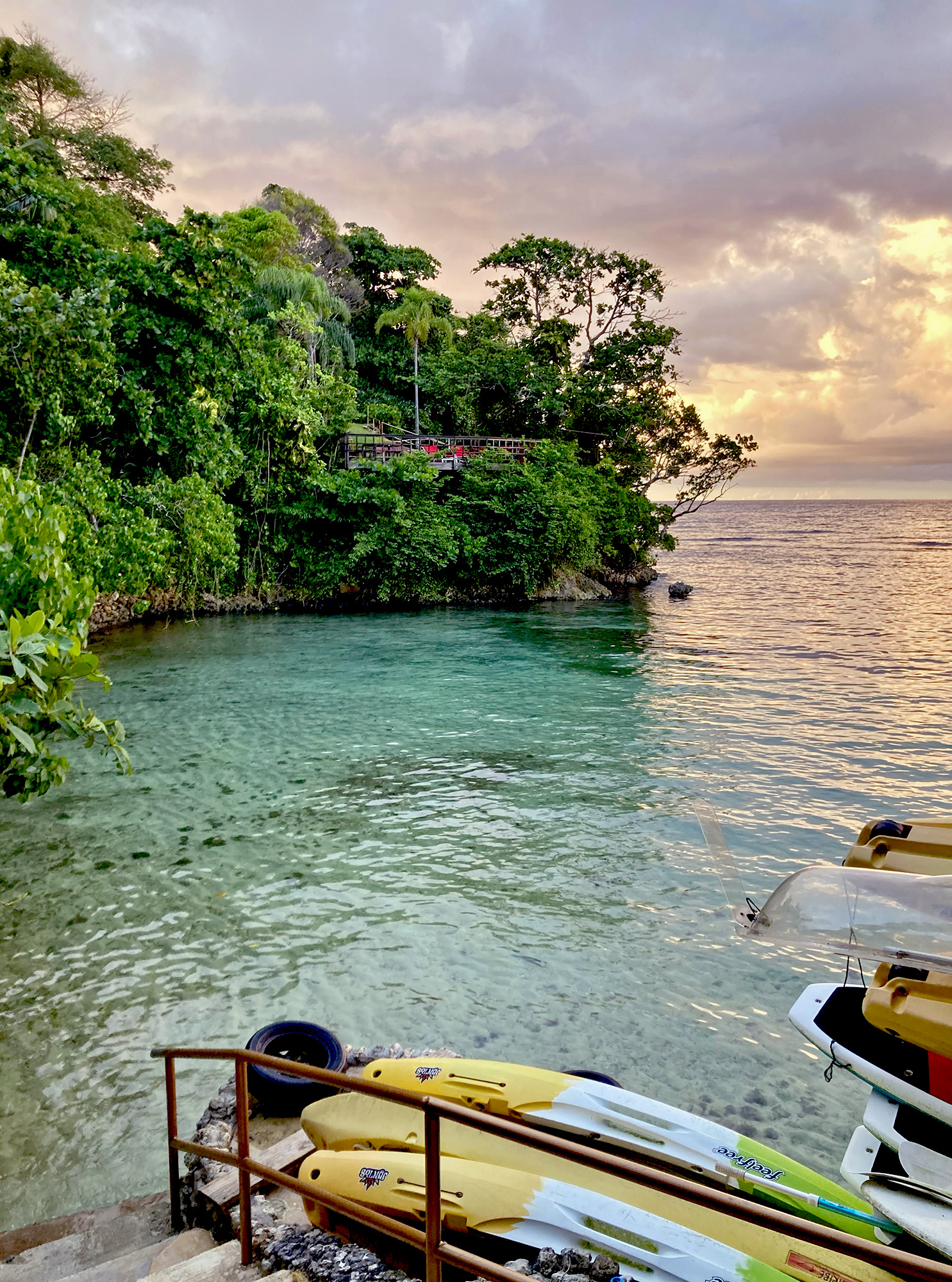
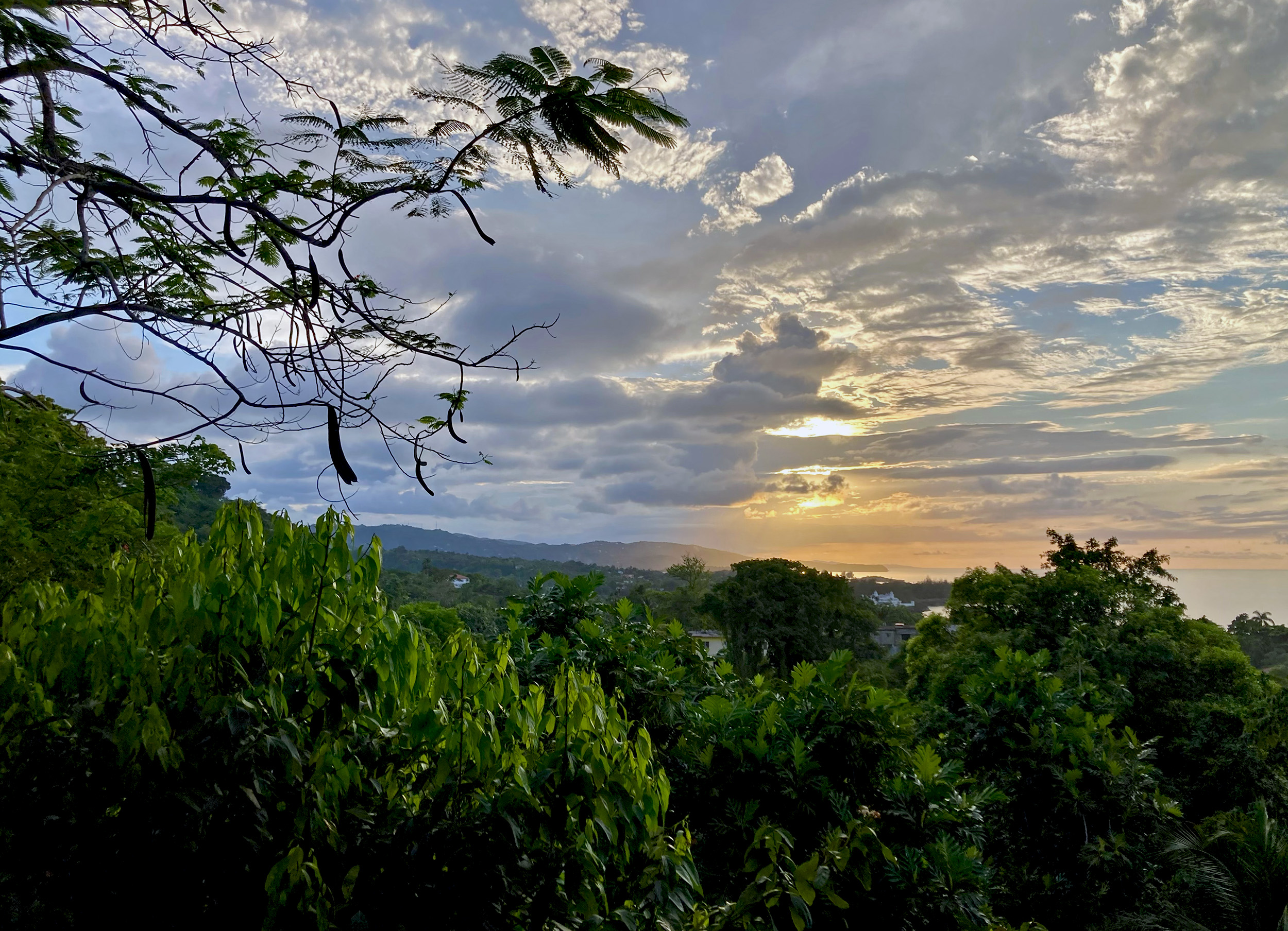
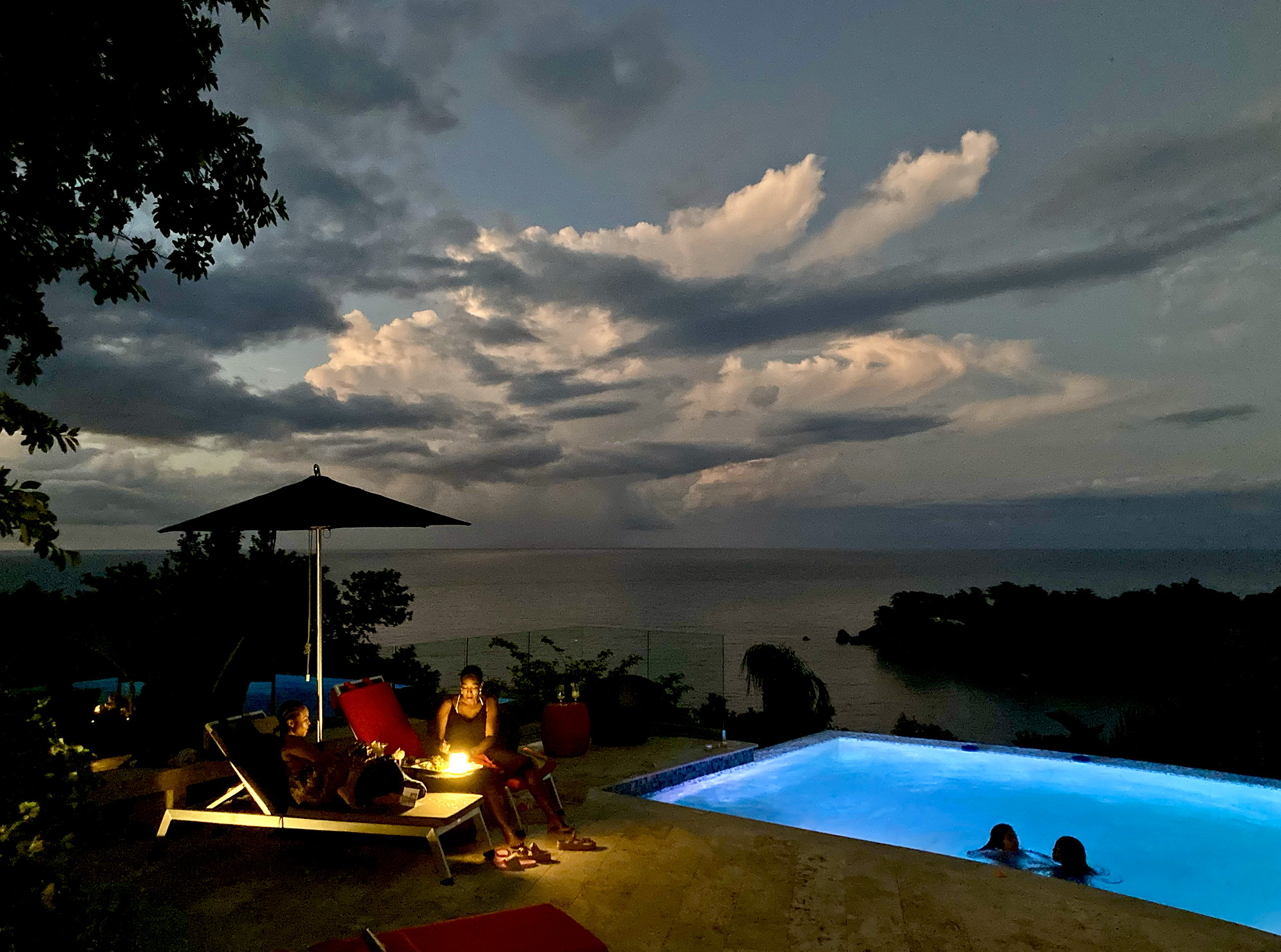
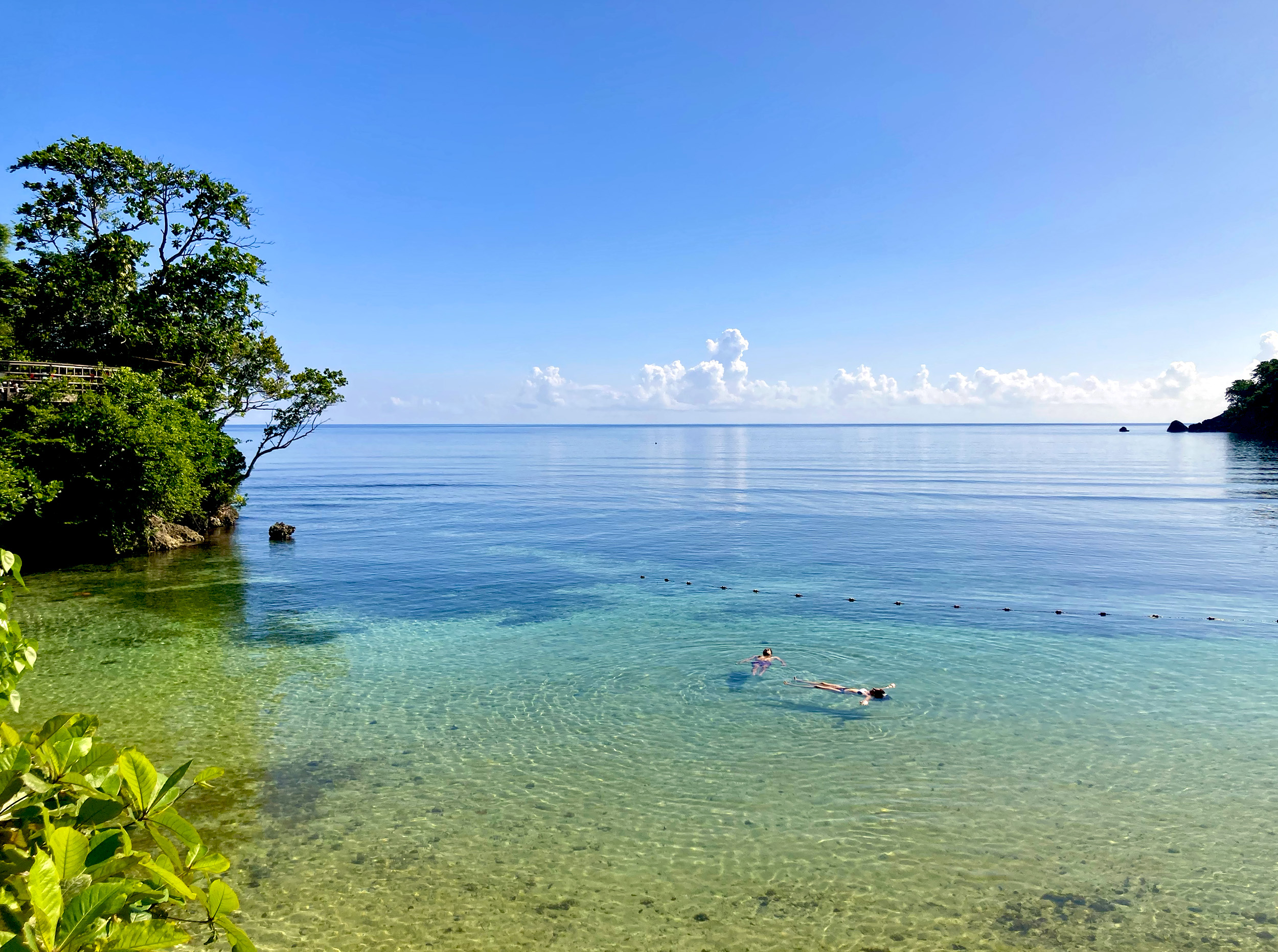
It’s our final morning in Port Antonio and a pre-breakfast plunge is in order. Not surprisingly, we’re the first ones at the beach club, and yet again, have the bay to ourselves. So perfect are the conditions today that a planned half hour dip quickly evolves into over an hour. If it wasn’t for my hunger, we’d rather just remain in this state of bliss. We bid Arthur farewell, then make our way up those steep steps for breakfast, working up a solid appetite in the process. And before we know it, it’s time to hit the road.
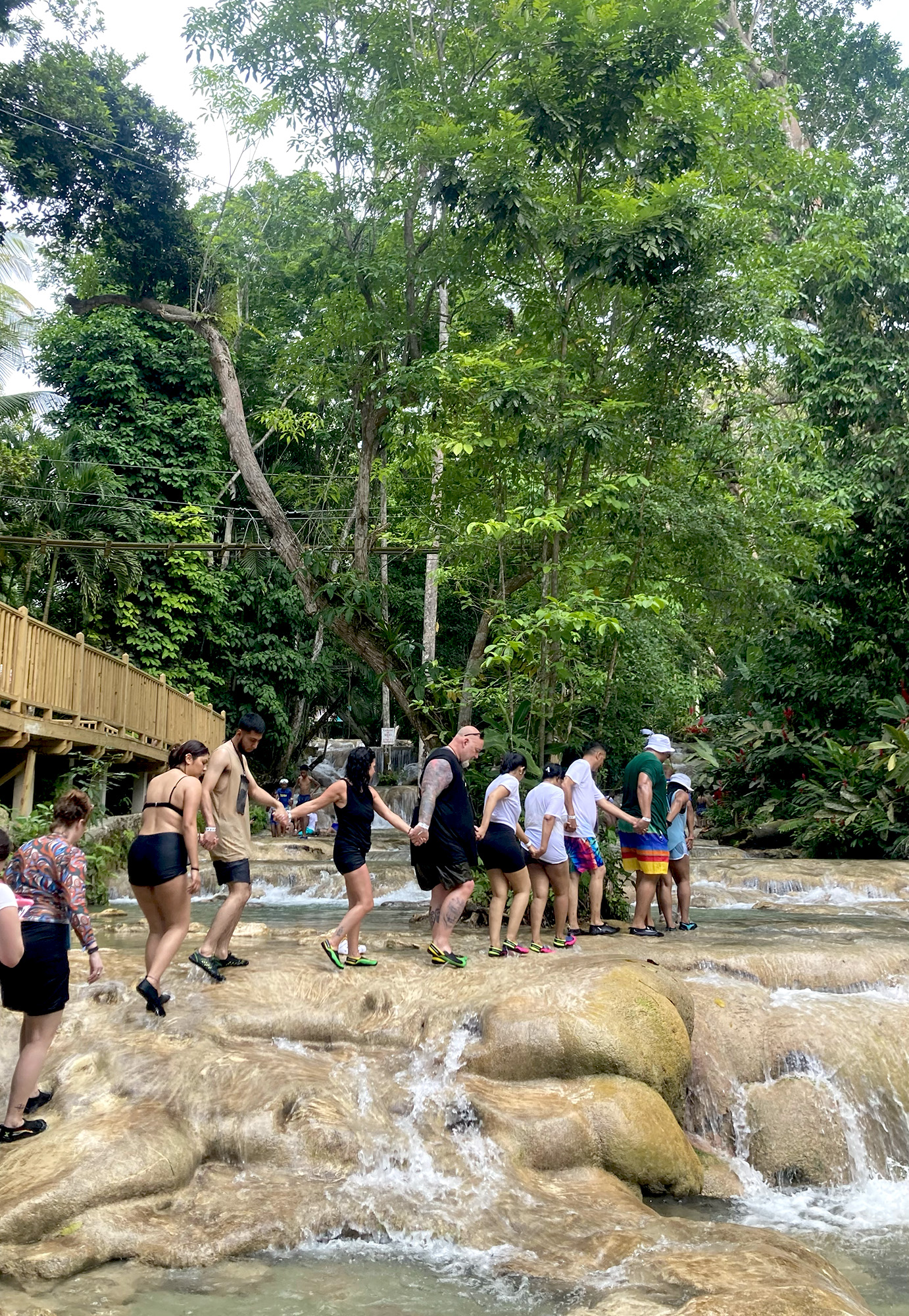
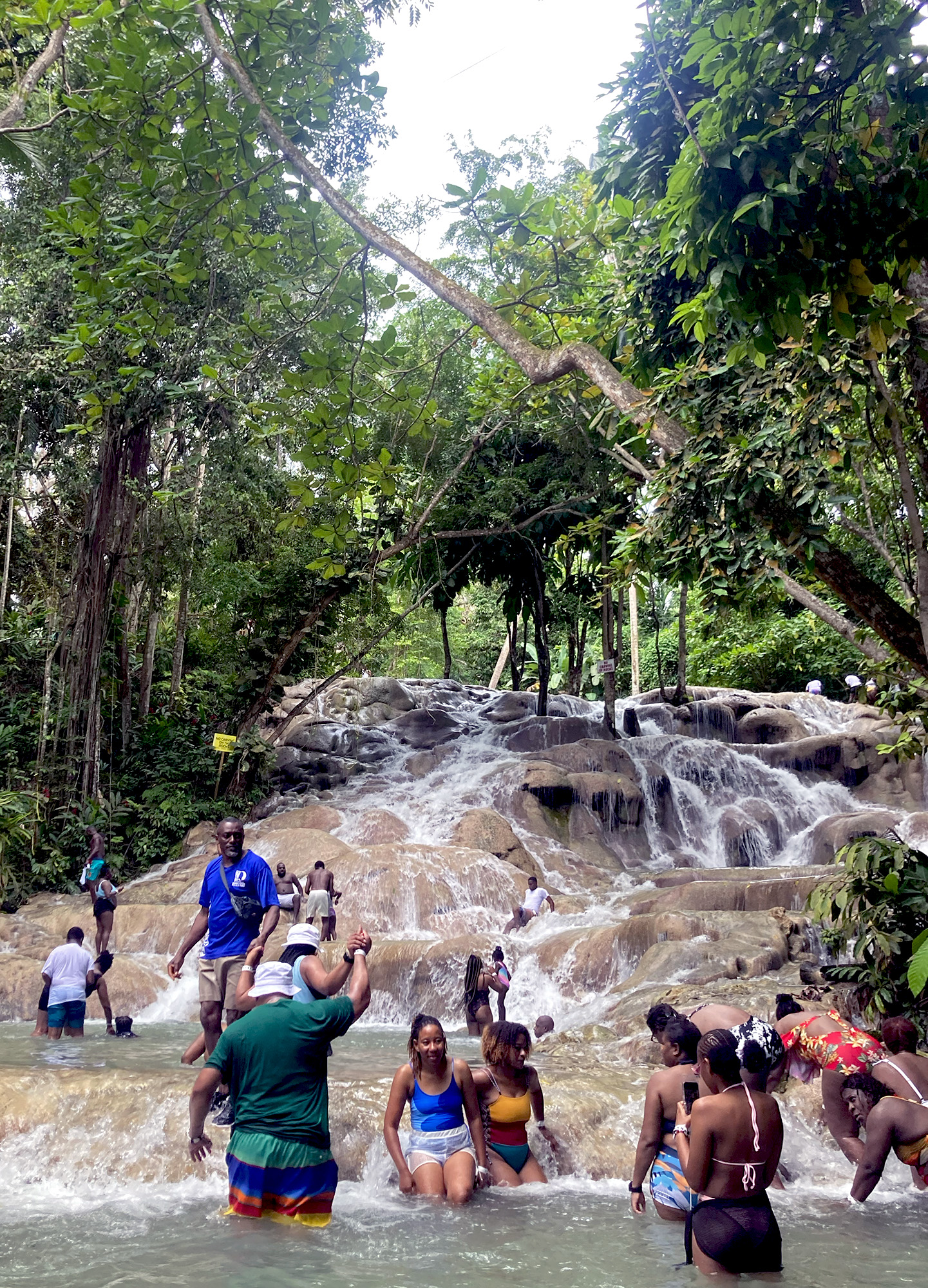
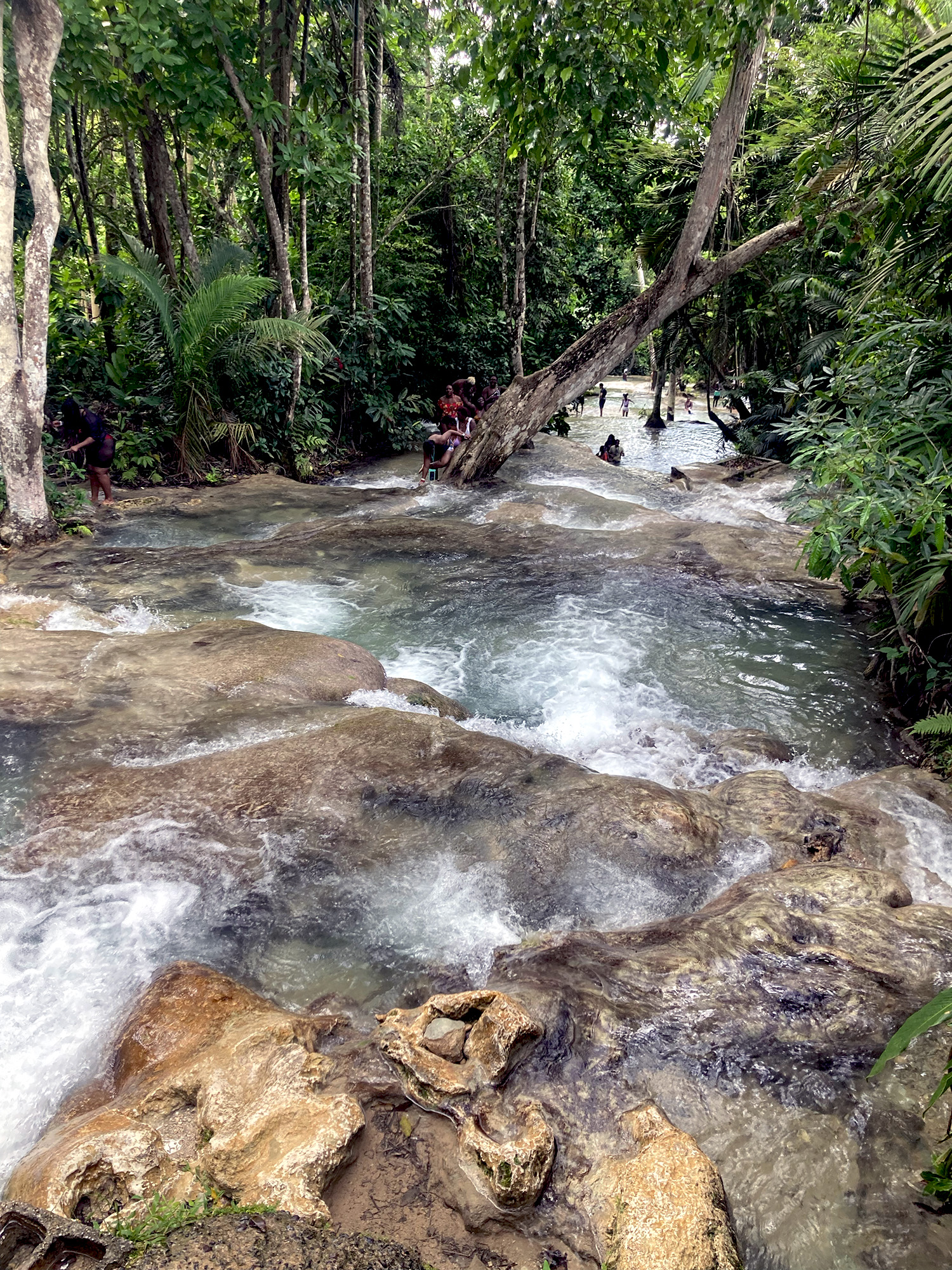
Ocho Rios is our next and final destination. Located about a two-hour drive west of Port Antonio, it’s one of the largest towns on the north coast of Jamaica, and quite the tourist hub. Its main draw is undoubtedly Dunn’s River Falls. Almost 600-feet in length, the waterfalls are naturally terraced like giant stairs, and climbing them is one of the most sought after activities for locals and visitors alike. Almost 200-feet high and fed by spring water at their source, the falls empty into the Caribbean Sea. You could choose to go it alone but a guide is highly recommended. Expert guidance, along with special “water shoes” – which you pay for but get to keep – and that all-essential “human chain” is what gets you up eventually. It’s far from easy, and from a safety perspective, let’s just say it wouldn’t pass muster in the first world. Is it worth the effort and risk then? A hundred percent.
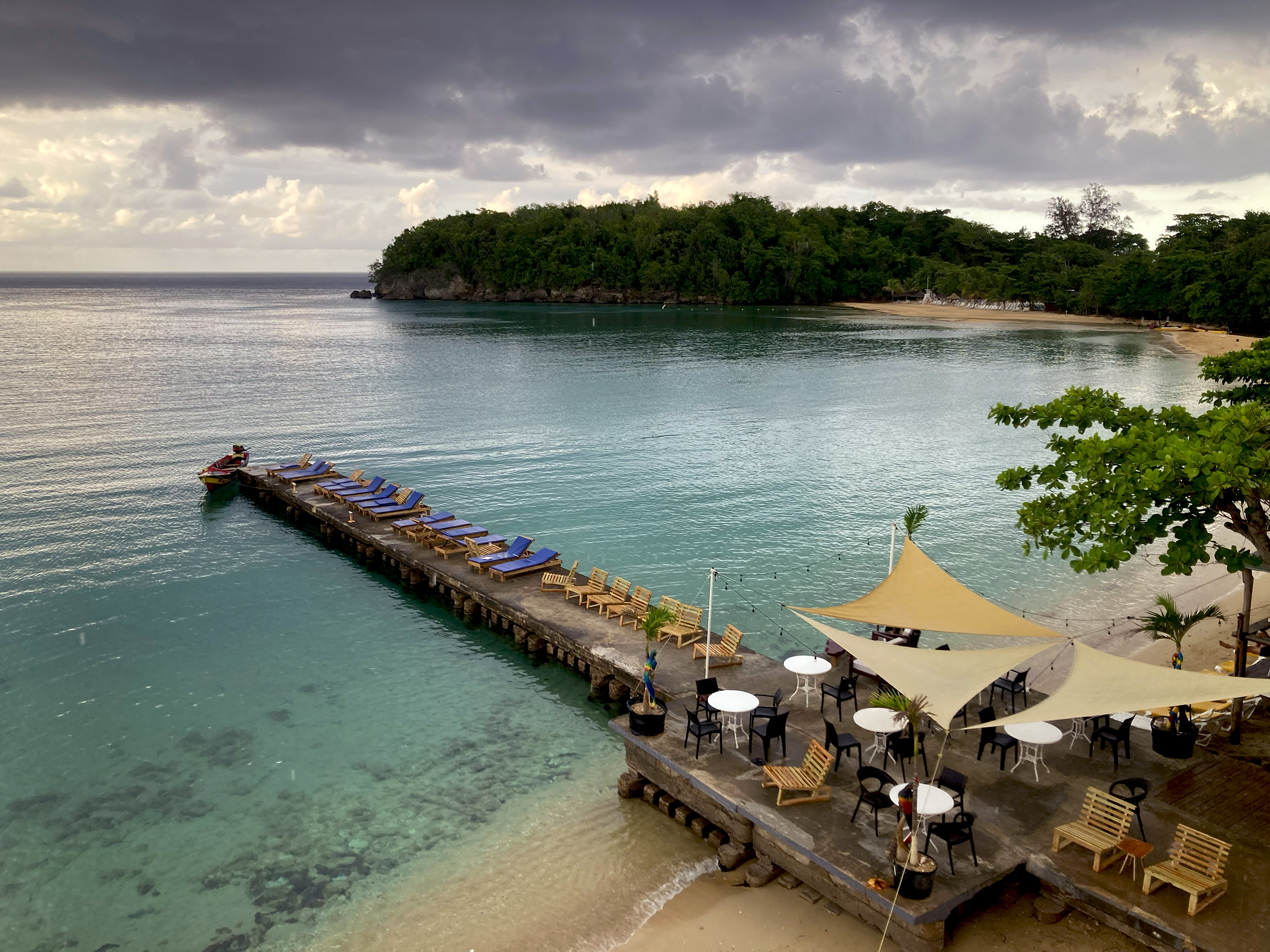
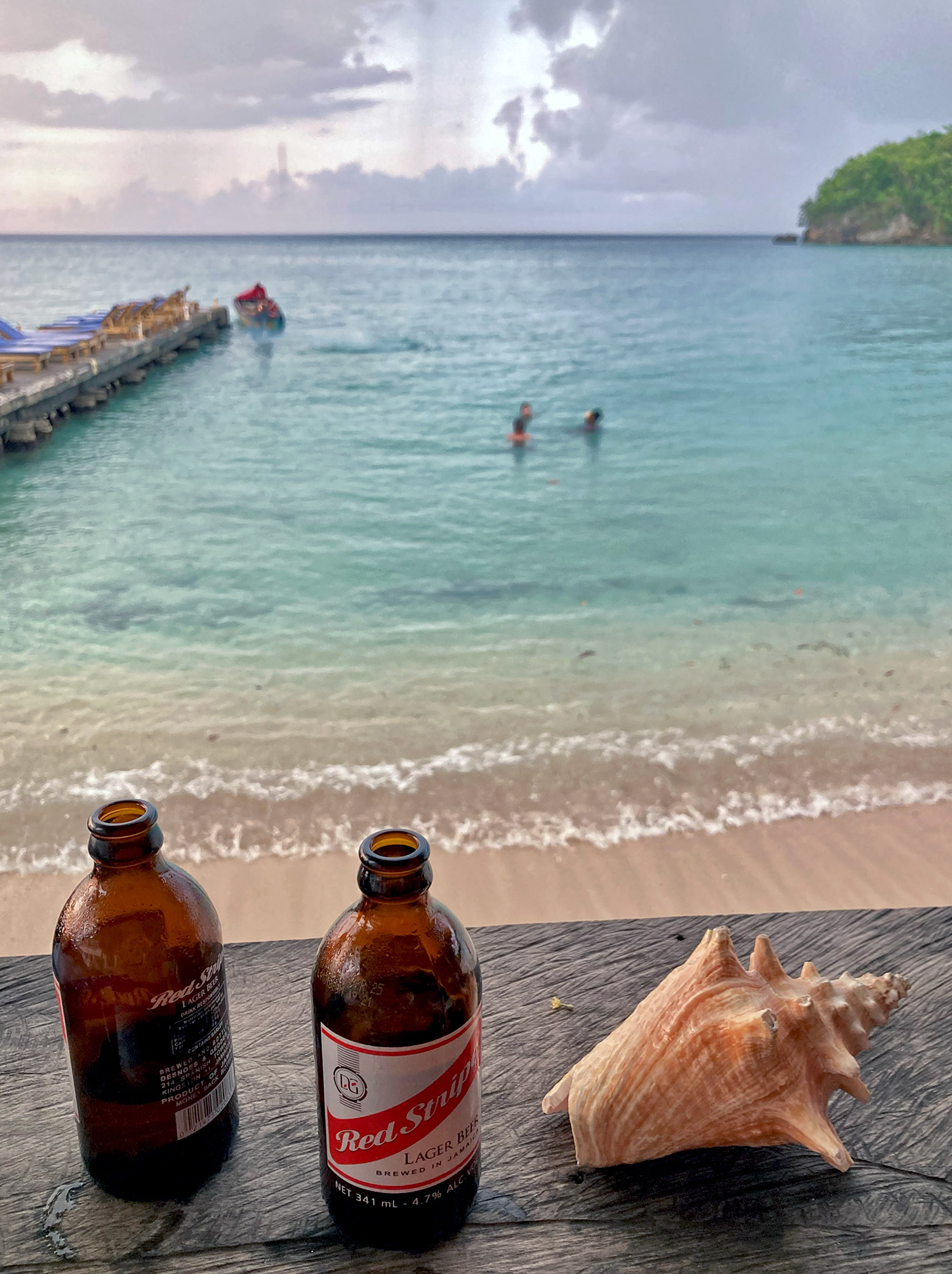
The guides had warned us, if at all it rained, which is typically accompanied by lightning in these parts, the trip up the falls would be called off immediately. Not a drop fell on our ascent, thankfully, but by the time we get to our rental car, the heavens open up. A double speed wiper adventure, and one last FU from Google later, we’ve made it to the Sand and Tan Beach Hotel. It’s a far cry from the Geejam, or even the swish AC Hotel in Kingston, but it’s also sufficiently removed from tourist central in Ocho Rios. Offering ocean views from every room that beg for a longer stay, it has its own strip of sand adjacent to a public beach, and best of all, a delightfully rustic tiki bar abutting a ramshackle pier full of well-worn loungers.
To faint beats of reggae and the pitter patter of rain, I take one last dip in the Caribbean. Reduced to a drizzle by now, the rain stops in due course, and the sun appears right on cue for curtain call. Several Red Stripes ensue, and we eventually close out the bar with a potent rum punch. It’s sweeter than usual, much like our time in Jamaica.

A full set of photos from my visit to Jamaica can be seen on my Flickr.
 brat's ramblings
wow!! 46Jamaica, in four perfect days